EFCC Arrests Okowa Over Alleged Mismanagement of N1.3trn Derivation Fund

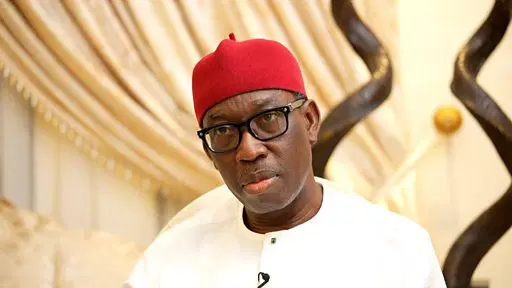
In a dramatic turn of events, the Economic and Financial Crimes Commission (EFCC) has arrested Ifeanyi Okowa, the immediate past governor of Delta State, over allegations of misappropriating a staggering N1.3 trillion derivation fund. The arrest, which took place on November 3, 2024, has sent shockwaves through both political and financial circles, raising serious concerns over the management of state funds during his tenure.
Allegations Against Okowa
The EFCC’s action comes in the wake of an ongoing investigation into the handling of Nigeria’s oil derivation funds, which are allocated to states that produce crude oil as compensation for the environmental degradation caused by oil exploration. These funds are crucial for the development of oil-producing regions, including Delta State, which receives a significant portion due to its status as one of the country’s key oil-producing areas.
According to sources within the EFCC, Okowa is under investigation for allegedly diverting a large portion of the N1.3 trillion earmarked for the state’s development into private accounts. The commission accuses him of engaging in a complex scheme to siphon off funds intended for public infrastructure, health, education, and other developmental projects in the state.
The funds in question were part of the federal government’s oil derivation allocation to Delta State, which has historically been a significant beneficiary of the derivation formula. However, authorities claim that Okowa, who served as governor from 2015 to 2023, failed to provide adequate accountability for how these substantial sums were spent, raising suspicions of corruption and mismanagement.
EFCC’s Investigation
The EFCC has been investigating the alleged diversion of funds for several months, following complaints and whistleblower reports from concerned citizens, civil society groups, and political opponents of Okowa. The investigation is said to have involved an extensive audit of Delta State’s financial records, including bank transactions, government contracts, and financial disbursements related to the management of the derivation funds.
Preliminary findings suggest that several high-ranking officials in Okowa’s administration may have been complicit in the alleged scheme. The EFCC has reportedly traced suspicious transactions to offshore accounts and shell companies, which were allegedly used to launder the misappropriated funds.
In addition to Okowa’s arrest, a number of former state officials and business partners of the former governor have also been questioned. The EFCC has confirmed that it is working closely with international financial intelligence agencies to track the movement of the funds and identify all individuals involved in the alleged financial misconduct.
Okowa’s Response to the Allegations
Following his arrest, Okowa has vehemently denied the accusations, calling them politically motivated. In a statement released through his legal team, Okowa claimed that the charges against him were part of a larger plot to tarnish his reputation following his successful tenure as governor of Delta State.
He insisted that all funds allocated to Delta State were spent in accordance with the law and that no funds were diverted for personal gain. Okowa also emphasized that the projects initiated during his tenure, including infrastructure development, health initiatives, and education reforms, were properly funded and transparent. He further pledged to cooperate with the EFCC in any way necessary to clear his name and resolve the issue.
Supporters of Okowa have rallied behind him, calling the investigation an attempt to discredit a popular and influential political figure. Many of his backers argue that the timing of the arrest is suspicious, given that Okowa had recently been appointed as a key figure in the new administration at the federal level. His allies also point to his track record of providing infrastructure and services to Delta State as evidence of his dedication to the state’s development.
The arrest of Okowa has significant political ramifications, especially within the context of the 2023 general elections and the ongoing power struggles in Nigerian politics. Okowa, a member of the People’s Democratic Party (PDP), was one of the key figures who supported Atiku Abubakar’s presidential bid during the 2023 elections. His arrest could be seen as part of the broader rivalry between the ruling All Progressives Congress (APC) and the opposition PDP, with some political analysts suggesting that the EFCC’s move is politically motivated.
The arrest has also raised questions about the effectiveness of the EFCC in addressing corruption at the state level. While the commission has been active in prosecuting individuals involved in high-profile cases of financial misconduct, critics have long argued that corruption at the state level, particularly involving large sums like the derivation funds, often goes unchecked.
The arrest of Ifeanyi Okowa is only the beginning of what promises to be a protracted legal and political battle. As the EFCC continues its investigation, the focus will shift to determining the full extent of the alleged mismanagement and identifying all individuals involved in the scheme. Okowa’s supporters are expected to continue defending his actions, while his detractors will likely seize the opportunity to highlight the alleged corruption during his administration.
The EFCC has promised to thoroughly investigate all aspects of the case and ensure that justice is served. Given the amount of money involved, the implications of this case extend beyond Okowa’s personal career. It underscores the larger issue of financial mismanagement and corruption in Nigeria’s state governance structures, particularly in resource-rich regions.
The arrest of former Delta State governor Ifeanyi Okowa over the alleged misappropriation of N1.3 trillion in derivation funds marks a significant moment in Nigeria’s ongoing battle against corruption. As investigations continue, the outcome will have far-reaching implications for the country’s political landscape and the fight for accountability in public office. While Okowa has denied the allegations and insists on his innocence, the EFCC’s probe will likely shed light on a case that has already become a focal point for discussions about financial transparency in Nigeria’s governance.



Responses