Anti-Corruption War Should Begin With Accountability From The Top — Obasanjo

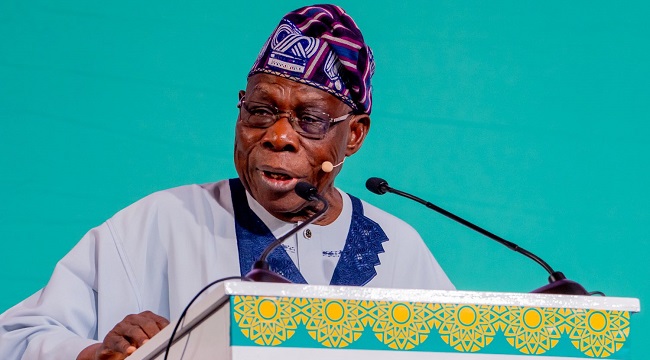
Former President Olusegun Obasanjo has once again emphasized the need for strong accountability at the top levels of government in the ongoing fight against corruption in Nigeria. Speaking on various platforms, Obasanjo, who led Nigeria as president from 1999 to 2007, reiterated his stance that for the nation’s anti-corruption war to be truly effective, those in positions of power, particularly political leaders and public officeholders, must first demonstrate accountability in their actions and decisions.
Obasanjo’s remarks come at a time when Nigeria continues to battle widespread corruption across both the public and private sectors. The fight against corruption has been a central theme for successive administrations, but many have criticized the lack of progress, citing high-profile cases where alleged perpetrators walk free or receive minimal consequences for their actions. The former president, who is known for his strong stance on anti-corruption, argued that tackling corruption at the grassroots level would be insufficient if the leadership fails to set the right example.
According to Obasanjo, the failure to lead with integrity at the top echelons of government undermines the overall efforts to combat corruption. He stated that leaders should be held to the highest standards of transparency and honesty. If leaders are seen engaging in corrupt practices or evading accountability, it sends a dangerous message to lower levels of government and society, implying that corruption is acceptable for those in power.
Obasanjo’s call for accountability at the top also echoes the concerns of many Nigerians who feel that the fight against corruption has often been selective, with certain individuals or groups seemingly above the law. He pointed out that no anti-corruption initiative could succeed if the leaders who institute such policies are not themselves held accountable for their actions. This sentiment resonates with critics who argue that many of the country’s previous anti-corruption campaigns have lacked a genuine commitment from the highest levels of leadership.
The former president further highlighted the importance of transparency in government spending and financial management. He suggested that the Nigerian government must prioritize openness in its dealings with public resources, ensuring that funds meant for national development are not diverted or misused by those in power. Obasanjo’s statement aligns with ongoing calls for reforms in the country’s financial management systems, including stricter monitoring of government contracts and a more robust system for tracking public funds.
In his speeches, Obasanjo has also pointed to the role of the judiciary in promoting accountability. He underscored the need for the judicial system to be impartial and free from political influence, which would allow it to hold both low and high-ranking individuals accountable for their actions. The role of the judiciary in ensuring that justice is served in cases of corruption has been a critical issue, with many pointing out that delays in trials or the lack of convictions in high-profile cases have allowed corruption to persist.
Obasanjo’s advocacy for accountability from the top reflects his broader vision for a Nigeria that upholds democratic values and the rule of law. He has long championed the idea of governance that prioritizes the welfare of the people, rather than the enrichment of a select few. Under his administration, there were notable efforts to improve transparency in government, including initiatives to reduce wasteful government spending and introduce measures aimed at reducing corruption within the public sector.
However, Obasanjo has also acknowledged the complexity of the issue, noting that corruption is deeply embedded in the political and economic systems of the country. He suggested that to effectively tackle corruption, a cultural shift would be required, one where citizens and public officials alike reject corrupt practices and demand higher standards of integrity. He pointed out that without a change in attitudes toward corruption, Nigeria’s efforts to combat it would remain largely symbolic.
The fight against corruption in Nigeria remains an ongoing challenge, and Obasanjo’s calls for accountability from the top provide a crucial perspective in addressing the issue. His remarks underscore the need for political will, effective governance, and judicial independence in the battle to eradicate corruption and promote good governance.
As Nigeria continues to grapple with the consequences of corruption, Obasanjo’s message serves as a reminder that leadership is crucial in shaping the future of the country. If the country’s leaders are serious about defeating corruption, they must begin by demonstrating the same accountability and transparency that they expect from others. Only then can Nigeria hope to build a fairer, more prosperous future for all of its citizens.


Responses