Diaspora Remittances Surge to $600 Million Monthly

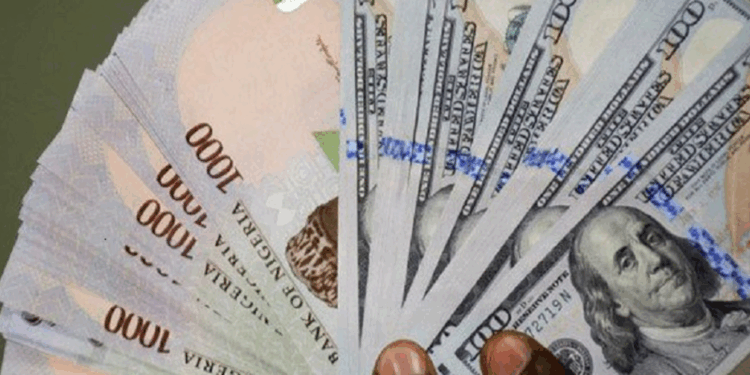
Every year, millions of Nigerians living abroad send money home to support their families, invest in property, and contribute to community projects. These funds, known as diaspora remittances, are more than just financial transactions. For many households, they are lifelines that pay school fees, cover healthcare costs, and support small businesses. Now, the latest figures from the Central Bank of Nigeria (CBN) show that these inflows have surged dramatically, tripling in just two months to reach about $600 million every month.
According to the Nigerians in Diaspora Commission (NIDCOM), this sharp increase is no coincidence. The Commission believes it reflects renewed confidence in Nigeria’s financial system, largely driven by the reforms introduced by the CBN under its governor, Mr. Olayemi Cardoso.
Abike Dabiri-Erewa, the Chairman and Chief Executive Officer of NIDCOM, explained that Nigerians abroad are responding positively to policies such as the Non-Resident Bank Verification Number (NRBVN) and the introduction of more competitive exchange rates. In her view, these changes are not only encouraging people to use official banking channels but also showing them that the Nigerian financial system can be trusted again.
For years, many Nigerians in the diaspora avoided sending money through formal banks. Instead, they relied on informal networks and unofficial money transfer agents, often called “black market” channels. The reason was simple: official exchange rates were unattractive, and the bureaucracy around banking discouraged people. This created a situation where billions of dollars bypassed Nigeria’s formal system every year.
The CBN’s new policies are slowly reversing that trend. By unifying the foreign exchange market and liberalizing the rules, the apex bank has created a system where exchange rates are determined more by market forces. This has helped narrow the gap between official and parallel market rates, making formal transactions more appealing. The launch of the Non-Resident BVN also removed a long-standing barrier, allowing Nigerians abroad to access banking services without physically coming home to register.
Cardoso has made it clear that the goal is to make Nigeria’s financial environment not just competitive but trustworthy. At a recent investment roundtable in Brazil, he shared how remittance flows have grown from about $200 million per month to $600 million in just two months. He expressed optimism that by 2026, the country could attract up to $1 billion every month from diaspora remittances.
The significance of this development goes beyond financial statistics. Remittances are a crucial source of foreign exchange for Nigeria, especially at a time when oil revenues remain volatile. In 2024 alone, Nigerians abroad sent home more than $20 billion, according to official figures. These funds help stabilize the economy by boosting the supply of dollars, supporting the naira, and improving liquidity in the banking system.
But remittances are also personal. For the average Nigerian family, they represent school tuition, rent, food, or the capital to start a small business. In December 2024, NIDCOM revealed that Nigerians visiting home for the holidays spent about N60 billion during their stay. This spending, combined with regular remittance inflows, shows just how deeply connected the diaspora is to the local economy.
Dabiri-Erewa has consistently emphasized that the Nigerian diaspora is one of the country’s most valuable yet underutilized assets. To keep strengthening ties, NIDCOM organizes events such as the Nigerian Diaspora Investment Summit, National Diaspora Day, and the Diaspora Youth Summit. These gatherings are more than symbolic; they create platforms for collaboration, investment, and policy discussions.
Her message is clear: the Nigerian government does not just want money from abroad. It wants engagement, ideas, and partnerships that can transform communities. The recent surge in remittances, therefore, is not only about financial reform. It is also about building a stronger relationship of trust between Nigerians at home and Nigerians abroad.
For decades, Nigeria’s financial system was viewed with skepticism by its own people, especially those living abroad. Many feared that sending money through formal channels meant dealing with high fees, delays, or unfair exchange rates. Some even worried about outright losses. The fact that these attitudes are beginning to change is an encouraging sign.
Cardoso himself admitted that when the CBN began pushing for reforms, some critics dismissed the idea of diaspora flows being a reliable foreign exchange source. At that time, inflows were around $200 million monthly, and few believed they could grow much higher. Today, with figures now tripled, the narrative has changed. What seemed overly ambitious a year ago is now within reach.
While the progress is impressive, sustaining it will require consistency. For remittances to keep rising, Nigerians abroad must continue to trust the system. That means the CBN must remain committed to transparency, competitive exchange rates, and smooth transaction processes. Any reversal of reforms or return to cumbersome policies could send people back to unofficial channels.
The target of $1 billion per month by 2026 is ambitious but achievable if the current momentum continues. Beyond the numbers, such inflows could transform Nigeria’s economic outlook, reducing dependence on oil and providing a stable cushion for external reserves.
The average Nigerian may not immediately connect diaspora remittance statistics to daily life, but the link is real. When remittance inflows increase, the supply of dollars in the economy improves. That helps strengthen the naira, stabilizes prices, and creates a more predictable environment for businesses. For families, it means smoother and cheaper transactions when relatives abroad send money. For small businesses, it could mean easier access to foreign goods and services.
Ultimately, diaspora remittances remind us of the global Nigerian spirit — a community that, despite living thousands of miles away, remains committed to the growth and wellbeing of their homeland. The surge to $600 million monthly is more than just an economic win. It is a testament to what can happen when good policy meets trust, and when a government recognizes the value of its people abroad.



Responses