Dembélé Leads Ballon d’Or Race 2025

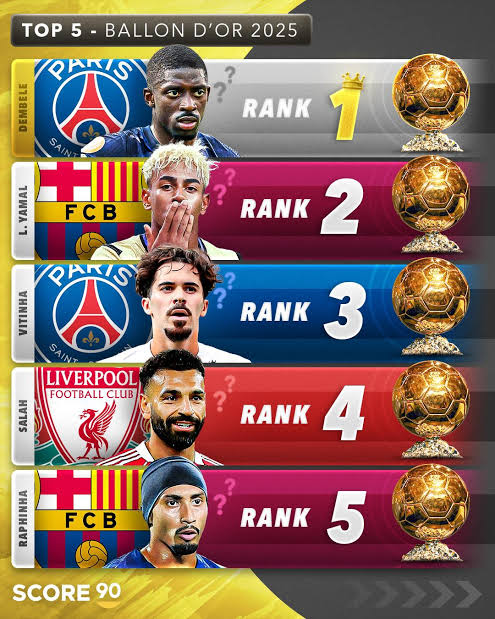
The Ballon d’Or is once again at the center of global football discussion as the 2025 ceremony in Paris draws near. Every year, the award sparks debates, predictions, and arguments about who truly deserves to be named the best footballer in the world. This year is no different, but the competition feels particularly intense because of the quality of performances across Europe and beyond.
The biggest story heading into the award night is the rise of Ousmane Dembélé. For years, he was seen as a player with incredible talent who struggled with injuries and consistency. But 2025 has changed that story completely. Dembélé is now the clear favorite after leading Paris Saint-Germain to the one trophy that had always slipped through their fingers—the UEFA Champions League. It was the title PSG desperately needed to confirm their status among Europe’s elite, and Dembélé was the man who delivered it with his speed, flair, and goals in crucial matches. That success alone has placed him firmly at the top of the Ballon d’Or rankings.
Hot on his heels is Barcelona’s teenage sensation, Lamine Yamal. At just 18 years old, Yamal has turned into a superstar almost overnight. His performances in La Liga and the Copa del Rey were dazzling, as he helped Barcelona complete a domestic double. But it wasn’t just at club level where he made his mark. In the Nations League semi-final against France, he scored twice in a thrilling 5-4 victory that fans will remember for years. The fact that someone so young is already performing at this level has made him one of the most talked-about players in the world. While his age may work against him in terms of voters preferring more established stars, Yamal has shown that the future belongs to him.
Third in the rankings is Vitinha, another PSG player who has been essential in both the Champions League run and Portugal’s Nations League success. His consistency and ability to dictate play in midfield have earned him admiration across Europe. While he might not be as flashy as Dembélé or Yamal, his role in PSG’s long-awaited triumph cannot be understated.
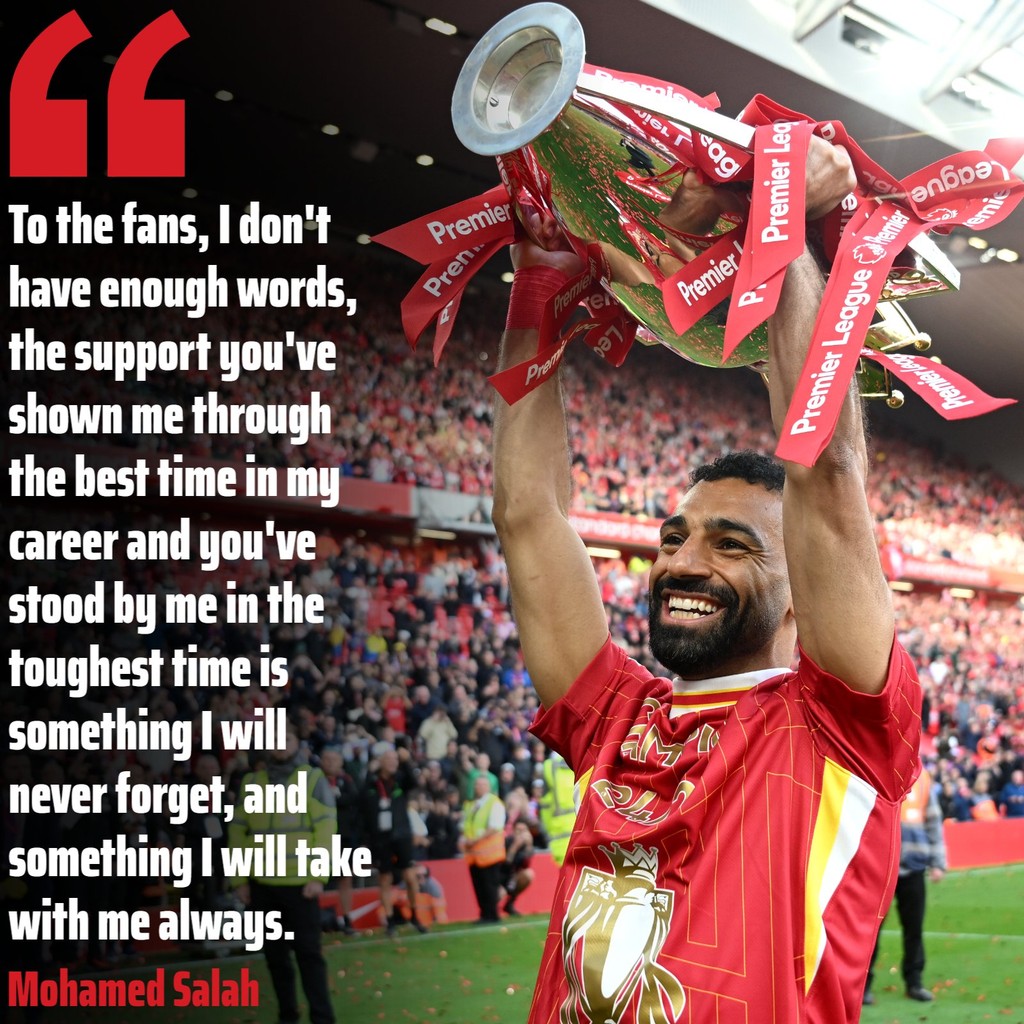
Liverpool’s Mohamed Salah sits in fourth place. Once again, Salah has been the heartbeat of Liverpool’s attack, leading them to the Premier League title. His goals and leadership carried the Reds through another memorable domestic campaign. However, Liverpool’s inability to go all the way in Europe, particularly being outshone by PSG, seems to have dented his Ballon d’Or chances this year. Salah remains a fan favorite and a legend in the Premier League, but the lack of continental success might hold him back from claiming his first Golden Ball.
Barcelona’s Raphinha takes the fifth spot, another sign of the club’s domestic dominance under Hansi Flick. His goals and creativity played a huge role in their La Liga and Copa del Rey triumphs. Yet, like Yamal, he suffers from Barcelona’s failure in Europe. Without a Champions League title, it is hard to see him overtaking Dembélé.
Chelsea’s Cole Palmer has been one of the biggest surprises of the year and finds himself tied in sixth place with PSG’s Achraf Hakimi and Napoli’s Khvicha Kvaratskhelia. Palmer’s rise has been incredible, cemented by Chelsea’s Club World Cup win, where he showed he could step up on the biggest stage. Hakimi, meanwhile, has been vital to PSG’s dominance, while Kvaratskhelia continues to shine as one of Europe’s most dangerous wingers, proving that Napoli’s star is no one-season wonder.
The rest of the top ten includes PSG’s Fabian Ruiz and Nuno Mendes, alongside Kylian Mbappé, who is now at Real Madrid. Interestingly, Mbappé’s move has not produced the immediate dominance many expected. He remains one of the most gifted players in the world, but compared to the unstoppable impact of Dembélé this season, his influence has felt quieter than usual.
Barcelona’s strong representation with both Yamal and Raphinha proves just how dominant they were in Spain this year. Still, the lack of European glory puts them at a disadvantage compared to PSG, who not only secured their long-desired Champions League but did it with style. Dembélé’s contributions in Europe, where the world is watching, seem to be the factor that gives him the edge.
Yamal’s case is fascinating because of his age. If he were a little older, his chances might be stronger, but it feels as though voters may see him as one for the future rather than the present. His Kopa Trophy win confirms his standing as the best young player in the world, but the Ballon d’Or may come a little too soon this time.
The debates among fans, pundits, and even players themselves have been fierce. Should the Ballon d’Or go to the player who produced the most decisive performances in the biggest games, like Dembélé, or should it reward the consistency of someone like Salah or Vitinha? Does Yamal deserve recognition now, even though he still has many years ahead of him? And what about the underdogs like Palmer or Kvaratskhelia, who continue to prove their worth against all odds?
Whatever the final decision, this year’s Ballon d’Or has shown that football is entering a new era. The names dominating the conversation are not only the familiar ones like Salah and Mbappé, but also a new generation represented by Yamal and Palmer. The ceremony in Paris promises to be dramatic, emotional, and filled with debate, as always. But right now, all signs point to Ousmane Dembélé standing on that stage and finally being recognized as the best player in the world.
For a player whose career was once defined by injuries and questions about consistency, it would be the perfect redemption story. And for PSG, it would mark the crowning achievement of their long quest to be the kings of Europe.



Responses