Sanwo-Olu Launches €410m Omi-Eko Electric Ferry Project to Revolutionize Water Transportation in Lagos

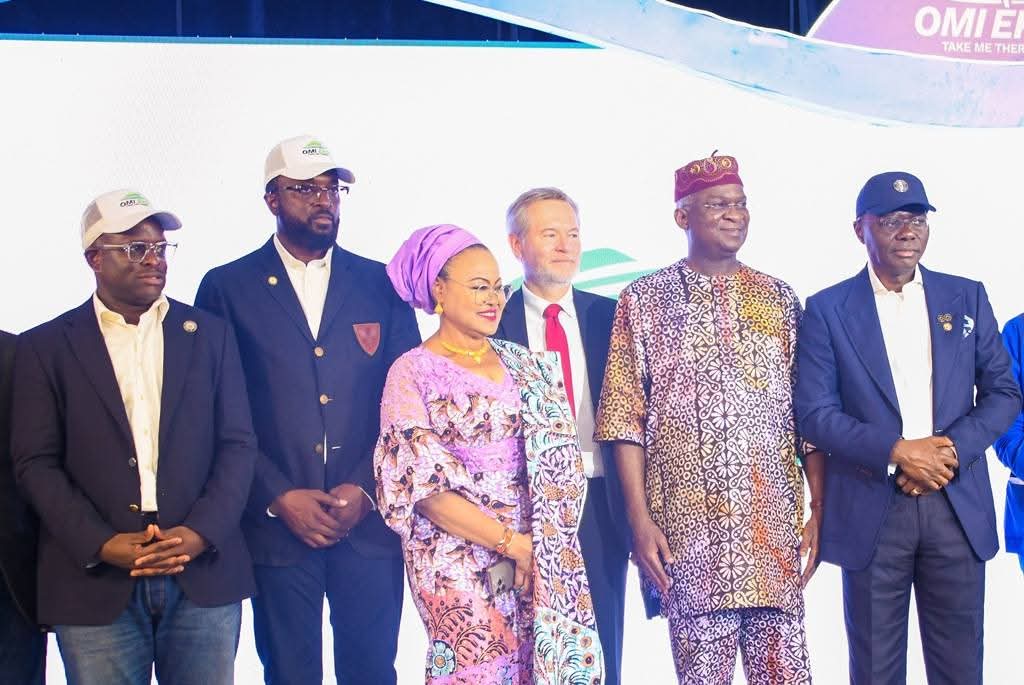
Governor Babajide Sanwo-Olu has officially launched the Omi-Eko Electric Ferry Project, a landmark initiative aimed at transforming water transportation in Lagos State and easing pressure on the city’s road network. The project, valued at €410 million, is being executed in partnership with the European Union (EU), the French Development Agency (AFD), and the European Investment Bank (EIB) under the Global Gateway Initiative.
Speaking at the launch event, Sanwo-Olu described the Omi-Eko Project as a “decisive step toward building a cleaner, safer, and more efficient city.” He emphasized that the initiative marks a major shift in Lagos’ transport system, allowing water — one of the state’s greatest natural assets — to become a viable channel for movement, commerce, and opportunity.
“For generations, Lagos has been defined by water, yet our roads have carried most of the city’s movement. The Omi-Eko Project changes that narrative,” the governor said. “We are committed to giving Lagosians more mobility options, easing congestion, and promoting sustainable economic growth.”
Two-Phase Development Plan
The Omi-Eko project is structured into two major components.
The first involves the construction of critical inland waterway infrastructure, including the dredging and channel marking of 140 kilometers of ferry routes, and the creation of 15 priority ferry corridors across Lagos. It will also deliver 25 ferry terminals and jetties, all equipped with electric charging points, maintenance depots, and improved road linkages to ensure smooth intermodal transportation between road, rail, and water routes.
The second component focuses on sustainable operations, introducing over 70 hybrid and fully electric-powered ferries, smart ticketing systems, and passenger information technology. Capacity development programs will also be carried out for the Lagos State Waterways Authority (LASWA) to ensure effective management and maintenance. The second phase of implementation is expected to be completed by 2030.
Voices from the Event
At the ceremony, former Lagos State Governor Babatunde Raji Fashola commended Sanwo-Olu and LASWA’s Managing Director, Damilola Emmanuel, for driving forward what he described as a “generational vision” for Lagos.
Fashola reflected on the evolution of Lagos’ transport infrastructure and praised the continuity of governance that allowed projects conceived decades ago to come to fruition. “This is a legacy of perseverance,” he said. “Intermodal transportation — linking road, rail, and waterways — is not just an ambition anymore; it is happening in real time.”
A representative of the European Union also spoke at the event, expressing optimism that the Omi-Eko Project would transform water transport and strengthen economic ties between Lagos and Europe. According to the EU, the project aligns with global sustainability goals and demonstrates Lagos’ readiness to transition toward a green, water-based economy.
A Sustainable Future for Lagos
With a population exceeding 20 million and chronic traffic congestion, Lagos has long sought to diversify its transport system. The Omi-Eko Electric Ferry Project is positioned as a sustainable alternative that will reduce travel time, cut carbon emissions, and open new economic corridors across the state.
Sanwo-Olu thanked Lagos residents and international partners for their support, reaffirming his administration’s commitment to delivering modern infrastructure that meets the needs of a rapidly growing megacity.
“The journey toward a smarter and greener Lagos is ongoing,” he concluded. “Through Omi-Eko, we are turning our waterways into engines of progress — for today, and for generations to come.”


Responses