Tenant Rights 2025: Five New Legal Protections Every Tenant Should Know

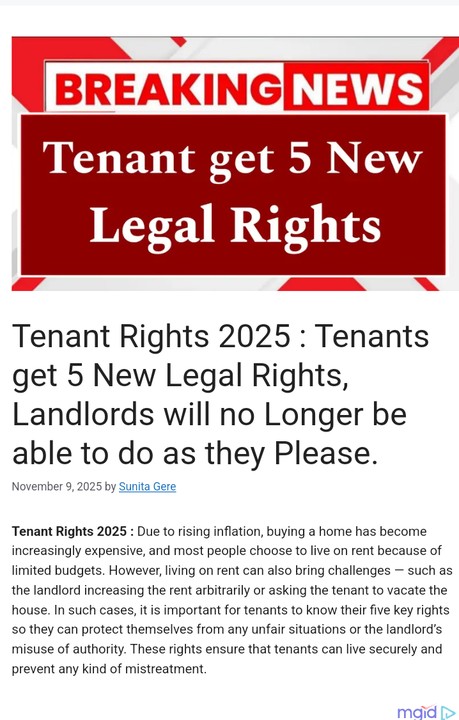
As inflation continues to rise and the cost of owning a home becomes increasingly out of reach for many people, renting remains the only viable housing option for a large portion of the population. However, living in a rented home often comes with its own set of challenges—arbitrary rent hikes, sudden eviction notices, or landlords who ignore maintenance issues. To address these recurring problems, new tenant protection measures have been introduced in 2025, giving renters five powerful legal rights that aim to create a fairer and more balanced landlord–tenant relationship.
These new rights are designed to empower tenants, reduce exploitation, and ensure that everyone—regardless of their economic status—can live with dignity, stability, and legal security. Below is a detailed explanation of these five major rights every tenant should know and exercise confidently.
1. Protection Against Premature Eviction
One of the most significant rights given to tenants is protection from being evicted before the agreed tenancy period expires. As long as a valid rental agreement is in place, the landlord cannot force the tenant to vacate the property before the contract ends. Exceptions to this rule only apply if the tenant fails to pay rent for more than two months, uses the property for illegal or unauthorized purposes, or breaches any other major clause of the agreement. Even in such cases, eviction must follow a transparent legal process. The landlord must serve the tenant with a written notice at least 15 days in advance, allowing enough time for the tenant to prepare or challenge the decision legally.
This law ensures that tenants are not unfairly displaced and that landlords cannot exploit their authority or manipulate tenants through threats of sudden eviction.
2. Mandatory 90-Day Notice Before Rent Increase
Under the new rules, landlords are now required to issue a 90-day written notice before increasing rent. Sudden or unreasonable rent hikes are no longer acceptable. This gives tenants sufficient time to evaluate whether they can afford the new rate or make alternate living arrangements.
In addition, tenants are entitled to essential amenities such as water, electricity, and parking. A landlord cannot deny access to these basic needs or use them as leverage in rent negotiations. The law emphasizes that every tenant deserves a livable, safe, and sanitary environment, and it is the landlord’s duty to maintain those standards throughout the lease period.
3. Landlord’s Obligation to Maintain the Property
Maintenance and repairs are primarily the responsibility of the landlord, not the tenant. Once the tenancy agreement is signed, it becomes the landlord’s legal duty to fix any damages or structural faults in the property—whether it’s plumbing, roofing, electrical issues, or general wear and tear.
If the landlord fails to carry out necessary repairs within a reasonable time, tenants can request a rent reduction or file a complaint with the appropriate housing authority. This rule not only ensures the property remains habitable but also prevents tenants from living in unsafe or deteriorating conditions due to landlord negligence.
4. Tenant’s Right to Privacy and Prior Notice for Visits
Tenants are also guaranteed the right to privacy in their rented homes. Once the agreement is in effect, a landlord cannot show up unannounced or enter the property without notifying the tenant at least 24 hours in advance. The notice should specify the purpose of the visit—such as repairs, inspections, or other property-related matters—and must preferably be in writing.
Moreover, if the tenant is not present, the landlord cannot open the locks or touch the tenant’s personal belongings under any circumstance. Unauthorized entry or tampering with a tenant’s possessions can lead to legal penalties. This measure is aimed at curbing harassment and safeguarding the dignity and privacy of tenants.
5. Right to Receive Rent Receipts as Proof of Payment
Rent receipts are now a mandatory requirement for every rent transaction. A landlord must provide a written or digital receipt each time rent is paid, clearly indicating the amount, date, and payment period covered.
These receipts act as crucial legal evidence in cases of disputes—especially if a landlord later claims nonpayment or tries to evict a tenant unlawfully. In court, rent receipts are considered legitimate proof that the tenant fulfilled their financial obligations under the agreement.
Conclusion
The new tenant protection framework introduced in 2025 marks a major step toward housing fairness and accountability. These five rights—protection from unlawful eviction, mandatory rent hike notice, maintenance responsibility, privacy assurance, and proof of payment—help level the playing field between tenants and landlords.


Responses