Bill Clinton Dominates the Spotlight as Long-Awaited Epstein Files Are Released

The long-anticipated release of documents connected to the late Jeffrey Epstein has finally arrived, and as expected, it has reignited controversy, suspicion, and fierce political debate. For months, Donald Trump faced mounting pressure from sections of his own support base to authorize the disclosure of the Epstein files, which conspiracy-minded allies claimed would expose a hidden network of powerful individuals shielded from justice. Although the former president resisted for as long as possible, he eventually yielded. Yet when the documents were finally made public on Friday evening, the outcome was not what many anticipated.
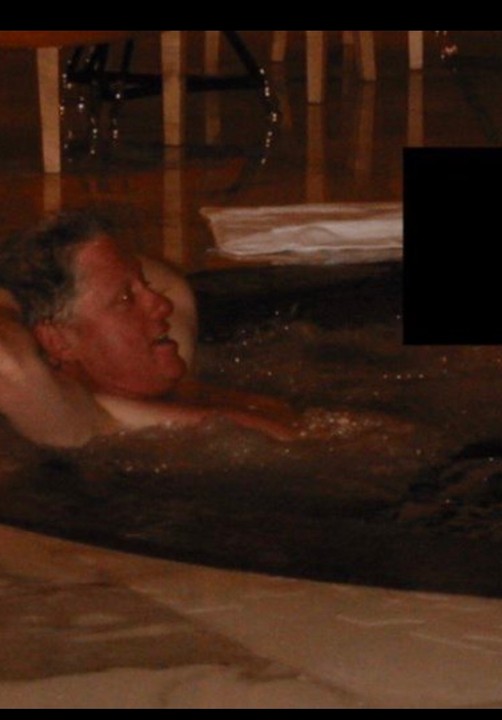
Rather than centering on the man currently occupying the White House, the initial wave of released material thrust former president Bill Clinton squarely into the headlines. Among the most talked-about revelations was a photograph circulating widely online: a former president relaxing in a hot tub, dressed only in tight swimming trunks. The image, shared gleefully by Trump’s press secretary Karoline Leavitt with the caption “Oh my!”, was unmistakably of Bill Clinton, not Trump.
Early reviews of the documents suggest that while Trump’s name appears occasionally—largely in passing—it is Clinton who is portrayed as a far more prominent figure within Epstein’s social orbit. Photographs and records show Clinton in close proximity to Ghislaine Maxwell, Epstein’s longtime associate, who is currently serving a 20-year prison sentence for sex trafficking. In one image, Clinton is seen in a swimming pool with Maxwell and another unidentified woman whose face has been deliberately obscured. Other images show him posing casually in a red hoodie, fist clenched, beside another woman whose identity is concealed.
The files also paint a picture of Clinton moving comfortably within elite social circles connected to Epstein. He is seen touring Winston Churchill’s War Rooms alongside Maxwell and actor Kevin Spacey, dining with Rolling Stones frontman Mick Jagger, and posing for photographs with Epstein himself, both men dressed flamboyantly in silk shirts. In another striking image, Clinton stands arm-in-arm with Michael Jackson, with Diana Ross on his other side—snapshots that underscore the overlapping worlds of political power, celebrity, and wealth.
Unsurprisingly, the White House capitalized on these optics. Aides resurrected Clinton’s long-standing nickname, “Slick Willy,” originally coined during his presidency to describe his charm and perceived slipperiness. Steven Cheung, the White House communications director, shared the hot tub photograph with a cutting caption suggesting carefree indulgence, unaware of the scrutiny that would follow years later.
By contrast, Trump’s presence in the files is minimal. He appears largely on the margins: his name on a large cheque, a copy of his book Trump: The Art of the Comeback spotted on a bookshelf, and little else of substance. Trump has acknowledged that he once moved in the same elite circles as Epstein, particularly in Palm Beach and New York, before the two reportedly fell out more than two decades ago. Importantly, Trump has never been accused of wrongdoing in connection with Epstein’s crimes and has consistently maintained that he was unaware of Epstein’s activities.
Nevertheless, the shadow of the Epstein scandal hovered over Trump throughout the year. During the campaign, he promised full transparency, feeding expectations that the files would expose a protected cabal of abusers. Once back in office, however, his tone shifted. He grew visibly irritated when questioned about Epstein and even cut short a White House event hours before the document release, saying he did not want to “soil” a major policy announcement by entertaining questions—an uncharacteristic move for a president known for sparring with reporters.
In hindsight, Trump’s concerns appear overstated. His Department of Justice oversaw the release, and it quickly became clear that only a fraction of the files had been made public. Officials emphasized that many documents remain under review to protect victims’ identities, meaning further releases could stretch on for weeks. This staggered approach allows the administration to control both timing and impact.
On the day of the release, the White House also employed a familiar strategy: flooding the media landscape with unrelated news. Trump announced plans to slash drug prices under Medicaid, unveiled a controversial renaming of the Kennedy Center, and later authorized military strikes against Islamic State targets in Syria. Amid this barrage, attention settled firmly on Bill Clinton.
Crucially, while the files are undeniably embarrassing for Clinton, they stop short of being incriminating. Even the White House chief of staff, Susie Wiles, acknowledged in an interview that there is no evidence Clinton visited Epstein’s private island, directly contradicting past claims made by Trump. “The president was wrong about that,” she admitted.
In the end, the first tranche of Epstein files delivers more political humiliation than legal consequence. No smoking gun emerges, no definitive proof of criminal wrongdoing by Clinton within the released material. But the images, associations, and optics are damaging enough to dominate headlines—and for now, embarrassment, not indictment, is the story.


Responses