Kashim Shettima to Receive Dauda Lawal Into APC Amid Major Political Shift

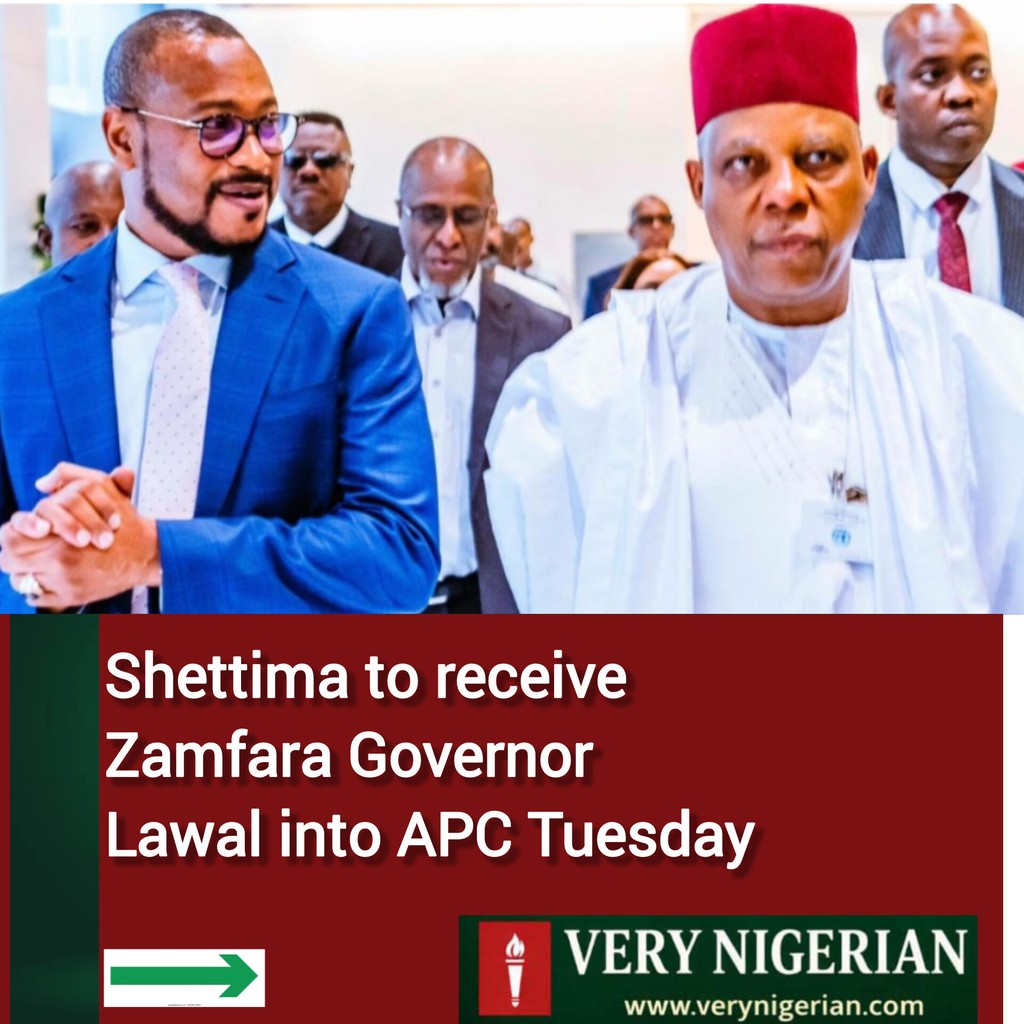
A significant political development is unfolding in northwestern Nigeria as Kashim Shettima is set to formally welcome Dauda Lawal into the All Progressives Congress (APC) on Tuesday. The planned reception, expected to attract top political figures and party stakeholders, marks a major realignment in Zamfara State and could have far-reaching implications for the country’s political landscape ahead of future elections.
Governor Lawal, who was elected under the platform of the Peoples Democratic Party (PDP), recently announced his decision to defect from the party. His move did not come in isolation, as it was accompanied by his deputy, several cabinet members, and a large number of loyal supporters. The governor cited persistent internal crises within the PDP as the primary reason for his departure, suggesting that the party’s instability made it difficult to effectively govern and pursue his administration’s agenda.
Interestingly, the announcement of his defection was made while the governor was outside the country, specifically in Saudi Arabia. His deputy, Mani Mummuni, disclosed the development and also confirmed that preparations were already underway for a formal ceremony to usher the governor into the ruling party.
To ensure a smooth and well-coordinated event, the Zamfara State Government has set up a special committee tasked with organizing the reception. The committee, chaired by Deputy Governor Mummuni, includes a mix of the governor’s loyalists and established APC members in the state. Its responsibilities go beyond logistics, as it is also expected to promote unity within the party and facilitate the seamless integration of new entrants into the APC structure.
During the inauguration of the committee, Mummuni emphasized the importance of diligence and cooperation among members. He reiterated Governor Lawal’s commitment to fairness, inclusiveness, and collaboration within the APC, signaling an intention to build bridges rather than deepen divisions. Similarly, the Zamfara APC Chairman, Tukur Umar Danfulani, urged party members to embrace the governor and his supporters in good faith, describing the development as a step toward strengthening the party’s unity and influence in the state.
The defection has already begun to reshape the political dynamics in Zamfara. According to party officials, the APC has witnessed a surge in membership following the governor’s move, with over 210,000 new members reportedly joining the party. This influx has pushed the party’s total membership in the state to more than 300,000, highlighting the governor’s considerable grassroots support and political influence.
Observers believe that this development could have broader implications beyond Zamfara. As political parties begin to position themselves ahead of upcoming elections, high-profile defections such as this often signal shifting alliances and evolving strategies. For the APC, gaining a sitting governor from an opposition party is a significant boost, both symbolically and strategically.
However, the move also raises questions about the state of opposition politics in Nigeria. Frequent defections have long been a feature of the country’s political system, often driven by internal party disputes, personal ambitions, or strategic calculations. Critics argue that such shifts can weaken ideological consistency and reduce the effectiveness of opposition parties in holding the ruling party accountable.
Despite these concerns, supporters of the defection see it as a pragmatic decision aimed at aligning Zamfara with the federal government to attract more development opportunities and resources. They argue that being part of the ruling party could enhance the state’s access to federal support and improve governance outcomes.
As the official reception approaches, all eyes will be on Zamfara to see how this political transition unfolds. Whether it leads to greater stability and development in the state or further intensifies political competition remains to be seen. What is clear, however, is that Governor Lawal’s move represents a notable moment in Nigeria’s ever-evolving political landscape.


Responses