Salami’s Claim on Obi’s 2023 Candidacy Triggers Fresh Debate Over Electoral Law

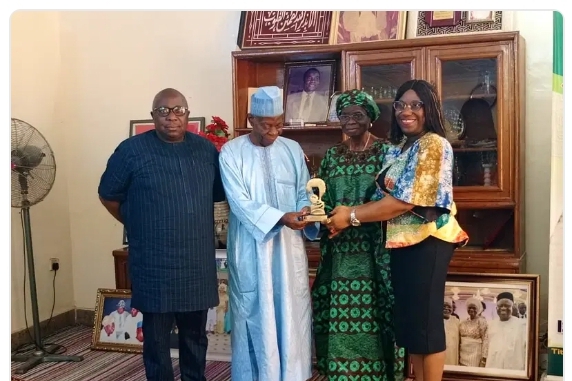
A former President of the Court of Appeal, Isa Ayo Salami, has stirred fresh controversy after asserting that Peter Obi should not have been allowed to contest the 2023 presidential election under the Labour Party (LP).
Speaking in Ilorin during a visit by the Wole Soyinka Centre for Investigative Journalism, Salami attributed what he described as “wrong decisions” in Nigeria’s electoral jurisprudence to judicial incompetence and systemic flaws in the appointment of judges.
According to the retired jurist, Obi’s candidacy raised constitutional concerns, particularly regarding party membership requirements. He argued that since the Labour Party had already submitted its membership register to the Independent National Electoral Commission (INEC), Obi’s subsequent emergence as its candidate should have been questioned.
Salami maintained that Nigeria’s constitution does not recognize independent candidacy, insisting that a candidate must be a bona fide member of a political party before being eligible to contest under its platform. He suggested that allowing such candidacies undermines the integrity of the electoral process.
The former appellate court president extended similar criticism to the case of Abba Yusuf, noting that questions surrounding party membership were also raised in his emergence as governor under the New Nigeria Peoples Party (NNPP). He argued that inconsistencies in judicial interpretations contributed to controversial rulings at higher courts.
Beyond specific cases, Salami expressed broader concerns about the quality of judicial appointments in Nigeria. He lamented what he described as declining standards, pointing to instances where individuals without sufficient legal grounding are elevated to the bench.
He attributed part of the problem to the rapid expansion of legal education, noting that more institutions now offer law degrees, which may affect the overall quality of candidates entering the judiciary. According to him, some judges lack the depth of knowledge required to handle complex constitutional matters, leading to flawed judgments—even at the Supreme Court level.
Salami also criticized the promotion system within the judiciary, arguing that appointments are sometimes influenced by regional considerations rather than merit. He cited personal experiences where junior colleagues were elevated above more experienced judges due to zoning arrangements, describing the situation as detrimental to judicial excellence.
Despite the controversy surrounding his remarks, the event itself was organized to honour Salami’s contributions to the legal profession. The award was presented by Dapo Olorunyomi and Motunrayo Alaka on behalf of the WSCIJ.
In his response, Salami expressed appreciation for the recognition, noting that such honours are valued across the judiciary. He also reflected on the influence of prominent Nigerian figures on his career path, including Wole Soyinka and Obafemi Awolowo, whose principles and actions, he said, shaped his decision to study law.
Awolowo’s historic treason trial, in particular, left a lasting impression on him, reinforcing his belief in the importance of legal knowledge in political life.
Salami’s comments have since sparked intense reactions across political and legal circles, with analysts divided over the validity of his claims. While some agree that electoral laws regarding party membership require stricter interpretation, others argue that the courts have already settled such issues within the framework of existing constitutional provisions.
The debate highlights ongoing tensions within Nigeria’s legal and political systems, especially as the country continues to grapple with questions of electoral integrity, judicial independence, and democratic accountability in the post-2023 election landscape.




Responses