SEC Signals Nigeria’s Readiness for Stablecoins to Empower Citizens and Boost Financial Innovation

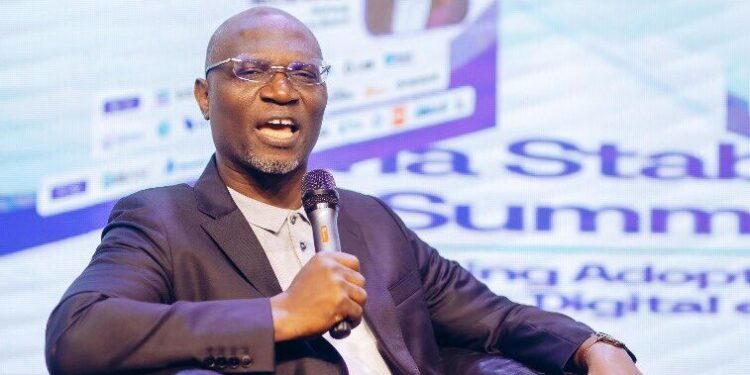
Nigeria is opening a new chapter in its digital finance journey. The Securities and Exchange Commission (SEC) has announced the country’s readiness to embrace stablecoin businesses, provided they operate under clear, responsible regulations designed to protect citizens and maintain market stability.
This was the key message from Dr. Emomotimi Agama, Director-General of the SEC, as he addressed participants at the first-ever Nigeria Stablecoin Summit held in Lagos. His keynote address, titled “Building a Regulatory Framework for Stablecoin Innovation: The Nigerian Perspective,” painted a bold vision for Nigeria’s digital future while emphasizing the need for structure and safety in adopting new financial technologies.
“Nigeria is open for stablecoin business, but on terms that protect our markets and empower Nigerians,” Agama declared. “When history documents Africa’s financial revolution, today will be remembered as the moment we moved from potential to action.”
The summit came at a time when stablecoins are increasingly being used across Nigeria. From freelance workers and digital entrepreneurs to SMEs and importers, many Nigerians are turning to stablecoins as a more reliable store of value and means of transaction amid the continued volatility of the naira.
Dr. Agama acknowledged this growing demand and highlighted how stablecoins are becoming a vital tool in the country’s emerging digital economy.
“The Nigerian digital economy is youthful, dynamic, and increasingly decentralized. Stablecoins are playing a central role in facilitating secure, borderless transactions,” he said.
He emphasized the importance of shaping a uniquely African regulatory model—one that accounts for the country’s demographics, infrastructure challenges, and economic realities—while also learning from international best practices.
One of the key enablers of Nigeria’s stablecoin readiness, according to the SEC chief, is the recently enacted Investment and Securities Act (ISA) 2025. This new legislation represents a major upgrade to Nigeria’s financial regulatory framework, particularly in the area of digital asset oversight.
The ISA 2025 introduces specific legal provisions for the regulation of stablecoins, cryptocurrencies, tokenized assets, and other forms of financial innovation. Dr. Agama noted that this new law significantly strengthens the SEC’s ability to manage risks while fostering innovation in a rapidly evolving space.
“The ISA 2025 strengthens our ability to manage innovation responsibly. It provides the legal clarity the industry needs,” he said.
Another critical element in Nigeria’s digital asset ecosystem is the SEC’s regulatory sandbox, which continues to attract both local and international startups. This sandbox environment allows innovators to test new products and services in a controlled setting under the Commission’s supervision, striking a balance between technological growth and consumer protection.
Dr. Agama didn’t hold back when laying out his long-term vision for Nigeria in the global digital economy. He expressed a desire to see Nigerian-developed stablecoins powering trade and finance not only locally, but across the African continent.
“Five years from now, I want to see a Nigerian stablecoin powering cross-border trade from Dakar to Dar es Salaam,” he said. “I want Lagos to become the stablecoin capital of the global South. This is not just finance—it’s nation-building.”
This vision reflects Nigeria’s ambition to become a digital finance hub, driving innovation not only through policy but also through partnerships, education, and investment in technological infrastructure.
Industry Leaders Welcome SEC’s Progressive Outlook
The SEC’s announcement was met with enthusiasm by industry stakeholders, many of whom see the regulatory openness as a positive signal for innovation and market growth.
Mr. Nathaniel Luz, President of the Africa Stablecoin Network, praised the SEC for what he described as a “historic moment” in Africa’s financial evolution.
“This is a pivotal moment for digital finance in Africa. Friendly regulation and strategic vision are exactly what emerging markets need,” Luz said during the summit.
He further emphasized that the Nigeria Stablecoin Summit, being the first of its kind on the continent, sets the tone for a more inclusive and well-regulated digital economy across Africa.
In addition to its regulatory focus, the SEC is also investing in public education. Just last month, the Commission unveiled its upcoming initiative titled ‘Crypto Smart, Nigeria Strong’, aimed at teaching young Nigerians how to safely and smartly engage with blockchain and crypto technologies.
This initiative is not just a policy add-on, it is a strategic move to ensure Nigerians are informed, protected, and empowered in the digital finance space. The program will target students in secondary schools, universities, and active social media users with education on blockchain basics, how to spot scams, and how to approach long-term investing.
According to SEC insiders, this grassroots education campaign is part of a broader effort to build digital literacy and drive responsible financial participation among the youth, who make up the majority of Nigeria’s population and are the most active adopters of digital currencies.
The SEC’s strong endorsement of stablecoin adoption under a clearly defined regulatory framework marks a new era for Nigeria’s financial system. It signals the country’s willingness to embrace digital transformation while maintaining necessary safeguards.
By introducing laws like ISA 2025, expanding sandbox programs, and promoting public education, Nigeria is sending a powerful message: innovation and regulation can go hand in hand.
If the country continues along this path, it may soon find itself at the forefront of the global digital economy—not just as a user of technology, but as a leader shaping its future.


Responses