Human Rights Lawyer, Deji Adeyanju Apologises To PDP Leaders Over Alleged Defamatory Statements

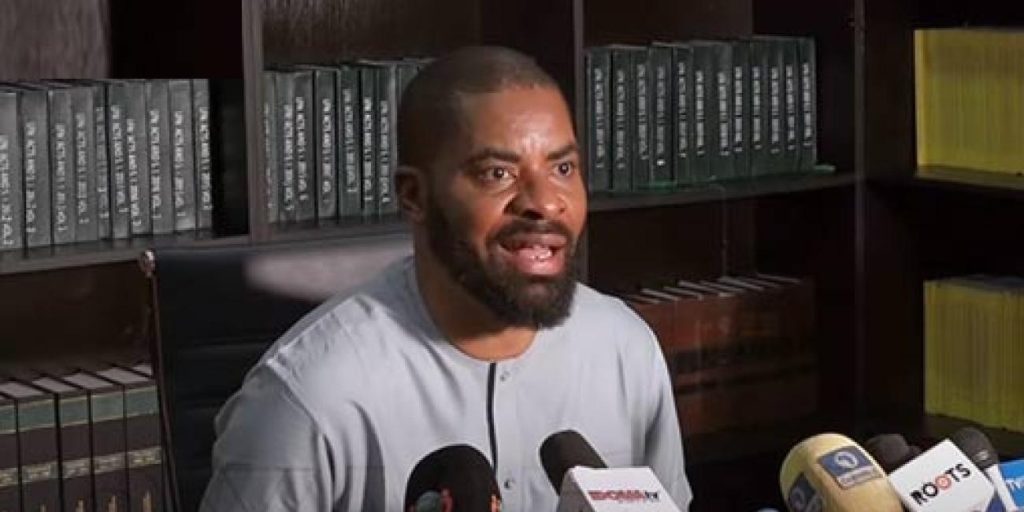
Human rights lawyer and political activist, Deji Adeyanju, has issued an apology to the leadership of the People’s Democratic Party (PDP) after allegedly making defamatory statements against them. This apology comes after Adeyanju’s remarks, which were seen by many as damaging to the reputation of the party’s leadership, sparked controversy and outrage within the PDP. The apology is a significant development in Nigerian politics, given Adeyanju’s prominence as a vocal critic of various political parties and government policies.
The Defamatory Statements
The controversy surrounding Adeyanju’s apology stems from statements he made that were perceived by members of the PDP as defamatory. While the exact nature of these statements has not been fully disclosed, they reportedly involved accusations that questioned the integrity and credibility of certain PDP leaders. These remarks were said to have created a rift between Adeyanju and members of the opposition party, with the latter accusing him of attempting to tarnish their image in the public eye.
Adeyanju, who has built a reputation as a human rights lawyer and activist, has been an outspoken critic of Nigerian politicians and government actions. His views on issues like corruption, governance, and human rights have made him a controversial figure in Nigerian politics. However, his recent statements about the PDP leadership took many by surprise, as they came from someone who has often been viewed as an advocate for transparency and justice.
The accusations made by Adeyanju reportedly centered around alleged mismanagement within the PDP and were aimed at certain prominent party figures. These remarks were seen by PDP supporters as an unfair attack, particularly given Adeyanju’s background as a human rights advocate who is expected to uphold principles of fairness and justice.
The Apology
In response to the backlash, Deji Adeyanju issued an official apology to the leadership of the PDP. In his statement, Adeyanju expressed regret for the comments he made and acknowledged that they were inappropriate. He stated that his remarks were made in the heat of the moment and that they were not intended to defame or damage the reputation of the party or its leaders.
Adeyanju’s apology was seen as a move to mend fences with the PDP, a party he had previously had a relationship with, particularly due to his activism. His public apology included a commitment to refrain from making any further statements that could harm the party or its leaders, signaling his intent to resolve the dispute amicably.
This apology is significant because it highlights the complex relationships between political actors and activists in Nigeria. While Adeyanju has frequently aligned himself with opposition parties in the past, his outburst against the PDP demonstrated the tension that sometimes exists within political relationships. The fact that Adeyanju was willing to apologize for his remarks shows a level of self-awareness and a recognition of the impact his words had on the party and its members.
Reactions to the Apology
The PDP leadership’s reaction to Adeyanju’s apology has been one of acceptance, with some leaders indicating that they appreciated his gesture and willingness to make amends. Party officials and members of the PDP have emphasized the importance of unity and reconciliation in Nigerian politics, especially as the country approaches future elections. The PDP has also indicated that it would focus on moving forward from the incident and that the apology marks the end of the matter.
However, some PDP members have raised questions about Adeyanju’s motives and whether his apology was genuine or prompted by external pressures. Some critics of Adeyanju believe that his apology was likely motivated by political calculations, particularly given his association with various political figures and parties. Nevertheless, the majority of PDP leaders have accepted the apology and have urged their members to focus on the broader issues facing the country.
The apology also seems to have cleared the air regarding any potential legal actions that could have been taken by the party. The PDP, which has seen numerous controversies and accusations levied against its leadership in the past, had the option to pursue legal remedies for defamation. However, by accepting the apology, the party appears to have chosen a more conciliatory approach, preferring to resolve the issue through dialogue rather than litigation.
Deji Adeyanju’s Political Influence
Deji Adeyanju’s political influence has fluctuated over the years. Known for his activism and his frequent critiques of both the ruling party and opposition parties, Adeyanju has played an important role in Nigerian political discourse. His efforts in advocating for human rights, good governance, and transparency have earned him both support and criticism from various quarters.
While Adeyanju has often aligned himself with opposition parties like the PDP, his criticisms have not been limited to one side of the political spectrum. This has made him a polarizing figure in Nigerian politics. His apology to the PDP leadership may signify an attempt to preserve his credibility as an advocate for justice and fairness, while also maintaining relationships with key political players.
Adeyanju’s influence in Nigerian politics cannot be overstated, as he continues to be an outspoken voice on issues related to democracy and governance. His actions, whether in the courtroom or through public commentary, have a significant impact on public opinion, making his relationship with political parties an important aspect of his career.
The Role of Human Rights Activists in Nigerian Politics
The role of human rights activists like Deji Adeyanju in Nigerian politics is increasingly important, especially as the country continues to grapple with issues such as corruption, electoral integrity, and governance. Human rights activists often serve as watchdogs, calling attention to the failings of both the government and opposition parties. However, they also face challenges, including the need to maintain impartiality while advocating for social justice.
In Nigeria, the line between activism and politics is often blurred. Many human rights activists, including Adeyanju, have been involved in political movements and have aligned themselves with different political parties over time. While this can enhance their ability to influence policy, it can also create conflicts, as activists may sometimes find themselves at odds with political leaders whom they once supported or critiqued.
Adeyanju’s apology to the PDP highlights the delicate balance that activists must maintain between speaking out against injustice and engaging with political structures. The ability to apologize and reconcile with political figures, as Adeyanju has done, shows a level of political maturity and the need for flexibility in an environment where alliances shift frequently.
Deji Adeyanju’s apology to the leadership of the People’s Democratic Party (PDP) over alleged defamatory statements marks a notable moment in Nigerian political discourse. His willingness to make amends highlights the complexities of Nigerian politics, where activists, political parties, and public figures often navigate fraught relationships. Adeyanju’s apology also underscores the importance of dialogue and reconciliation in resolving political disputes and maintaining unity within the political landscape. As Nigeria continues to face numerous challenges, both political and social, it remains to be seen how Adeyanju will continue to shape the country’s political conversations, especially in the run-up to future elections.





Responses