PDP Says Anti-Party Allegations Alone Cannot Warrant Sanctions Against Wike

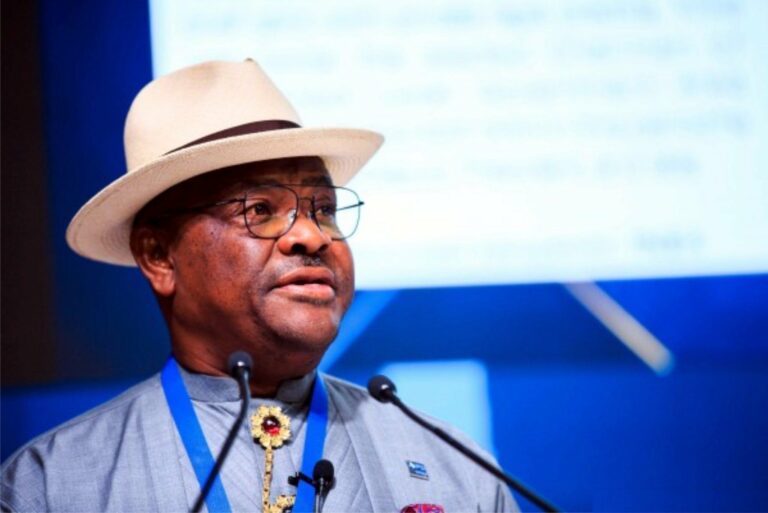
The internal wranglings within Nigeria’s major political parties often make headlines, but the People’s Democratic Party has clarified its position on how discipline is enforced within its ranks. At the centre of the conversation is Nyesom Wike, the former governor of Rivers State who now serves as the Minister of the Federal Capital Territory under President Bola Tinubu’s administration.
For months, some party loyalists and observers have called for disciplinary measures against Wike, accusing him of engaging in anti-party activities during the last general elections and in the period that followed. However, according to the PDP, no member, including Wike, can be sanctioned merely on the basis of public accusations or speculation.
The party’s Deputy National Legal Adviser, Mr. Okechukwu Osuoha, explained on Monday in Abuja that until a formal petition is written, filed, and supported with evidence, the disciplinary structures of the party cannot act. He reminded party members and the public that discipline in a political organisation must follow due process, not sentiments.
“People often ask me specifically about the Minister of the FCT, Nyesom Wike — why don’t we discipline him? Why don’t we take action? I tell them: It is not enough to merely say someone has committed an offence,” Osuoha stated firmly.
He explained that the PDP’s National Executive Committee has already set up a disciplinary committee headed by elder statesman Chief Tom Ikimi, with former Ondo State governorship candidate Eyitayo Jegede as secretary. The committee’s task is to investigate infractions and recommend sanctions where necessary. Yet, despite the establishment of this body, no member has been sanctioned so far, because no one has stepped forward with a documented complaint and verifiable proof.
According to Osuoha, anyone making an accusation against a member must be willing to take responsibility for their claims. “When that petition is written and presented, the petitioner must also be ready to come and testify. If the person accused is invited, you must come with your evidence,” he said.
This emphasis on procedure highlights the PDP’s insistence on legality and fairness in internal governance. In Nigeria’s political space, allegations of anti-party activities are often used as weapons in rivalries, but without documented proof, such accusations may not stand the test of scrutiny. For Osuoha, the party’s responsibility is to uphold its constitution and avoid arbitrary decisions that could damage its credibility.
The issue surrounding Wike is particularly sensitive because of his dual identity: a prominent PDP figure who also serves in an administration led by the rival All Progressives Congress. His acceptance of the ministerial appointment last year sparked debates within the PDP, with some members calling for his suspension or outright expulsion. Yet, others argue that he remains an asset who should not be pushed out hastily.
Osuoha’s comments suggest that the PDP is treading carefully, aware that any disciplinary action must not only be lawful but also politically strategic. Punishing a heavyweight like Wike without following due process could further fracture the party, especially in states where he retains significant influence.
The legal adviser further noted that the difficulties in enforcing discipline are not unique to the PDP but are reflective of wider problems within Nigeria’s political and legal institutions. “This is the same problem with our wider Nigerian system. It is not just about pointing out anomalies; the challenge is following them up to a conclusion,” he explained.
Observers say this reflects the weakness of institutional structures in Nigeria, where processes often collapse under the weight of political interests, leaving room for speculation and unresolved disputes. In this sense, the PDP’s challenges mirror those of the country itself: the gap between identifying wrongdoing and securing accountability.
For many party loyalists, the explanation may not be satisfying. They argue that Wike’s open defiance of party structures, particularly during the 2023 general elections when he reportedly worked against the PDP presidential candidate, is enough justification for sanction. However, without a written petition or a member willing to provide testimony and evidence, the PDP leadership insists its hands are tied.
The situation reveals the delicate balance political parties must strike between discipline and cohesion. If the PDP comes down hard on Wike without proper procedure, it risks alienating his supporters and creating deeper divisions. If it does nothing, it risks appearing weak and unable to enforce its own rules.
In the meantime, Wike continues to operate in his role as Minister of the Federal Capital Territory, wielding considerable influence in national politics while still maintaining his position as a PDP member. His situation illustrates the blurred lines that often exist in Nigerian politics, where party loyalty and personal ambition sometimes collide.
For now, the ball is in the court of those accusing Wike. If they want to see disciplinary action, they must be prepared to put their grievances in writing, back them with evidence, and appear before the committee to testify. Until then, the PDP leadership is standing by its principle that mere accusations, no matter how loud, cannot replace due process.
As the party prepares for the next electoral cycle, the handling of this issue may serve as a test of its internal democracy. Will the PDP demonstrate that it can manage internal conflicts through structured legal frameworks, or will it succumb to the pressures of political expediency?
What is clear from Osuoha’s statement is that the PDP wants to present itself as a party governed by rules rather than rumours. In an environment where political battles are often fought through media headlines and informal alliances, the insistence on petitions, testimonies, and evidence is an attempt to restore order. Whether that attempt will hold in the heat of political rivalry remains to be seen.


Responses