US Envoy Says Boko Haram Has Killed More Muslims Than Christians


A United States envoy has stated that the Boko Haram insurgency in Nigeria has claimed more Muslim lives than Christian ones, sparking intense public debate over the group’s true targets and the nature of its violence.
The remark, made by Michael Boulos, a senior adviser and businessman with close ties to the U.S. political establishment, acknowledged that although Boko Haram is widely viewed as an extremist Islamist sect targeting Christians, Muslims have borne the greater brunt of its deadly attacks over the years. A video clip of Boulos’ comments, shared online on October 17, quickly went viral, drawing mixed reactions across social media platforms.
The statement has reignited discussions about the complex dynamics of Nigeria’s 15-year insurgency. While many Nigerians agreed with the envoy’s assessment, others accused him of downplaying the religious persecution faced by Christians in the country’s northeast.
Some commenters argued that Boko Haram’s campaign of terror is indiscriminate, targeting Muslims, Christians, and anyone who opposes its ideology. “It’s not about religion anymore,” one user wrote. “Nigerian lives mean nothing to these terrorists, and the government continues to watch helplessly.”
Others insisted that the group’s attacks have always been directed primarily at Christians and places of worship, describing Muslim casualties as “collateral damage.” They cited high-profile massacres in churches across Borno, Yobe, and Ondo States as evidence of a deliberate anti-Christian agenda.
A few contributors also raised concerns about selective reporting on violence in other regions, such as the Southeast, where they claimed that separatist groups like IPOB have also targeted Christians. “If we truly want to solve our security crisis, we must stop being biased and acknowledge all forms of terrorism,” one user commented.
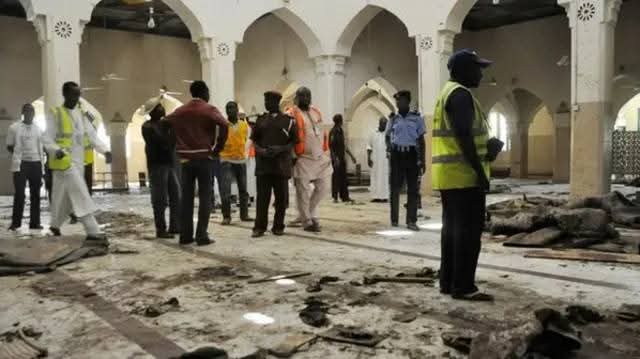
Security analysts, however, note that Boko Haram’s violence has indeed affected Muslim-majority communities the most. Many attacks have taken place in mosques, markets, and schools within predominantly Muslim northern states, displacing millions and destroying livelihoods.
Experts say the group’s victims are often Muslims who reject its extremist interpretation of Islam or refuse to join its ranks. This internal targeting, they explain, is part of Boko Haram’s effort to control and intimidate local populations.
Despite the controversy surrounding Boulos’ statement, it underscores a long-standing reality highlighted by several humanitarian organizations, including Amnesty International and the United Nations, which have documented that Muslims make up the majority of those killed or displaced by the insurgency since 2009.
The renewed debate comes as Nigeria continues to grapple with overlapping security challenges, including banditry, farmer-herder conflicts, and separatist violence. For many citizens, the envoy’s comment is another reminder that beyond religious divisions, the real tragedy is the loss of innocent Nigerian lives — regardless of faith.



Responses