Eleven Years After the Kano Grand Mosque Massacre: A Tragedy That Still Echoes Across Nigeria

Eleven years have passed since one of the deadliest terrorist attacks in Nigeria’s modern history—the brutal bombing and shooting at Kano’s Grand Central Mosque on Friday, November 28, 2014. The incident, carried out by Boko Haram, left the nation shaken and remains a painful reminder of how deeply violent extremism has scarred communities in the North. More than a decade later, the memory of that horrific day continues to evoke grief, questions, and an ongoing demand for justice.
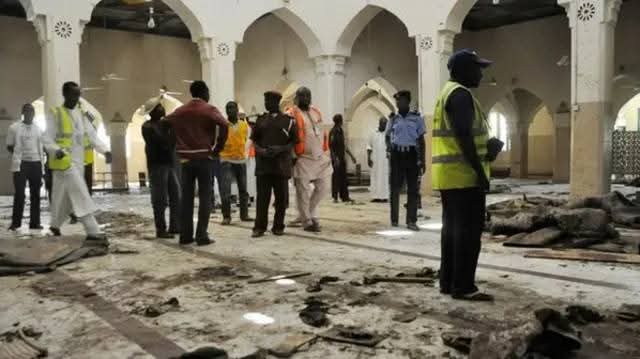
On that fateful Friday afternoon, as thousands gathered for the Juma’at prayers, three powerful explosions tore through the centuries-old Grand Mosque. The blasts, followed by indiscriminate gunfire from armed militants, created a deadly scene of chaos. Bodies lay scattered across the mosque grounds, personal items mingled with debris, and survivors ran for safety, some covered in blood and confusion. When the dust settled, at least 130 worshippers were confirmed dead, with more than 135 suffering varying degrees of injury. It was an attack that not only shattered lives but struck at the spiritual heart of Kano, one of Islam’s historic centers in West Africa.
Images from that day revealed bullet-riddled pillars, shattered tiles, and blood-stained walls—haunting reminders of the sudden violence that erupted in a place of peace and prayer. According to eyewitness reports, a suicide bomber drove directly into the crowd inside the mosque before detonating his explosives, while gunmen stationed outside opened fire on those attempting to escape. The attack marked a chilling escalation in Boko Haram’s campaign of terror across northern Nigeria.
The Kano mosque attack was not the first time that religious sanctuaries in the state were targeted. Seven years earlier, on April 13, 2007, the revered Islamic scholar Sheikh Ja’afar Mahmud Adam was assassinated during the early morning Subhi prayer inside the Dorayi Juma’at Mosque. Unknown gunmen stormed the prayer session, killing the cleric along with two other worshippers and injuring several more. Sheikh Ja’afar’s murder sent shockwaves throughout Kano, as he was widely respected as a reformist preacher and the founder of the Usman Bin Affan Centre. That assassination, and the violence that followed in later years, underscored a disturbing reality—religious institutions were no longer safe havens.
Since the 2014 mosque bombing, Boko Haram and affiliated extremist groups have continued to launch attacks on religious facilities, schools, government buildings, markets, and entire communities across the northern region. Innocent civilians—Muslims and Christians alike—have borne the brunt of this relentless violence. Women and girls have remained particularly vulnerable, enduring abductions, forced marriages, rape, and other forms of sexual exploitation. The scars of these tragedies run deep, affecting families and communities long after the attacks fade from headlines.
Eleven years on, the call for accountability remains strong. While some insurgent leaders have been killed or captured, many victims’ families feel that justice is far from complete. The identity of the masterminds behind numerous attacks, including the Kano bombing, remains unclear. There is a growing demand for Nigerian authorities to intensify intelligence gathering, strengthen security operations, and identify not only the perpetrators but also the financiers and ideological backers of terrorism.
The anniversary of the Kano Grand Mosque massacre is not merely a moment for reflection; it is a reminder that Nigeria must do more to protect its citizens from all forms of violent extremism. As MPAC Nigeria noted, the responsibility lies with the government to ensure that such atrocities never repeat themselves—and to reaffirm the right of every Nigerian, regardless of faith or ethnicity, to live and worship in peace.
Eleven years later, the echoes of that dark November day still resonate. The grief remains, the trauma persists, and the demand for justice grows louder. The memory of the worshippers who lost their lives continues to fuel the hope that one day, Nigeria will overcome the scourge of terrorism and reclaim lasting peace.


Responses