Nigeria Absent as Four African Ports Make Lloyd’s 2025 Global Top 100 Ranking

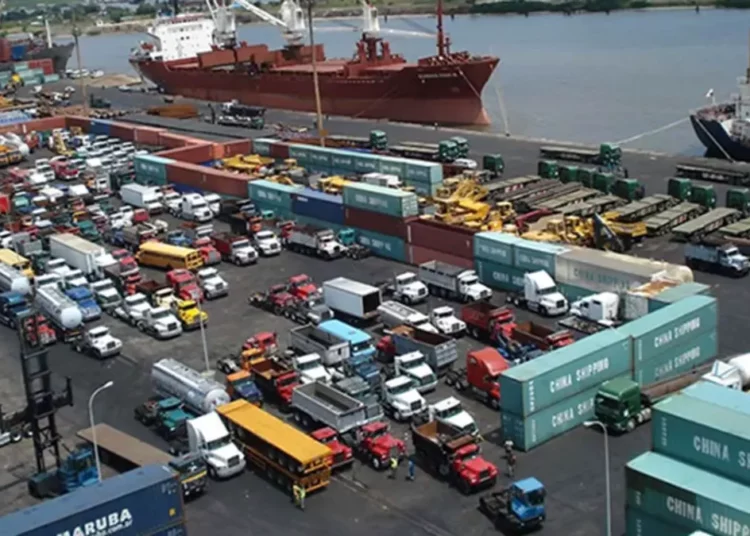
Nigeria’s major seaports have once again failed to feature in the 2025 Lloyd’s List of the world’s Top 100 Ports, highlighting the country’s persistent challenges in port infrastructure, automation, and logistics.
The latest ranking by Lloyd’s Register, a globally respected maritime authority, revealed that only four African ports made the cut this year — Morocco’s Tanger Med, Egypt’s Port Said and Alexandria, and Togo’s Lomé Port.
Africa’s Top Performers
According to the report, Tanger Med Port in Morocco remains Africa’s highest-ranked port, placing 17th globally after handling more than 10.2 million twenty-foot equivalent units (TEUs) in 2024 — an impressive 18.9% year-on-year growth. This achievement cements its reputation as the continent’s leading transshipment hub.
Egypt’s Port Said followed in 53rd place, handling 3.9 million TEUs, though it recorded a slight decline due to disruptions in the Red Sea. Alexandria Port, also in Egypt, showed strong momentum, climbing to handle 2.2 million TEUs, one of the fastest growth rates in Africa.
Completing the continent’s representation is Togo’s Lomé Port, ranked 92nd globally, with throughput exceeding 2 million TEUs. Lomé continues to strengthen its position as a vital West African maritime corridor.
Nigeria’s Absence and the Underlying Challenges
Nigeria’s exclusion from the list has once again raised concerns among maritime stakeholders. Experts attribute the nation’s lag to poor infrastructure, ageing facilities, slow cargo clearance, and limited automation in port operations.
Maritime analyst Emmanuel Onyema explained that “ageing berths, inadequate container yards, and insufficient dredging capacity create bottlenecks that cause long vessel queues and delays.” He noted that many carriers avoid Nigerian ports due to high turnaround times and logistical inefficiencies.
Onyema added that the absence of reliable road and rail connections linking ports to major industrial and commercial centers continues to hamper productivity.
“The Lekki Deep Sea Port example shows that new ports alone won’t solve the problem without efficient road and rail connectivity,” he said.
He emphasized that fragmented documentation systems and the absence of single-window automation also prolong cargo processing and increase operational costs.
Another industry expert, Chinedu Ogbonna, said the problem goes beyond infrastructure, pointing to systemic inefficiencies that make Nigerian ports unattractive to shippers and investors.
“Infrastructure creates capacity, automation converts that capacity into performance, and connectivity ensures efficient flow. Without all three, ports cannot compete globally,” he stated.
Global Trends and Africa’s Struggles
Lloyd’s List reported that global container throughput rose sharply to 743.6 million TEUs in 2024, representing an 8.1% increase from the previous year — signaling a rebound after pandemic-era disruptions.
Asia maintained dominance in global maritime trade, with Chinese ports accounting for over 40% of total container traffic, while North America and Europe also recorded steady growth due to shifting supply chains and rising consumer demand.
In contrast, African ports continue to face structural and operational challenges that limit competitiveness. The report noted that limited port automation, capacity bottlenecks, slow cargo clearance, and poor hinterland infrastructure remain key barriers.
Security issues in the Red Sea have further disrupted trade routes, forcing major shipping lines to divert vessels, increasing insurance premiums, and reducing calls at key African ports.
The Way Forward
Analysts argue that for Nigeria to regain its place in global maritime rankings, it must undertake comprehensive reforms — focusing on modernizing infrastructure, embracing automation, improving cargo clearance efficiency, and developing multimodal transport links.
Experts emphasize that public-private partnerships (PPPs) and stronger regulatory oversight will be crucial to transforming Nigerian ports into regional trade hubs.
As the global maritime industry accelerates toward automation and efficiency, Nigeria’s ability to adapt and invest in sustainable port operations will determine whether it remains a spectator or reclaims its status as a leading maritime gateway in West Africa.




Responses