The Rise and Fall of Abubakar Shekau: A Recrafted Account of Fanaticism, Violence, and Collapse


Abubakar Shekau’s life story is a grim illustration of how personal tragedy, radical ideology, and state failures combined to produce one of the most violent insurgents in modern African history. His journey—from an obscure villager in Yobe State to the ruthless leader of Boko Haram—reshaped the security landscape of the Lake Chad Basin and left behind a legacy of terror whose consequences remain profound to this day.
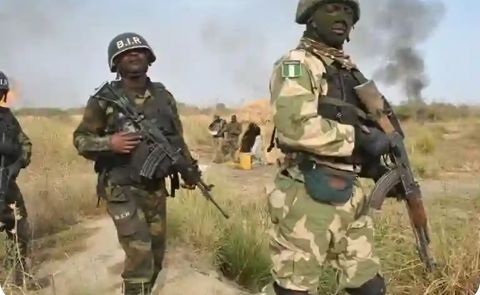
Shekau’s final days unfolded in the shadows of the vast Sambisa Forest, a terrain he once dominated with absolute impunity. In late May 2021, fighters from the Islamic State West Africa Province (ISWAP)—his former allies turned rivals—advanced deep into the forest in a coordinated operation aimed at eliminating him. This time, unlike previous clashes with Nigerian forces, Shekau’s enemies were fighters who knew both his tactics and his weaknesses. Their loudspeakers blasted a chilling offer: surrender and live. But Shekau, a man whose power had relied on uncompromising brutality, was not prepared to capitulate.
By then, Shekau’s health had drastically deteriorated. He had long suffered from recurring seizures, and witnesses later recounted that he drifted between anger and exhaustion as the noose tightened around his hiding place. ISWAP fighters encircled his forest enclave swiftly, creating what surviving loyalists described as a suffocating “silence of waiting.” Chaos followed—radio messages crackled in panic, gunfire erupted sporadically, and men scrambled through the trees shouting in Kanuri and Arabic.
Within hours, the end had come. ISWAP’s internal message later confirmed that Shekau detonated a suicide vest sometime between May 18 and 19, 2021, killing himself and several of his remaining followers. The man who had routinely praised suicide bombings as a sacred act ultimately chose the same fate for himself, refusing surrender in the final moments of his life. Unlike previous premature reports of his death, this one was corroborated by multiple insurgent sources, marking the genuine conclusion of a violent chapter.
Yet to understand why Shekau died so violently, one must first understand the path that led him there.
Born in a modest village in Yobe State, Shekau grew up in a deeply religious household under the guidance of his father, a local imam. As a child, he enjoyed football and went by the nickname Babson. His early aspirations were humble; he sold small bottles of perfume on a rickety bicycle and spent long hours memorizing the Qur’an in Maiduguri’s almajiri schools. His mother later recalled that he appeared dutiful and quiet, though deeply scarred by personal tragedies—including the death of his first wife in childbirth.
His life took a decisive turn in 2004 when he met Mohammed Yusuf, a charismatic preacher whose extremist ideology was gaining traction among disillusioned youths. Yusuf’s teachings, rooted in a literalist interpretation of the works of medieval scholar Ibn Taymiyyah, challenged the legitimacy of the Nigerian state and rejected Western influences outright. In a volatile political climate shaped by corruption, poverty, and years of military rule, these ideas resonated powerfully.
Shekau quickly emerged as one of Yusuf’s fiercest acolytes. After the 2009 uprising that left hundreds dead and culminated in Yusuf’s extrajudicial execution, Shekau went into hiding, recovered from his injuries, and re-emerged as the sect’s leader. What followed was a transformation that shocked even some within the group: under Shekau, Boko Haram evolved into an ultra-violent insurgency marked by suicide bombings, mass kidnappings, and attacks on both Christian and Muslim communities.
His doctrine sanctioned the killing of anyone—civilian or cleric, Christian or Muslim—who rejected Boko Haram’s authority. This indiscriminate brutality eventually led to schisms within the movement, paving the way for the emergence of ISWAP, which viewed Shekau’s methods as excessive and strategically destructive.
By 2013, Shekau had retreated into the Sambisa Forest, ruling his enclave with paranoia and ferocity. His forces turned schools into battlegrounds, villages into mass graves, and entire regions into humanitarian disasters. He cultivated an image of invincibility, surviving multiple military operations and repeatedly resurfacing after being declared dead.
But by 2021, his empire had eroded. ISWAP, stronger and better organized, encircled him not just militarily but ideologically. In his final hours, Shekau chose death over irrelevance.
His death marked the end of an era but not the end of the violence he unleashed. Boko Haram and its offshoots remain active, their operations still affecting millions across Nigeria, Niger, Chad, and Cameroon. The trauma inflicted by Shekau’s reign—on families, communities, and entire generations—continues to shape the region.



Responses