2027 Presidency: Obasanjo Reportedly Brokers Obi–Kwankwaso Alliance to Challenge Tinubu

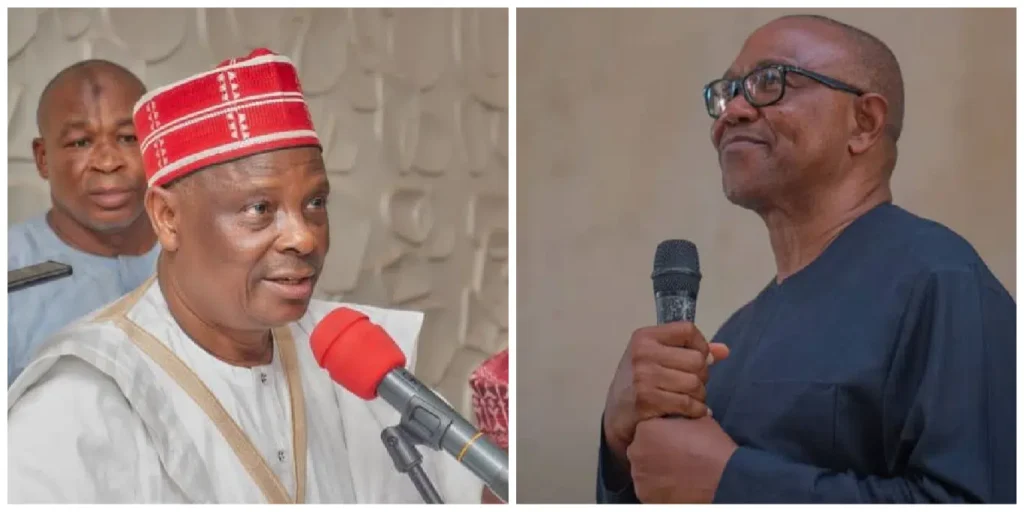
Fresh political calculations ahead of the 2027 general election suggest that former President Olusegun Obasanjo is once again playing the role of behind-the-scenes power broker, this time working to unite two of Nigeria’s most prominent opposition figures—Peter Obi and Rabiu Musa Kwankwaso—under a single presidential ticket.
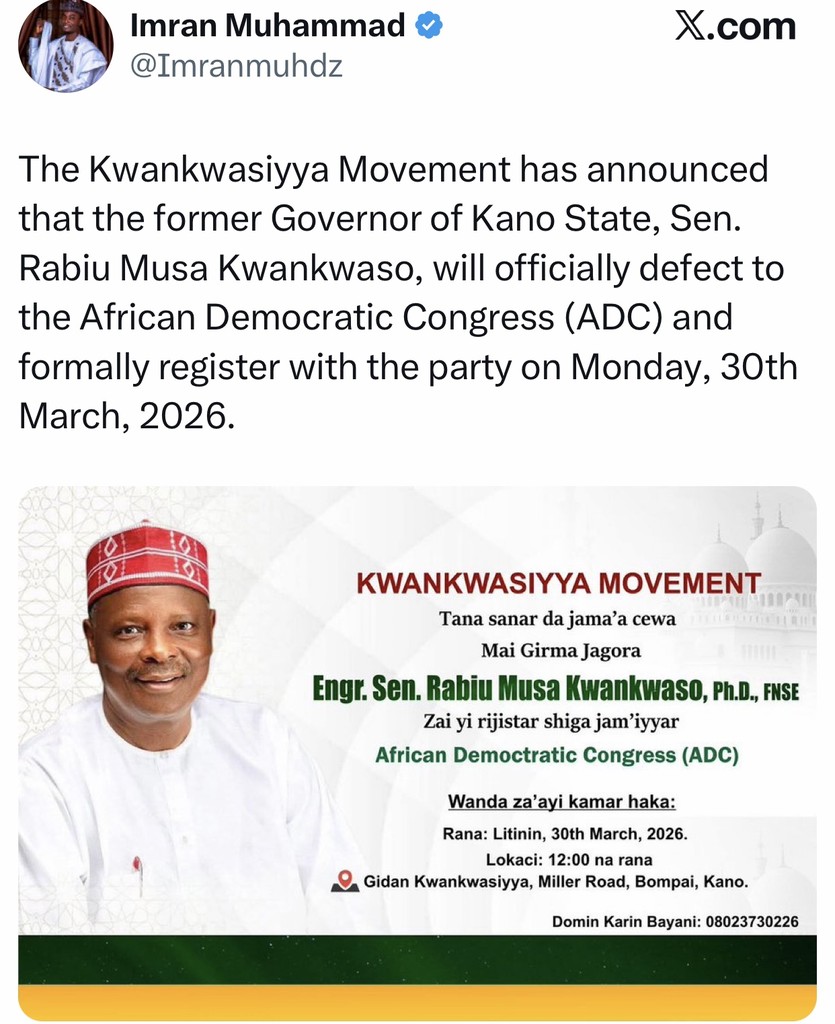
According to a report by Daily Trust, Obasanjo is spearheading efforts to convince Obi, the Labour Party’s 2023 presidential candidate, and Kwankwaso, leader of the New Nigeria Peoples Party (NNPP), to form a joint ticket under the African Democratic Congress (ADC). The former president reportedly believes that an Obi–Kwankwaso alliance offers the strongest chance of unseating President Bola Ahmed Tinubu in 2027.
Sources familiar with the discussions say Obasanjo has tentatively persuaded Kwankwaso to accept the vice-presidential slot, with Obi leading the ticket. The strategy, insiders claim, is to confront former Vice President Atiku Abubakar directly at the ADC presidential primaries, rather than splitting opposition votes across multiple platforms as happened in 2023.
One source disclosed that Kwankwaso recently visited Obasanjo in Abeokuta, where the former president encouraged him to formally join the ADC and align with Obi. The source added that former military president Ibrahim Babangida had earlier advised Kwankwaso along similar lines, although IBB reportedly stopped short of proposing a vice-presidential role.
“The thinking is that the current political momentum—both within Nigeria and internationally—favours Peter Obi,” the source said. “Obasanjo is one of Obi’s strongest promoters. Even Atiku himself has previously admitted that it was Obasanjo who recommended Obi as his running mate in 2019.”
The calculation, according to insiders, is largely pragmatic. Atiku Abubakar remains a dominant force within opposition party structures, particularly in primary elections. Acting alone, neither Obi nor Kwankwaso is believed to have the internal leverage to defeat Atiku for the ADC ticket. Together, however, they may be able to pool their political capital, regional strengths, and grassroots support to mount a credible challenge.
Kwankwaso, through one of his close aides, confirmed that “high-level discussions with key stakeholders across the political spectrum” are ongoing, though he stopped short of confirming a definitive alliance or meeting involving Obi and Obasanjo.
“Our party has not yet finalized its position,” the aide said, “but we are actively engaged with political parties and individuals who share our belief that Nigeria urgently needs a departure from the current climate of insecurity and systemic collapse. Our position will soon be made public.”
Despite these strategic maneuvers, public reaction has been sharply divided. Supporters of the alliance argue that an Obi–Kwankwaso ticket is the only realistic opposition configuration capable of seriously challenging Tinubu’s political machinery. They point to Kwankwaso’s influence in the North and Obi’s strong urban and youth support as a potentially formidable combination.
Critics, however, remain skeptical. Some argue that Kwankwaso’s strong personality and political ego could complicate governance, should the alliance succeed. Others insist that Kwankwaso is “too politically weighty” to accept a vice-presidential role, while another camp believes Obi has already missed his window and should wait until 2031.
There are also those who dismiss the entire project as coming too late, noting that Tinubu’s incumbency advantage, party structure, and elite alliances place him several steps ahead. For this group, Obasanjo’s involvement is seen more as symbolic than decisive—an endorsement without real electoral weight.
Meanwhile, some ADC loyalists have raised concerns about internal fairness, questioning whether newer entrants should be allowed to dominate the party’s ticket at the expense of founding members. Others argue that unless Atiku is fully accommodated or persuaded to step aside, any coalition effort risks collapsing under internal rivalry.
Ultimately, the reported Obi–Kwankwaso alliance reflects a broader truth about Nigerian politics: opposition unity remains both the greatest opportunity and the greatest obstacle. While Obasanjo’s intervention has reignited debate and speculation, the success of such a coalition will depend not on meetings and endorsements alone, but on genuine compromise, disciplined coordination, and the ability to translate public frustration into electoral victory.
As 2027 approaches, one thing is certain—the battle lines are being drawn early, and Nigeria’s opposition is once again at a crossroads between fragmentation and collective strategy.




Responses