Kwankwaso Set to Dump NNPP for ADC After Abuja Meeting with Atiku, Shakes Up 2027 Race

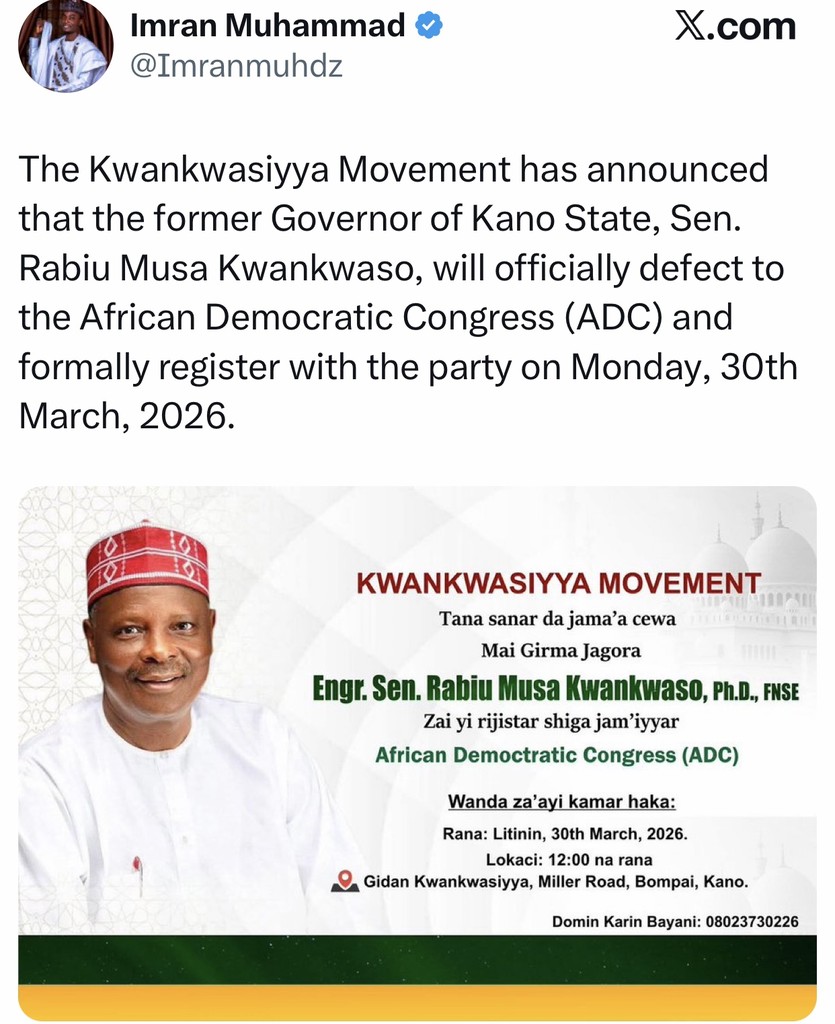
Nigeria’s political landscape may be on the brink of another major realignment as former Kano State governor and influential northern politician, Rabiu Musa Kwankwaso, is reportedly set to defect to the African Democratic Congress (ADC) on Monday, March 30, 2026. The development follows a meeting with former Vice President Atiku Abubakar in Abuja, fueling speculation about a broader opposition coalition ahead of the 2027 general elections.
Though official confirmation is still awaited, the reported move has already sparked intense debate across political circles, with many viewing it as a potentially game-changing development. Kwankwaso, who was the presidential candidate of the New Nigeria Peoples Party (NNPP) in the 2023 elections, commands significant political influence, particularly in Kano State and the wider North-West region. His political machinery, widely known as the Kwankwasiyya movement, has proven to be a formidable grassroots force.
If the defection materializes, it could mark a strategic shift in opposition politics, especially within the ADC, which is increasingly being seen as a possible platform for a united front against the ruling All Progressives Congress (APC) in 2027. Analysts believe Kwankwaso’s entry into the ADC could strengthen its internal structure, boost delegate numbers, and enhance its bargaining power during primary elections.
There is also growing speculation about how this move might affect other key opposition figures, particularly Peter Obi, whose strong showing in the 2023 elections galvanized a large youth-driven support base known as the “Obidient” movement. Some observers suggest that Kwankwaso’s defection could open the door for strategic alliances, possibly influencing ticket arrangements within the ADC.
However, opinions remain sharply divided. While supporters argue that Kwankwaso brings electoral value, especially in Kano where he previously demonstrated significant political strength, critics question whether his influence remains as potent as it once was. Some political commentators point out that key Kano stakeholders have since aligned with the APC, potentially weakening his base.
Others view the reported move through a more strategic lens, suggesting it may not necessarily be about immediate electoral gains but rather long-term positioning. There are arguments that Kwankwaso could be maneuvering for relevance ahead of 2031, either as a presidential contender or as a kingmaker within a broader coalition.
The reactions from the public and political observers have been mixed. Supporters of the ADC and opposition coalition see the move as a step toward consolidating forces capable of challenging the ruling party. On the other hand, skeptics argue that opposition parties in Nigeria have historically struggled with unity, often failing to sustain alliances due to internal rivalries and competing ambitions.
Meanwhile, attention is also turning to how the ruling APC and President Bola Ahmed Tinubu might respond to this potential shift. While some believe the APC remains firmly in control, particularly in key northern states, others argue that emerging alliances could gradually erode its dominance if managed effectively.
As Monday approaches, all eyes will be on Kwankwaso and the ADC for official confirmation. Whether this reported defection becomes reality or not, one thing is clear: the political permutations ahead of the 2027 elections are already intensifying, with alliances forming, shifting, and evolving in ways that could redefine Nigeria’s electoral landscape.


Responses