FG Unveils Nigeria’s First Floating Solar Power Plant at UNILAG, Signals Major Push for Clean Energy

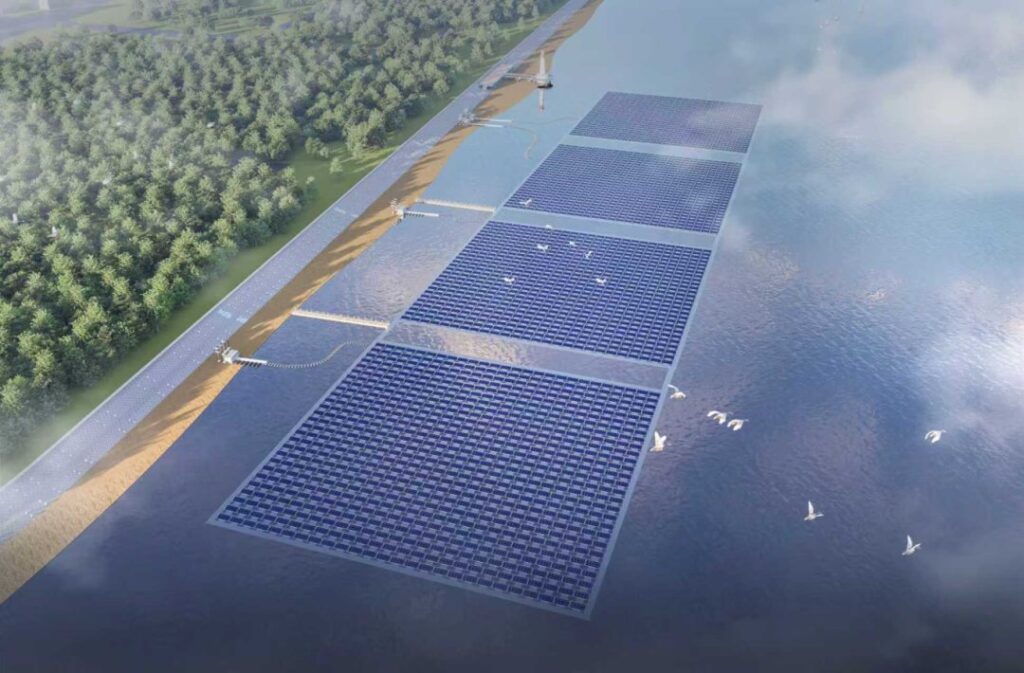
The Federal Government has taken a significant step toward strengthening Nigeria’s renewable energy landscape with the announcement of a 7-megawatt floating solar power project at the University of Lagos (UNILAG). The project, which will be constructed on the lagoon waters surrounding the university campus, is expected to become Nigeria’s first floating solar power station upon completion, marking a historic milestone in the country’s transition to clean and sustainable energy.
The project will be executed by the China Civil Engineering Construction Corporation (CCECC), which recently won the bid to deliver the innovative solar facility. According to details shared by the company, the floating solar plant will provide UNILAG with a reliable, safe, and environmentally friendly power supply, significantly reducing the institution’s dependence on the national grid and diesel-powered generators.
Supporters of the initiative describe it as a bold and forward-looking intervention that aligns with the Federal Government’s broader renewable energy agenda. The project is also being framed as part of the ongoing “Energising Education Programme” (EEP), an initiative originally launched under the Buhari administration and now being continued by the Tinubu administration. The programme is implemented through the National Rural Electrification Agency (REA) and is designed to deliver affordable, clean, and uninterrupted power to federal universities and teaching hospitals across Nigeria.
Under this initiative, dozens of tertiary institutions have already benefited from solar-powered energy solutions. Government officials have repeatedly highlighted the positive impact of stable electricity on academic activities, research output, healthcare delivery in teaching hospitals, and overall campus life. The floating solar project at UNILAG is therefore seen as both a continuation and an expansion of these efforts, introducing a new technology that maximises available water surfaces while preserving land for other uses.
Advocates of floating solar technology point out that it offers several advantages over conventional ground-mounted systems. By being installed on water bodies, floating solar panels reduce land acquisition challenges, minimise dust accumulation, and benefit from the cooling effect of water, which can improve efficiency and extend the lifespan of the panels. For a coastal city like Lagos, the technology also represents an innovative response to space constraints and rising energy demands.
However, reactions to the announcement have been mixed. While many Nigerians have applauded the project as a sign of technological progress and a step toward energy diversification, others have expressed skepticism. Critics argue that a 7MW project is relatively small given Nigeria’s vast power deficit and have questioned the overall cost, transparency, and long-term maintenance of such initiatives. Some have also raised concerns about environmental risks, including debris management and the durability of installations in lagoon conditions.
Despite the criticism, government officials and supporters maintain that the UNILAG floating solar plant should be seen as a pilot project with the potential to be replicated on a larger scale across the country. They argue that innovation often begins modestly and expands with experience, local capacity development, and improved regulatory frameworks.
If successfully delivered and sustained, the floating solar power project could position Nigeria as a regional leader in renewable energy innovation while demonstrating how universities can serve as testing grounds for cutting-edge infrastructure solutions. For UNILAG, the project promises improved energy reliability, reduced operating costs, and a cleaner campus environment—outcomes that could redefine how public institutions consume and generate power in Nigeria.





Responses