Understanding Daniel’s Refusal of the King’s Food and Wine in the Book of Daniel

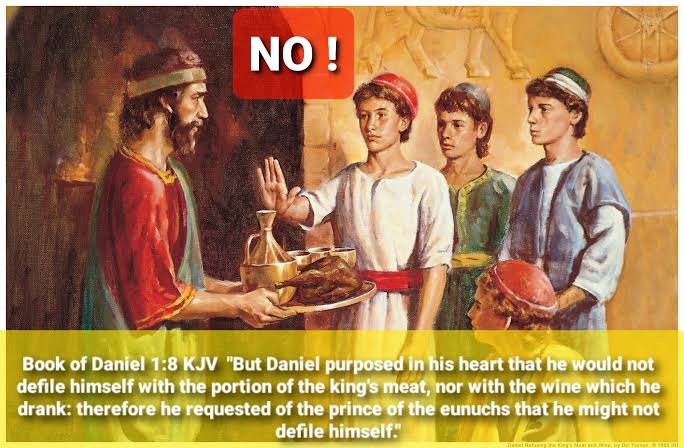
The account of Daniel refusing the king’s food and wine in the Book of Daniel is one of the most widely discussed passages in biblical interpretation. The story appears in Daniel 1, where Daniel and his companions were taken into captivity in Babylon after the fall of Jerusalem.
The young Hebrews were selected to be trained in the king’s palace under Nebuchadnezzar II, the Babylonian ruler. As part of their training, they were offered food and wine from the royal table, which represented the finest provisions available in the kingdom.
However, Daniel refused to partake in these royal delicacies, choosing instead to request a diet of vegetables and water.
The Traditional Interpretation
Many biblical scholars believe Daniel’s refusal had to do with the Jewish dietary laws given in the Torah, particularly in Leviticus and Deuteronomy.
Under these laws, certain foods were considered unclean for the people of Israel. In addition, meat served in pagan courts was often sacrificed to idols before being consumed. Eating such food could be interpreted as participation in idol worship, which would violate the commandment to worship only the God of Israel.
Because of this, Daniel’s refusal is often seen as an act of faithfulness to God’s covenant.
A Symbolic Act of Loyalty
Another important interpretation focuses on spiritual loyalty rather than diet itself. In ancient cultures, eating from the king’s table could symbolize political allegiance and cultural assimilation.
By rejecting the king’s provisions, Daniel may have been making a statement that although he lived in Babylon, his ultimate loyalty remained with the God of Israel.
This act therefore represented a deliberate effort to maintain spiritual identity in a foreign culture.
The Role of Conscience and Influence
Your reflection referencing First Epistle to the Corinthians introduces another thoughtful perspective.
In 1 Corinthians 8:8–9, the Apostle Paul the Apostle explains that food itself does not bring a person closer to God. However, believers must be careful not to use their freedom in a way that causes others with weaker understanding to stumble.
Applying this idea to Daniel’s situation suggests that his decision might not have been only about personal purity but also about protecting the faith of others around him, including fellow Hebrew captives.
If younger or less spiritually mature Israelites in the royal court saw Daniel freely eating the king’s food, they might assume that abandoning their covenant practices was acceptable.
By refusing the king’s provisions, Daniel set an example that encouraged others to remain faithful despite pressure to conform.
The Possible Issue of Sacred Vessels
Another interesting theory relates to the use of temple vessels taken from Jerusalem.
Later in Daniel 5, Belshazzar is described using sacred vessels from the temple in Jerusalem during a feast. These holy items were originally dedicated to the worship of God but were later used in pagan celebrations.
Some interpreters suggest that similar practices might have already been taking place earlier in the Babylonian court. If sacred vessels were used to serve royal food and wine, participating in the feast could symbolically represent acceptance of the profaning of holy things.
If Daniel knew or suspected this, his refusal would have been another way to avoid participating in an act that dishonored God.
The Outcome of Daniel’s Choice
According to the biblical narrative, Daniel requested a ten-day test with vegetables and water instead of the king’s rich food.
At the end of the test period, Daniel and his companions appeared healthier and stronger than those who ate from the royal table. As a result, the steward allowed them to continue their chosen diet.
The passage concludes by stating that God blessed them with knowledge, wisdom, and understanding, with Daniel receiving particular insight into dreams and visions.
A Lesson in Faithfulness
Ultimately, the story of Daniel’s refusal is widely seen as a lesson about faithfulness under pressure.
Whether the issue involved dietary law, idol sacrifice, cultural loyalty, or the conscience of others, Daniel’s decision demonstrated a willingness to remain faithful to God even when surrounded by a foreign culture and powerful authority.
For many believers today, the passage serves as a reminder that maintaining spiritual convictions often requires courage, discipline, and a commitment to live differently from the surrounding environment.






Responses