Tax Dispute Emerges as Nigeria’s Revenue Service Moves Against OPay Offices

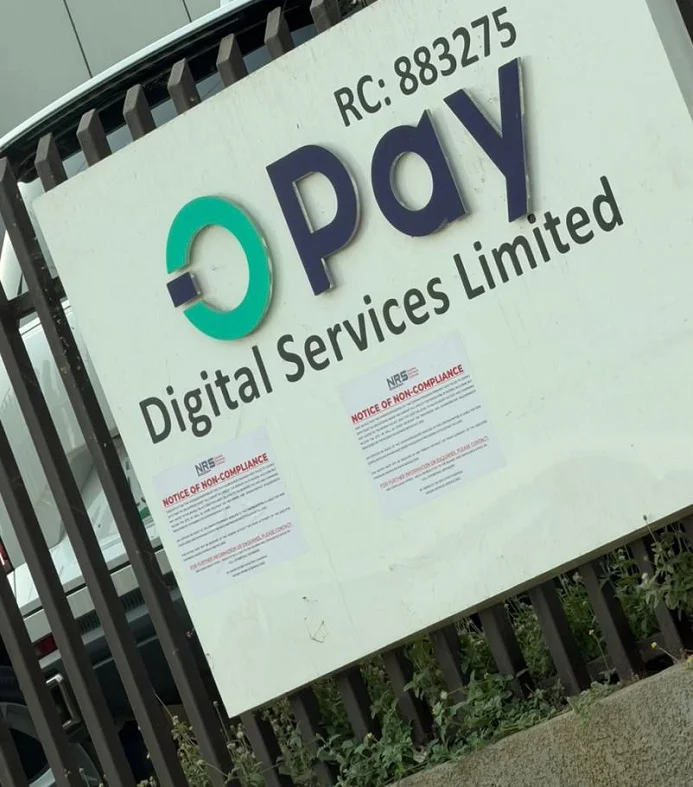
Nigeria’s federal tax authority has reportedly taken enforcement action against the offices of digital payments company OPay in Lagos and Abuja over alleged violations of tax regulations.
The move was reportedly carried out by the Nigeria Revenue Service (NRS), the federal agency responsible for assessing and collecting taxes in Nigeria.
According to reports, officials from the agency sealed the fintech company’s offices in both cities, placing notices on the premises indicating that the enforcement action was linked to alleged breaches of provisions under the Nigeria Tax Act 2025.
Alleged Tax Violations
The reported dispute centers on compliance issues related to Value Added Tax (VAT) and Companies Income Tax (CIT) obligations.
Notices reportedly placed on the affected offices warned that the seals must not be tampered with or removed without the authorization of the Executive Chairman of the Nigeria Revenue Service.
The development suggests an ongoing compliance dispute between the tax authority and the fintech firm.
However, reports circulating online also indicate that the situation may still be evolving, with some claims suggesting the matter could involve regulatory clarifications rather than a complete shutdown of the company’s operations.
OPay’s Rapid Rise in Nigeria
OPay, a digital financial services platform backed by Chinese investors, entered the Nigerian market in 2018 and has since grown rapidly.
The platform provides mobile payments, transfers, merchant services, and financial tools for millions of users across the country.
Over the years, OPay has become one of Nigeria’s most widely used fintech platforms, competing with other major digital payment services in the country’s expanding financial technology sector.
Its growth has been driven largely by Nigeria’s increasing adoption of digital payments and mobile banking solutions.
Concerns Over Foreign Tech Platforms
Public policy analyst Emmanuel Adeniyi said the situation reflects a pattern often seen when large foreign-backed technology platforms operate in developing digital economies.
According to Adeniyi, companies sometimes experience rapid expansion before facing greater scrutiny from regulators.
He noted that governments typically begin asking more questions about financial flows, regulatory compliance, and data management once these platforms achieve significant market influence.
The enforcement action against OPay therefore highlights broader questions about how foreign technology firms operate within Nigeria’s financial ecosystem.
Growing Global Scrutiny of Tech Companies
The situation also mirrors global trends in which governments are tightening oversight of international technology companies.
For example, regulatory debates around the social media platform TikTok in the United States intensified during the administration of former president Donald Trump, particularly over issues related to ownership, national security, and data protection.
Similarly, regulators in several countries have increased scrutiny of fintech platforms, digital payment services, and multinational technology firms.
Nigeria’s growing digital economy has also prompted regulators to pay closer attention to how such platforms handle taxation, data governance, and financial transactions.
Implications for Nigeria’s Digital Economy
The reported enforcement action has raised concerns among users and stakeholders in Nigeria’s fintech industry.
Many Nigerians rely heavily on mobile payment platforms like OPay for daily financial transactions, including transfers, bill payments, and merchant purchases.
Industry observers say the outcome of the dispute could influence how regulatory authorities interact with foreign-backed technology companies operating in Nigeria’s rapidly expanding fintech ecosystem.
If confirmed, the action could signal a tougher regulatory stance toward compliance issues in the country’s digital payments sector.
As investigations continue, stakeholders across Nigeria’s financial and technology industries will be closely watching how the dispute between OPay and the Nigeria Revenue Service is resolved and what it may mean for the future of digital finance in the country.






Responses