CAF Overturns AFCON 2025 Final Result, Declares Morocco Champions After Senegal Forfeiture

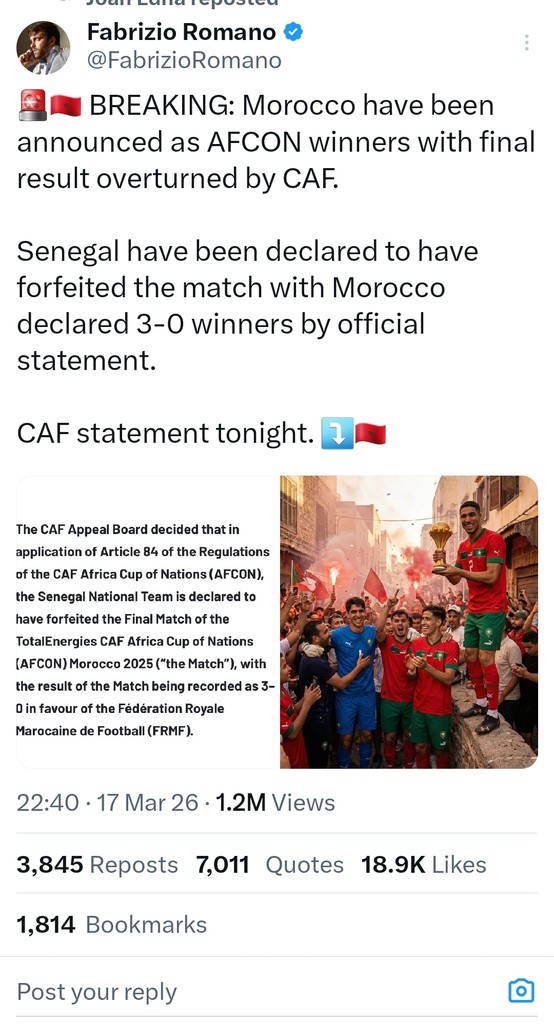
In a stunning and highly controversial development, the Confederation of African Football (CAF) has officially overturned the result of the Africa Cup of Nations 2025 final, declaring Morocco as champions after ruling that Senegal forfeited the match.
The decision, announced by CAF’s Appeal Board, has sent shockwaves across the football world, sparking widespread debate among fans, analysts, and stakeholders about fairness, governance, and the integrity of African football.
CAF’s Ruling and Legal Basis
According to the official statement, CAF applied Articles 82 and 84 of its competition regulations in reaching the verdict. The Appeal Board upheld a protest filed by the Moroccan Football Federation, ruling that Senegal’s conduct during the final constituted a breach of the rules.
As a result, the initial decision by the Disciplinary Board was set aside, and the match was officially recorded as a 3–0 victory in favour of Morocco. This effectively strips Senegal of the title and awards it to Morocco—despite the match already having been played and celebrated.
What Led to the Forfeiture?
While full details of the ঘটনাক্রম remain under scrutiny, reports suggest that Senegal’s team may have walked off the pitch during the final following a disputed refereeing decision. Under CAF regulations, such actions can be deemed a refusal to continue the match, which may result in forfeiture.
If confirmed, this would explain CAF’s reliance on Article 84, which provides for a 3–0 loss in cases where a team is found guilty of abandoning a match.
Unprecedented Decision Sparks Outrage
The ruling has triggered intense reactions across Africa and beyond. Many fans have described the decision as unprecedented, arguing that football results should be determined on the pitch rather than through post-match rulings.
Critics have also questioned the timing of the decision, noting that it came well after the final had concluded and celebrations had already taken place. For many supporters, this raises concerns about consistency, transparency, and possible political influence within African football administration.
On the other hand, some observers argue that rules are rules, and any team that violates established regulations must face the consequences—regardless of the stage of the competition.
Implications for Both Teams
For Morocco, the ruling grants them official status as AFCON 2025 champions, though the manner of victory may affect how the title is perceived historically.
For Senegal, the decision represents a significant blow—not only losing the trophy but also facing potential reputational damage. Questions also remain about whether the team will challenge the ruling further, possibly through the Court of Arbitration for Sport (CAS).
What Happens Next?
The controversy is far from over. There are growing calls for further clarification from CAF, as well as demands for reforms to ensure greater accountability in decision-making processes.
Additionally, practical questions remain unresolved: Will Senegal be required to return the trophy? Will Morocco hold a new celebration? And how will this decision affect future tournaments?
A Defining Moment for African Football
This incident may go down as one of the most controversial moments in the history of the Africa Cup of Nations. Beyond the immediate outcome, it highlights deeper issues within the administration of the sport in Africa.
As reactions continue to pour in, one thing is clear: the decision has reshaped the narrative of AFCON 2025 and ignited a conversation that could influence the future of football governance on the continent.


Responses