AFCON 2025 Final Controversy Deepens as Senegal Rejects CAF Ruling, Heads to CAS

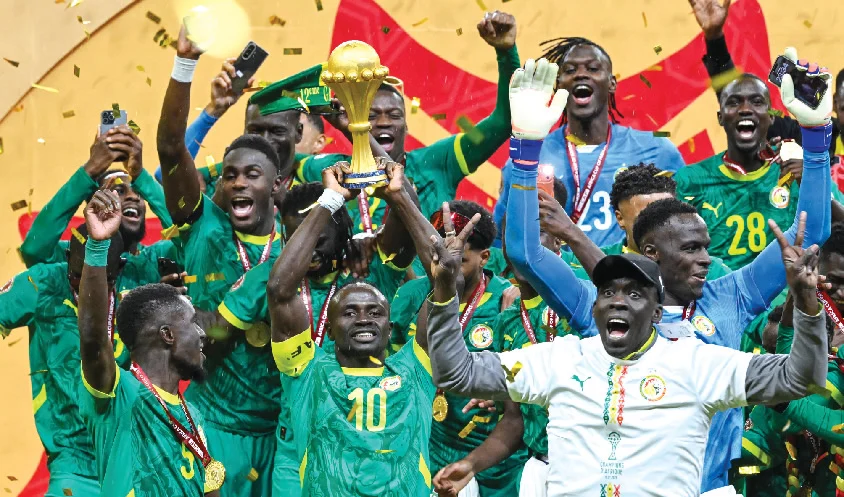
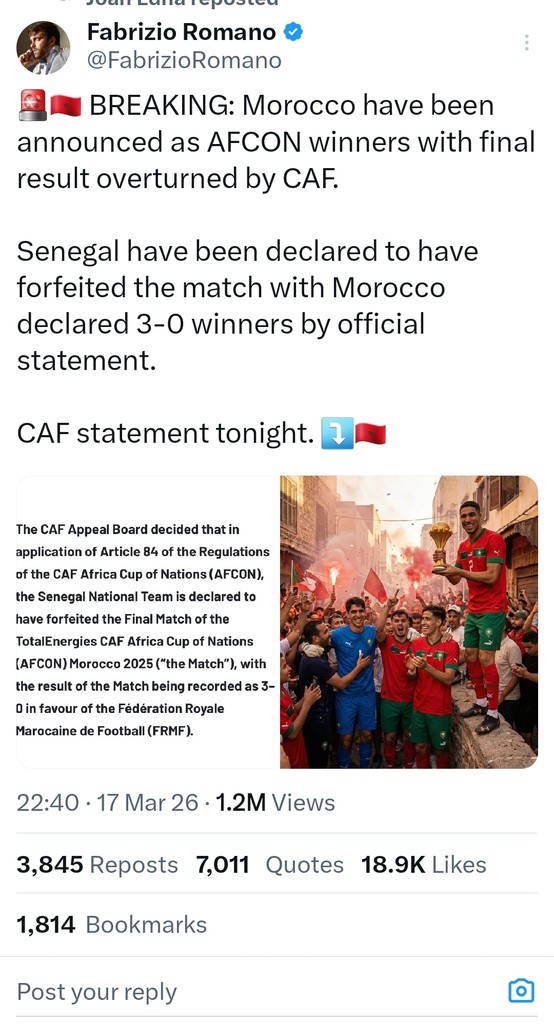
A major controversy has erupted in African football after Confederation of African Football (CAF) awarded the 2025 Africa Cup of Nations (AFCON) title to Morocco following a dramatic reversal of the final result against Senegal.
The decision, announced by CAF’s Appeal Board, declared that Senegal forfeited the final match played in Rabat on January 19, 2026, awarding Morocco a 3–0 victory. The ruling has since sparked outrage, with the Senegalese Football Federation (FSF) rejecting the verdict and confirming plans to challenge it at the Court of Arbitration for Sport (CAS) in Lausanne, Switzerland.
How the Controversy Began
The dispute stems from chaotic scenes during the AFCON final, when Senegalese players briefly walked off the pitch after a controversial disallowed goal and a penalty decision in favor of the host nation. Despite the disruption, the match continued and was concluded on the field.
However, Morocco lodged a formal protest, arguing that Senegal’s temporary walk-off constituted misconduct under CAF regulations. The Appeal Board later upheld this argument, citing violations of Articles 82 and 84, which deal with player conduct and match forfeiture.
CAF’s ruling overturned an earlier decision by its Disciplinary Board, which had initially dismissed Morocco’s complaint. The Appeal Board justified its reversal by stating that Morocco’s “right to be heard” was not respected in the initial proceedings.
Senegal’s Strong Rejection
In a strongly worded statement, the Senegalese Football Federation described the decision as “unfair, unprecedented, and unacceptable,” warning that it undermines the credibility of African football.
The federation insisted that it would pursue justice through the Court of Arbitration for Sport, the highest authority for resolving international sports disputes. According to FSF officials, the appeal aims to defend not only Senegal’s position but also the integrity of the competition.
Questions Over CAF’s Decision
The ruling has raised serious concerns among analysts and fans alike. One of the major criticisms is the timing of the decision—coming after the match had already been completed and a winner determined on the pitch.
Many argue that if Senegal’s actions warranted forfeiture, the decision should have been made immediately during or after the incident, rather than retrospectively overturning the final result. Others believe that alternative sanctions, such as fines or suspensions, could have been more appropriate than stripping a team of a continental title.
Impact on African Football
The controversy has placed the Africa Cup of Nations under intense scrutiny, with fears that the tournament’s credibility could suffer long-term damage. Critics warn that decisions perceived as inconsistent or politically influenced could erode trust among players, teams, and supporters.
For Morocco, the ruling secures a historic title, but it also comes amid widespread debate about fairness and sporting integrity. For Senegal, the battle is far from over, as the CAS appeal could potentially overturn CAF’s decision or order a different remedy.
What Happens Next
The case now moves to the Court of Arbitration for Sport, where legal and procedural arguments will be examined in detail. CAS rulings are binding, meaning its decision will likely bring finality to one of the most controversial episodes in AFCON history.
Until then, the 2025 tournament remains overshadowed by dispute, with the spotlight firmly on CAF’s governance and the broader question of fairness in African football.
As the situation unfolds, fans across the continent—and beyond—will be watching closely to see whether justice, as defined by the sport’s highest legal authority, will ultimately prevail.


Responses