Adeleke’s Re-Election Bid Threatened as PDP Crisis Deepens in Osun

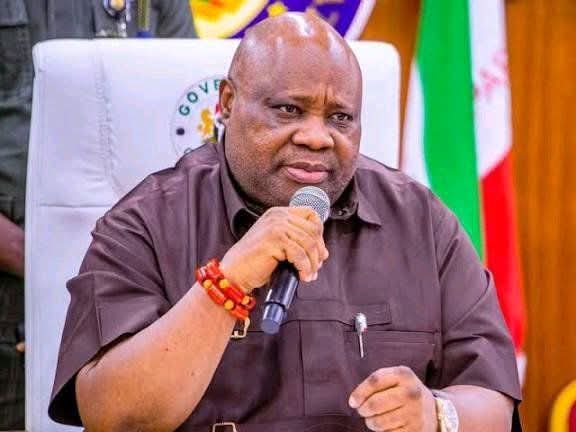
Governor Ademola Adeleke is confronting the most turbulent political moment of his career as the 2026 Osun State governorship election draws closer. What should ordinarily be a smooth journey toward securing a second-term ticket has evolved into a complex battle for political survival, as the People’s Democratic Party (PDP) — the very platform that brought him to power — slips deeper into chaos. With the party’s national structure fractured, its legitimacy questioned, and its ability to conduct valid primaries in doubt, Adeleke faces an urgent dilemma: stay and hope the party recovers, or defect before it becomes too late.
At the centre of this crisis is the PDP’s devastating internal war, one so severe that the party appears unable to meet even basic institutional requirements. The Independent National Electoral Commission (INEC) requires recognised national officers — the National Chairman and National Secretary — to authenticate nomination processes. Yet, in today’s PDP, both positions are claimed by rival factions, making coherent decision-making nearly impossible. The December 15, 2025 INEC deadline for governorship primaries is fast approaching, and any delay could lock Adeleke out entirely.
What began as internal disagreements has escalated into a full-blown, violent confrontation. The Turaki–Makinde faction, led by newly-elected National Chairman Tanimu Turaki with the support of Oyo’s Seyi Makinde and Bauchi’s Bala Mohammed, seized control of the party after a controversial convention in Ibadan. They expelled key rivals, deepening the divide. Opposing them is the Wike–Anyanwu bloc, led by FCT Minister Nyesom Wike and Senator Samuel Anyanwu, who insists he remains the authentic National Secretary despite his expulsion.
The crisis climaxed on November 18 when both factions stormed the PDP national headquarters, leading to tear gas, street-level clashes, and a tense standoff at Wadata Plaza. In a bizarre twist, Turaki even appealed publicly to U.S. President Donald Trump to intervene and “save Nigerian democracy,” a move analysts described as a sign of institutional collapse.
This national breakdown has severe implications for Governor Adeleke. Senator Anyanwu, recognised by the Wike faction, has vowed not to sign any nomination documents for Osun. With the two required signatories now belonging to opposing camps, INEC is unlikely to recognise any primary conducted under the current chaos. A precedent has already been set in Ekiti, where the commission rejected letters and actions not jointly endorsed by the recognised officers.
Adeleke, therefore, risks becoming a governor without a platform.
Behind the scenes, the governor is now exploring escape routes. Discussions with the Accord Party and the All Progressives Grand Alliance (APGA) are reportedly ongoing, with Accord appearing to be the most advanced option. Smaller parties offer quick nomination processes, but lack extensive structures, meaning Adeleke would need to rapidly build a statewide network to remain competitive.
The internal structure of the Osun PDP further complicates matters. The once-reliable Ife Federal Constituency is now in turmoil, with a recent vote of no confidence passed on top party figures. At a time when Adeleke needs unity, the party’s foundation in its strongest territories is cracking.
Meanwhile, the All Progressives Congress (APC) watches from a distance, confident that the PDP’s collapse plays directly into its hands. APC strategists believe Osun is theirs to reclaim and are crafting a strategy built around dominating key battlegrounds like Ede and Ile-Ife. Although the APC itself is not without internal rifts, the party remains far more organised than the PDP at the national level.
Political analysts warn that what is happening in the PDP signals a deeper national danger. A collapsing opposition destabilises the balance of power, weakens democratic accountability, and risks turning Nigeria into a de facto one-party state.
For Adeleke, three options lie ahead: remain in the PDP and hope for an unlikely reconciliation; defect to the APC and risk humiliation; or join a smaller party and gamble on his personal popularity. Each path carries significant risks. Each demands rapid calculation.
The coming weeks will shape not just Adeleke’s future, but also the political landscape of Osun — and possibly the future of opposition politics in Nigeria.





Responses