‘Christian Genocide’ Debate Sparks Tense Exchange Between Piers Morgan and Foreign Minister Tuggar

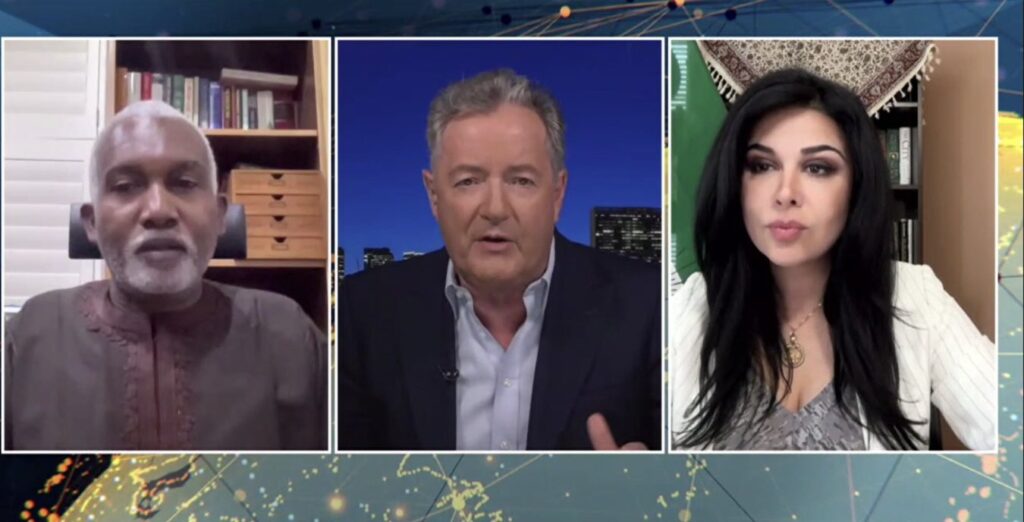
A heated conversation has unfolded across social media following an appearance by Nigeria’s Minister of Foreign Affairs, Yusuf Maitama Tuggar, on the Piers Morgan Uncensored programme. The interview, which has not yet aired, was part of the Minister’s recent media engagements aimed at countering international narratives suggesting that the Nigerian government is turning a blind eye to the killing of Christians in the country. His media outreach also followed recent statements by former U.S. president Donald J. Trump, who threatened sanctions or military intervention in response to escalating violence perpetrated by terrorist groups.
Tuggar announced his appearance on the programme and emphasized that his statements were grounded in verifiable data addressing what he described as misleading claims of systematic religious persecution in Nigeria. He maintained that both Christians and Muslims suffer in the fight against extremism, and he urged international observers to avoid oversimplifying a complex security situation. He insisted on the need for the entire interview to be aired “exactly as recorded,” stating that Nigeria’s reality should not be shaped by “external biases.”
Piers Morgan responded publicly, suggesting that the Minister appeared anxious. In his comment, Morgan wrote that the show is titled Uncensored precisely because guests’ comments are aired in full, adding that public judgment on Tuggar’s remarks would come after the episode is broadcast. The exchange prompted Tuggar to reply that he remained “as cool as a cucumber,” while subtly mocking Morgan for repeatedly mentioning “Chibok boys” instead of “Chibok girls,” a slip he suggested revealed the host’s limited understanding of Nigeria’s security challenges.
The back-and-forth quickly spread across online platforms, triggering a wave of reactions from Nigerians with sharply divided opinions. Some commenters argued that the Minister’s defensive posture even before the interview’s release highlighted the discomfort of government officials unaccustomed to tough foreign media scrutiny. Critics suggested that his insistence on unedited footage indicated an expectation that his performance may not withstand public examination.
Others accused the Nigerian government of downplaying the pervasive killings of Christians in parts of the north, arguing that denying the scale of violence only deepens distrust. Some users pointed out that even international outlets that previously downplayed religiously targeted killings had at times reported attacks on Christian communities, insisting that the problem could no longer be brushed aside. For these individuals, the government’s posture appeared evasive, and they expressed support for stronger international involvement.
Additional reactions criticized Tuggar for engaging in what they saw as unnecessary pre-emptive defensiveness. Several commenters argued that if the government truly had a firm grip on the security situation, or if its claims were backed with convincing actions rather than words, it would not need to react so vigorously to perceived criticism. Some users questioned why Nigerian officials were granting media interviews rather than taking more visible steps to curb the escalating violence and hold perpetrators accountable.
However, not all responses were critical of the Minister. A portion of commenters supported Tuggar’s stance, arguing that foreign commentators often oversimplify Nigeria’s complex security dynamics and misrepresent the situation for political ends. Some believed that Morgan’s alleged slip regarding the Chibok kidnappings illustrated insufficient understanding of the crisis and justified Tuggar’s insistence on context.
The broader debate reflects a long-standing tension: Nigerians are deeply frustrated by years of insecurity, and many are exhausted by government promises without significant improvement on the ground. Concerns continue to grow that terrorist groups, bandits, and sectarian militias have gained too much ground in certain regions, and there is increasing public discussion about whether Nigeria should accept foreign military support to curb the violence.
As anticipation builds for the release of the full interview, the incident has reignited discussions on accountability, transparency, and the government’s handling of both domestic insecurity and international perception. Whether Tuggar’s appearance ultimately clarifies Nigeria’s stance or intensifies scrutiny will become clearer once the episode airs.




Responses