Court Freezes Mele Kyari’s Bank Accounts

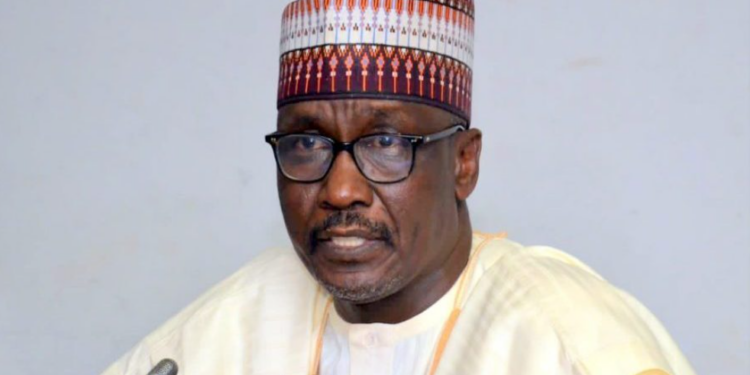
The former Group Managing Director (GMD) of the Nigerian National Petroleum Company Limited (NNPCL), Mele Kyari, is once again in the public spotlight — but not for his long tenure in the oil sector. This time, it’s for all the wrong reasons. On August 20, 2025, a Federal High Court sitting in Abuja ordered the temporary freezing of four bank accounts linked to him, marking a dramatic turn in an investigation that’s shaking up Nigeria’s energy and financial sectors.
Presiding over the case, Justice Emeka Nwite granted the request brought before the court by the Economic and Financial Crimes Commission (EFCC). According to Ogechi Ujam, the EFCC lawyer handling the matter, the accounts are being investigated for offenses related to conspiracy, abuse of office, and money laundering. While the investigation is still ongoing, the court’s intervention allows EFCC to effectively lock down the funds in question while building its case.
This is not just another corruption allegation in Nigeria’s long history of financial scandals. Mele Kyari, once celebrated as a reformer within NNPCL, now finds himself accused of facilitating large-scale financial misconduct. The frozen accounts — all domiciled in Jaiz Bank — allegedly contain over N661 million, which the EFCC suspects are proceeds of unlawful activities. Even more troubling, these accounts are not only in Kyari’s name but also tied to the Guwori Community Development Foundation and a related flood relief initiative, suggesting that nonprofit entities may have been used to launder funds under the guise of charitable activities.
The EFCC’s affidavit, submitted by investigator Amin Abdullahi, offers more insight into how the investigation unfolded. It all began with a petition from a group called the Guardian of Democracy and Rule of Law, filed in April 2025. What followed was a detailed financial probe that included accessing Kyari’s bank records, reviewing corporate filings from the Corporate Affairs Commission, and conducting interviews with individuals and entities involved in related transactions.
One of the major revelations was that significant sums of money, including suspicious inflows from NNPC and associated oil companies, were funneled into the accounts now under scrutiny. The investigation also points to the use of family members as fronts for account management and financial transactions a classic hallmark of money laundering schemes designed to obscure the real beneficiaries of illicit wealth.
In what seems to be an attempt to mask the suspicious flows, some of the transactions were recorded as expenses for a “book launch” or activities related to an NGO. The EFCC believes this was a tactic to disguise unlawful inflows and present them as legitimate community or philanthropic initiatives.
Jaiz Bank, where the accounts are held, had previously been instructed to place a 72-hour no-debit alert on the accounts — a temporary freeze pending legal approval. But the EFCC, anticipating the need for a longer window to complete its investigation, approached the court to secure an official freeze order. Justice Nwite granted the application after reviewing the evidence, describing it as “meritorious.”
Kyari, 60, has denied all wrongdoing. In May 2025, he took to social media platform X (formerly Twitter) to respond to circulating allegations, describing the reports as “clear mischief” and claiming he was simply enjoying a “well-deserved rest” after over three decades in the public service. He expressed his readiness to account for his stewardship, invoking religious accountability: “I served with the fear of God, knowing fully well that if I do not account before man, I will account before Allah.”
Still, the situation doesn’t appear to be a personal witch hunt. Kyari’s case is only one piece of a much larger investigation spearheaded by the EFCC into the management of funds earmarked for Nigeria’s refinery rehabilitation projects a sector that has long been marred by corruption, inefficiency, and unmet expectations.
Sources within the EFCC say the commission has expanded its investigation to include other senior officials involved in NNPC’s multi-billion naira contracts and expenditures. In fact, over N80 billion has reportedly been traced to the personal accounts of a former managing director of one of Nigeria’s refineries. The EFCC has requested emolument records and financial statements for several officials from this period, aiming to identify discrepancies and trace the origin of large, unexplained deposits.
This financial shake-up comes at a time when Nigeria is trying to revive confidence in its oil and gas sector. President Bola Tinubu has moved swiftly to restore public trust by appointing Bashir Ojulari as the new NNPCL Group CEO and Ahmadu Kida as non-executive chairman. Both men have been tasked with cleaning up the system, improving operational efficiency, and making NNPCL a competitive and transparent entity in the global energy space.
Still, the shadow cast by the Kyari investigation will not lift easily. Nigeria’s oil industry has long struggled with credibility issues, and this high-profile case only reinforces public skepticism about the integrity of those managing the country’s most valuable resource. For a country still heavily dependent on oil revenues and struggling with economic challenges, including high inflation, currency instability, and low foreign investment, the stakes are high.
There is also a deeper emotional and social undertone to this scandal. Many Nigerians have grown weary of hearing about billions siphoned off through fraud and embezzlement, while public services like healthcare, education, and infrastructure remain chronically underfunded. Every time a scandal like this breaks, it stirs a mix of anger, disappointment, and resignation. People wonder how many hospitals could have been built, how many scholarships funded, or how many potholes filled with the missing billions.
As September 23, the next court date, approaches, the eyes of the nation will remain fixed on the courtroom. Whether Mele Kyari is eventually found guilty or cleared of all charges, the investigation has already sent ripples through the highest levels of Nigeria’s public and private sectors. It’s a sobering reminder that accountability may be slow in coming but when it does, it can shake even the most powerful from their pedestal.


Responses