Dangote Crashes Petrol Prices to N899 Per Litre, Leaving Importers Reeling

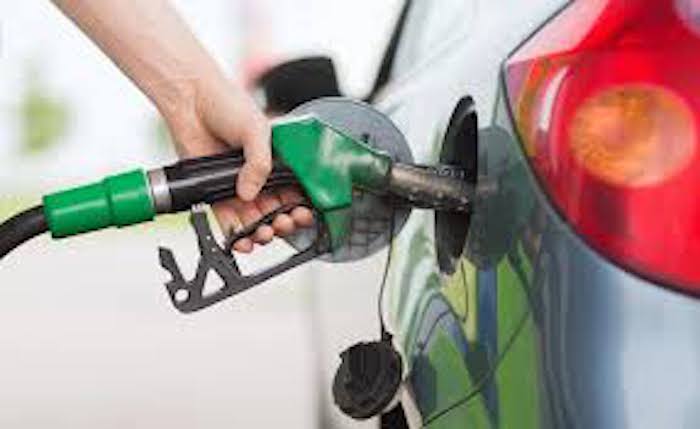
In a groundbreaking move, Nigeria’s largest private sector player, Dangote Group, has reduced the price of petrol to N899 per liter. This unexpected decision has sent shockwaves throughout the Nigerian oil market, significantly affecting both local and international importers. The price reduction follows an ambitious strategy by the Dangote Group, which is seeking to capitalize on the ongoing reforms in Nigeria’s oil sector while also boosting its domestic refining capacity.
Dangote’s Impact on Petrol Prices
The price cut to N899 per liter marks a substantial shift in the Nigerian petrol market. Previously, petrol prices in the country hovered around N800 to N870 per liter, fluctuating due to global oil price changes and the exchange rate. However, Dangote’s decision to undercut these prices by setting a new price point of N899 represents a bold move that positions the conglomerate as a major disruptor in Nigeria’s oil sector.
The decision follows the completion of Dangote’s highly anticipated refinery, which has long been touted as a game-changer for Nigeria’s oil industry. With the refinery now operational, Dangote is poised to significantly reduce the country’s dependency on imported refined petroleum products. This move directly challenges existing market dynamics, particularly the role of foreign importers who have traditionally dominated Nigeria’s fuel supply chain.
The Dangote Refinery: A Game Changer for Nigeria
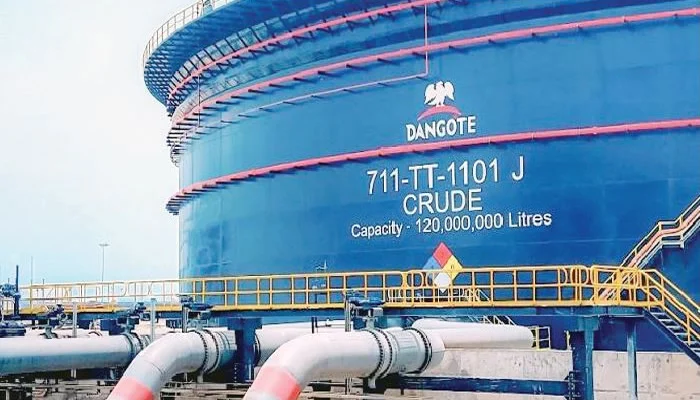
The Dangote Refinery, with a processing capacity of 650,000 barrels of crude oil per day, is one of the largest single-train refineries in the world. By producing refined petrol locally, Dangote aims to not only supply Nigeria with a steady stream of affordable petrol but also reduce the nation’s reliance on costly petroleum imports. The refinery is expected to transform Nigeria into a net exporter of refined petroleum products, which could have profound implications for both the national economy and the global oil market.
Dangote’s ability to refine crude oil domestically allows the company to bypass many of the challenges associated with importing petrol, including exchange rate fluctuations and the instability of global crude prices. As a result, Dangote can offer petrol at a lower price compared to competitors who still rely on importing refined products.
The lowering of petrol prices is a reflection of Dangote’s efforts to pass on the benefits of local production to Nigerian consumers. By offering petrol at N899 per liter, Dangote is signaling its intention to dominate the local market and provide more affordable energy options for the Nigerian populace, which has long suffered from high fuel costs.
Impact on Petrol Importers
Dangote’s price reduction has left many petrol importers reeling, as they are now faced with a competitive disadvantage. The price disparity between Dangote’s domestically refined petrol and imported fuel is stark, and importers are likely to struggle to match the new price point set by Dangote.
For years, Nigeria has depended on foreign companies to supply refined petroleum products, despite being one of the largest producers of crude oil in the world. The country’s ailing refineries and lack of capacity to refine oil locally meant that Nigeria had to import the bulk of its petrol, driving up the cost for consumers and increasing the country’s reliance on foreign exchange. However, Dangote’s ability to refine crude oil locally and offer lower prices has completely disrupted this supply chain.
The reduction in petrol prices also puts pressure on the Nigerian government, which had previously relied on importers to help meet the country’s fuel needs. As Dangote’s refinery begins to ramp up production, the government may face challenges in regulating the prices of imported fuels, which could become more expensive if importers are unable to compete with Dangote’s prices.
Moreover, the price disparity could lead to a decrease in the market share of foreign importers, who may struggle to justify their higher prices to Nigerian consumers. With Dangote now dominating the domestic market, it’s possible that smaller, less established players in the import sector may be forced to scale back their operations or exit the market altogether.
Economic and Political Implications
Dangote’s decision to cut petrol prices comes at a critical time for Nigeria, a country that has long struggled with the challenges of high fuel costs, economic instability, and a dependence on oil revenues. The government has struggled to address these issues in a way that benefits ordinary citizens, many of whom have faced skyrocketing petrol prices in recent years. Dangote’s price cut presents a potential solution to this problem, at least in the short term.
However, there are concerns about the long-term implications of Dangote’s price reduction for the broader oil market. As Dangote becomes the primary player in Nigeria’s oil supply, there is the potential for market consolidation, which could undermine competition in the sector. This could ultimately result in higher prices and fewer options for consumers in the future if Dangote’s dominance goes unchecked.
The political ramifications of Dangote’s price cut are also noteworthy. Nigeria’s fuel subsidy program, which has been a source of controversy for many years, could come under increased scrutiny as Dangote’s local refinery pushes down the price of petrol. The government has spent billions of dollars on fuel subsidies, which have been criticized for benefiting the rich and exacerbating fiscal deficits. With Dangote offering lower prices, the government may face pressure to phase out the subsidy, as the domestic supply of petrol becomes more reliable and affordable.
Local Benefits for Nigerians
The reduction in petrol prices by Dangote is expected to have several positive effects on the local economy and Nigerian consumers. First and foremost, the lower prices provide immediate relief to Nigerians, who have long struggled with the high cost of fuel. With petrol prices lower than they have been in years, the purchasing power of Nigerian consumers will likely improve, allowing them to spend more on other goods and services.
The move also has the potential to create new jobs in the energy sector, as Dangote’s refinery expands operations. The construction and operation of the refinery have already created thousands of jobs, and as the refinery increases production, more employment opportunities are likely to arise. This could be a welcome boost to Nigeria’s economy, which has faced significant unemployment challenges in recent years.
Additionally, the domestic production of petrol could reduce the country’s reliance on foreign exchange for importing refined products. By keeping more of its oil wealth within the country, Nigeria can strengthen its currency and reduce the trade imbalance that has long plagued the economy.
Dangote’s decision to crash petrol prices to N899 per liter is a game-changing development in Nigeria’s oil and gas industry. By leveraging its new refinery, Dangote is not only offering affordable petrol to Nigerian consumers but also reshaping the dynamics of the local fuel market. This move has disrupted foreign importers, who may struggle to match Dangote’s competitive pricing. While the reduction in prices brings immediate benefits to Nigerians, the long-term effects on the market, competition, and government policy will be closely watched. As Dangote continues to expand its influence in the Nigerian oil sector, it will be interesting to see how the government, local companies, and foreign players respond to this new era in Nigeria’s energy landscape.




Responses