Enugu Rolls Out Free School Uniforms for 267 Schools as Mbah Pushes Education Reform

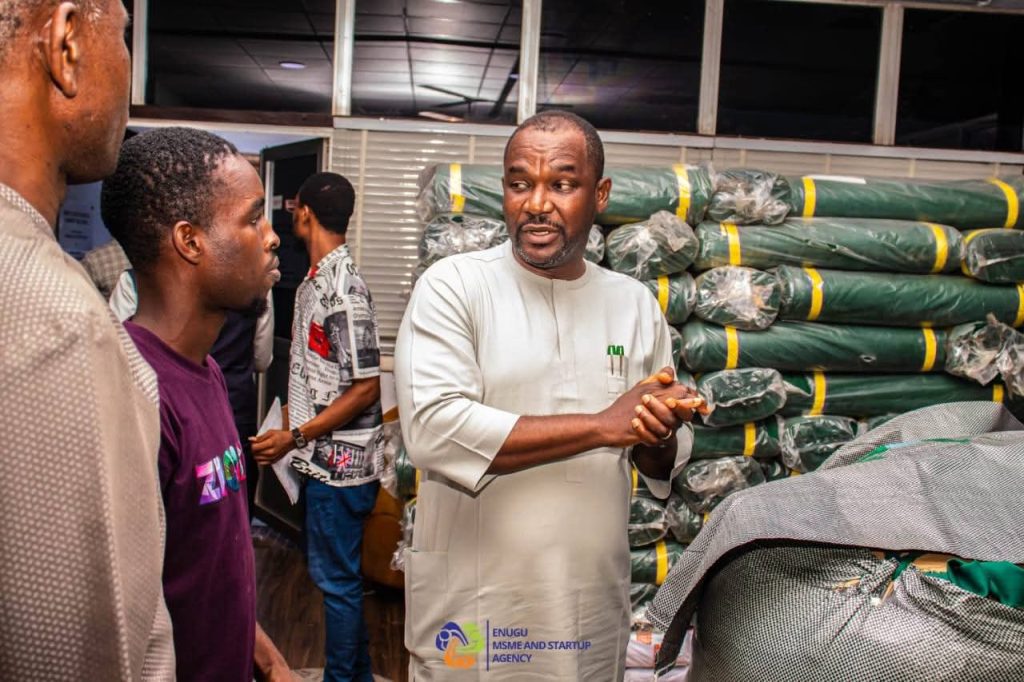
The Enugu State Government has announced the commencement of free school uniform distribution to students across 267 Smart Green Schools, marking a significant milestone in its ongoing education reform agenda. The initiative, championed by Governor Peter Mbah, is designed to support families, improve access to education, and strengthen the state’s broader vision for human capital development.
According to officials, the uniforms are now fully produced and ready for delivery, signaling a transition from policy planning to tangible implementation. The project is part of a wider transformation strategy centered on the Smart Green School model—an initiative aimed at modernizing education infrastructure, integrating technology, and enhancing learning outcomes across the state.
A key highlight of the program is its local production model. The uniforms are being manufactured at the Enugu Garment Factory, a growing hub for textile production, skills acquisition, and employment generation. By leveraging local capacity, the government aims not only to provide essential items to students but also to stimulate economic activity and create jobs within the state.
Officials say this dual-impact approach reflects a deliberate effort to align social welfare initiatives with economic development. The garment factory, located in Emene, has increasingly become central to Enugu’s industrialization efforts, offering opportunities for youth employment while reducing reliance on external suppliers.
The distribution process has already begun at the local government level. In Awgu Local Government Area, the council chairman, Hon. Uchenna Okolo, recently received consignments of uniforms for schools within the jurisdiction. The handover was facilitated by Hon. Arinze Chilo-Offiah, Special Adviser to the Governor on Small and Medium Enterprises and Director-General of the Enugu SME Centre.
Government representatives have described the initiative as a practical demonstration of the administration’s commitment to inclusive governance. By providing uniforms at no cost, the state hopes to ease the financial pressure on parents, particularly those from low-income households, while ensuring that students can attend school with a sense of dignity and equality.
Education advocates have generally welcomed the development, noting that access to basic school materials can significantly influence enrollment and retention rates. In many communities, the cost of uniforms—though seemingly modest—can pose a barrier to consistent school attendance. Removing that burden, they argue, could encourage more children to remain in school.
However, the initiative has also sparked debate among members of the public. Some critics question whether government resources should be directed toward providing uniforms, arguing that such responsibilities traditionally fall on families. Others have raised concerns about funding, suggesting that large-scale social programs may increase fiscal pressure if not carefully managed.
Supporters, on the other hand, view the program as a strategic investment in education and social equity. They argue that beyond immediate relief, such initiatives contribute to long-term development by promoting inclusivity and reducing disparities in access to education.
The policy also highlights a broader shift in governance style, where state-led interventions increasingly aim to address everyday challenges faced by citizens. By combining education reform with local industrial growth, the Mbah administration appears to be pursuing a model that integrates welfare with economic sustainability.
As the rollout continues across the 267 Smart Green Schools, attention will focus on its impact—both in classrooms and within the local economy. If successfully implemented, the initiative could serve as a template for other states seeking to balance social support with economic development.
For now, the distribution of free school uniforms stands as a visible step in Enugu’s education transformation journey, reflecting an effort to turn policy promises into measurable outcomes.


Responses