Ex-President Uribe Freedom Pending Appeal

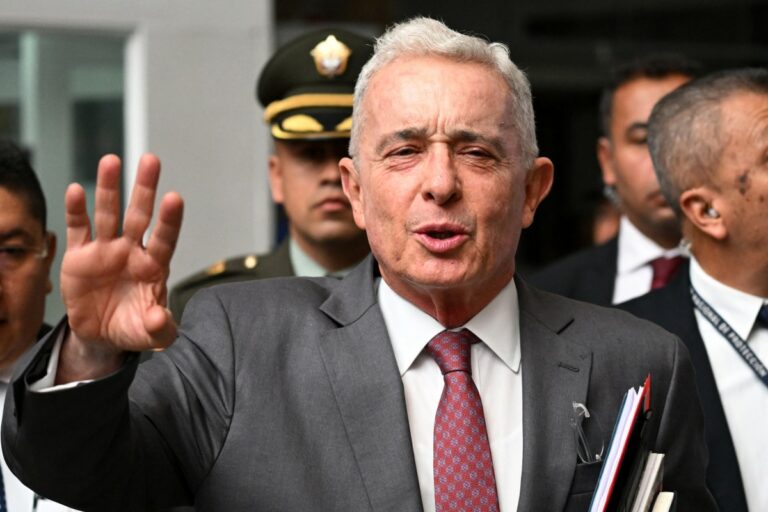
In a dramatic turn of events, a Colombian court has ordered the release of former President Alvaro Uribe from house arrest while he appeals a conviction that made history in the South American nation. The ruling, handed down on Tuesday by the Superior Court in Bogota, allows the 73-year-old conservative leader to walk free for now just weeks after becoming the first former Colombian president to be convicted of a criminal offense.
Uribe, a dominant figure in Colombian politics for more than two decades, was sentenced earlier this month to 12 years of house arrest following a conviction for witness tampering. He was found guilty of orchestrating efforts to manipulate testimony from individuals linked to right-wing paramilitary groups, in an attempt to downplay or cover up alleged ties between himself and the violent factions that carried out atrocities during Colombia’s long-running civil conflict.
The court’s decision on Tuesday emphasized that Uribe is not considered a flight risk, and therefore does not need to remain under house arrest while his legal team mounts an appeal. His freedom, however, is conditional and may be reversed if the appeal fails. The court has until October 16 to deliver a final ruling. If the deadline passes without a verdict, the trial could be annulled, which would automatically lead to his release.
For now, Uribe is free to move around the country and speak publicly—something he wasted no time doing. In a message posted on social media platform X (formerly Twitter), the former president expressed gratitude for the support he has received during the legal ordeal. “Thanks to God, thanks to so many fellow Colombians for their expressions of solidarity,” he wrote. “I will dedicate every minute of my freedom to the freedom of Colombia.”
Uribe’s return to public life during the appeal process has already reignited political tensions in a country deeply divided between right-leaning supporters of his legacy and the increasingly influential left led by current President Gustavo Petro.
As president from 2002 to 2010, Uribe was widely known for his hardline security policies. He launched aggressive military campaigns against both drug cartels and the FARC guerrilla movement, a Marxist rebel group that had waged war against the Colombian state for decades. Uribe’s tough-on-crime stance earned him admiration from many Colombians who were desperate for peace and order. He also built a strong alliance with the United States, where he continues to have supporters among conservative political circles.
Yet his leadership was not without controversy. Human rights groups and political opponents long accused him of turning a blind eye—or worse, offering covert support—to illegal paramilitary forces that fought the FARC using brutal and often illegal methods. Those allegations resurfaced during his recent trial, where more than 90 witnesses gave testimony over several months. Among them was at least one former paramilitary fighter who claimed he was personally contacted by Uribe and asked to alter his story.
The case has sparked a fierce debate in Colombia about the independence of the judiciary and the politicization of justice. Uribe and his legal team have repeatedly argued that the prosecution is politically motivated. They claim it is part of a broader effort by the left, particularly by President Petro and his allies, to discredit one of their fiercest rivals.
Petro, Colombia’s first left-wing president and himself a former member of a guerrilla group, has been openly critical of Uribe throughout his political career. The animosity between the two men has only deepened during this trial. In a public meeting with his cabinet that was broadcast nationwide on Tuesday, Petro questioned the court’s decision to grant Uribe release during the appeal.
“I do not understand how Uribe is free,” Petro said bluntly. “Is that justice?”
Petro also took issue with what he described as foreign interference in the country’s legal system. His comments came in response to remarks made by U.S. Secretary of State Marco Rubio, who has criticized the prosecution of Uribe. Rubio, without citing evidence, called the case an example of “the weaponization of Colombia’s judicial branch by radical judges.” Petro pushed back against that narrative, stating that international pressure threatens the credibility and independence of Colombia’s democratic institutions.
Despite the controversy, Uribe remains an influential figure in Colombian politics. Even out of office, he has continued to act as a political kingmaker, especially among conservative parties. His support has played a key role in determining leadership choices and shaping political discourse in the country. Recent opinion polls suggest that he is still one of Colombia’s most popular politicians, particularly in regions where his security policies once had a strong impact.
The case against Uribe, which began in 2018, has gone through a series of twists and delays. Several attorneys general tried to dismiss the charges before the case was revived under the leadership of Luz Camargo, the current Attorney General appointed by Petro. Camargo’s involvement has further fueled accusations of political bias, although her office insists that the case was handled strictly based on the evidence.
For now, the country waits as the legal process unfolds. The outcome of Uribe’s appeal could shape not just his personal legacy, but also the future of justice and accountability in Colombia. As one of the most consequential political trials in the country’s modern history, it continues to stir emotions, fuel debate, and test the strength of Colombia’s democratic institutions.
Whether the conviction stands or is overturned, the story of Alvaro Uribe’s legal battle is far from over. And as the October deadline approaches, all eyes will remain firmly fixed on the halls of justice in Bogota.


Responses