Federal Government Urges Closer Collaboration Between FMBN and State Governors

In a renewed push to make homeownership more accessible for millions of Nigerians, the Federal Government has called on the Federal Mortgage Bank of Nigeria (FMBN) to work hand-in-hand with state governors on viable housing projects across the country. This move is part of the broader Renewed Hope housing campaign aimed at reducing the nation’s huge housing deficit and expanding affordable living options for everyday citizens.
The directive came from the Minister of Housing and Urban Development, Ahmed Dangiwa, during the celebration of FMBN Day at the 19th Africa International Housing Show held in Abuja. Dangiwa, who was represented at the event by his Special Adviser on Media and Strategy, Mark Chieshe, emphasized the need for practical partnerships between the federal housing agencies and the state governments.
According to him, the collaboration is critical if the country hopes to turn housing policy into real results that affect lives in local communities. He noted that the current challenges facing the housing sector go beyond construction alone. Instead, the country needs more cohesive planning, technical expertise, and access to funding mechanisms that make housing truly affordable for the average Nigerian.
Minister Dangiwa highlighted a key gap in the housing value chain — the disconnect between well-intentioned federal policies and on-the-ground implementation in states. He stressed that unlocking land for development, planning viable projects, and embedding technical teams within states are essential steps to bring meaningful change.
“This is an opportunity for the Bank to showcase its products in every state of the federation,” he said. “FMBN must work closely with governors to unlock land, structure bankable housing projects, and provide the technical support needed to design and implement clear homeownership strategies.”
He also made it clear that this is not just about building homes, but about creating systems and structures that make those homes affordable and accessible to everyday Nigerians — especially low- and middle-income earners who continue to struggle in a market that seems increasingly out of reach.
While federal and state governments have made strides in building more houses nationwide, affordability remains the single biggest barrier to widespread homeownership in Nigeria. Even when new houses are available, their prices are often well beyond the budgets of most working-class Nigerians.
Minister Dangiwa admitted that simply building more units will not be enough unless financial access is addressed. He challenged FMBN to take a more aggressive role in reaching Nigerians who contribute to the National Housing Fund and make mortgage financing options more visible and user-friendly.
To address this, the minister urged the Bank to simplify its processes, increase awareness of its products, and work closely with other agencies to create stronger partnerships that can ease the burden of financing.
According to Dangiwa, FMBN is not just another institution within the housing ecosystem. It is the government’s primary vehicle for delivering affordable mortgages and a key pillar of the Renewed Hope housing campaign. He encouraged the Bank to fully embrace this role and scale its operations in ways that directly impact the lives of ordinary Nigerians.
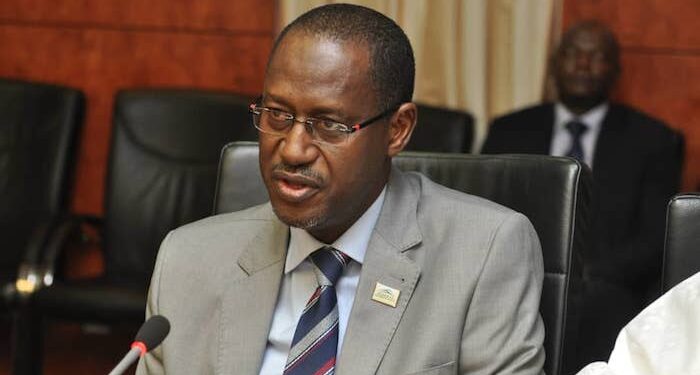
While the minister’s expectations were clear, the Managing Director of FMBN, Shehu Usman Osidi, shed light on one of the biggest challenges the Bank faces — inadequate capitalisation.
Speaking at the same event, Osidi explained that FMBN has been operating with a capital base of only N2.5 billion, a figure that has remained unchanged for decades. Given the size and complexity of Nigeria’s housing needs, he described this as woefully insufficient.
“Our current capital level limits the Bank’s ability to raise long-term financing from both local and international sources,” Osidi explained. “Without more funding, it becomes nearly impossible to scale our operations and deliver on our national housing mandate.”
He added that increasing the Bank’s capital would empower it to do much more, from expanding its mortgage offerings to making home loans more affordable and sustainable for citizens across all geopolitical zones. Strengthening the financial base of FMBN is, in his view, not just a policy option but an urgent necessity.
The direction from the Federal Government marks a shift toward more collaborative and results-driven housing development. By urging the FMBN to align more closely with state governors, the aim is to make housing programs more tailored to the unique needs of different regions, rather than adopting a one-size-fits-all model.
The minister also hinted at more robust rollouts in the near future, including the expansion of Renewed Hope Cities and Estates across various states and regions. Already, the federal government has begun developing 250 housing units in Yobe State as part of this effort, and further announcements are expected in the coming months.
This renewed focus on partnership, funding, and affordability offers a more hopeful outlook for Nigerians who dream of owning a home but have long been excluded by high prices and complex bureaucracy.
As the Renewed Hope housing campaign gathers momentum, the Federal Mortgage Bank of Nigeria has a renewed mandate to make homeownership a reality for more citizens. The path forward involves deeper collaboration with state governments, simplification of mortgage access, and, crucially, the political will to increase the Bank’s funding and support.
For millions of Nigerians still waiting for a chance to own their own homes, this could finally be the start of something tangible. But success will depend on coordinated action, increased investment, and the willingness of all stakeholders to treat housing not just as a goal, but as a national priority.


Responses