Gumi’s Controversial Claims on Terrorism Knowledge Spark Nationwide Debate on Nigeria’s Security Strategy

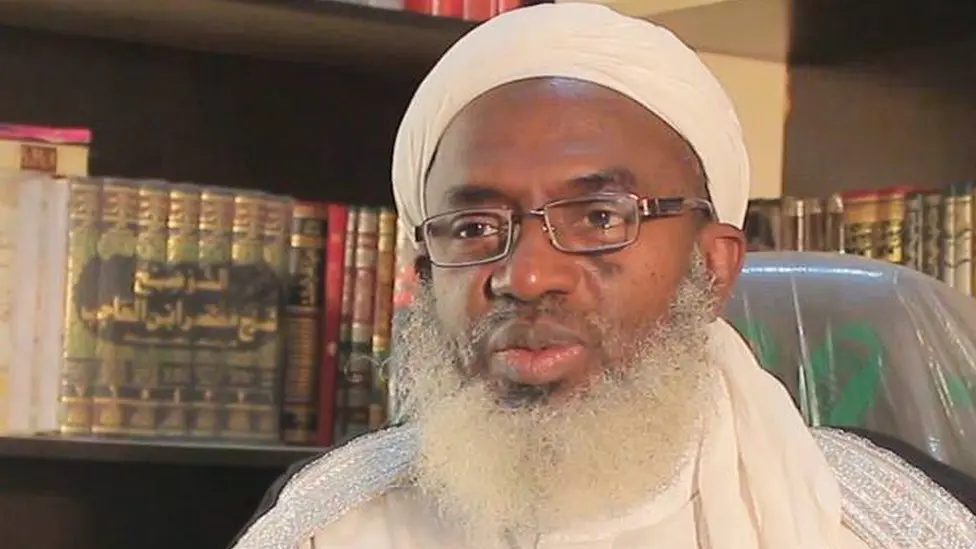
Nigeria’s long-running insecurity crisis has once again come under intense scrutiny following startling claims by Kaduna-based Islamic cleric Abubakar Gumi. In a recent television interview, Gumi asserted that the Federal Government possesses detailed knowledge of terrorists operating within the country, including their identities and whereabouts—an assertion that has triggered widespread reactions across the nation.
According to Gumi, his controversial engagements with armed groups are not carried out independently but in collaboration with security agencies such as the police, military, and intelligence services. He maintained that his visits to forests and remote enclaves, where he interacts with bandits and other armed groups, are coordinated efforts aimed at reducing violence through dialogue.
“The government knows every terrorist by name and location,” he said, emphasizing that his role is complementary to official security operations rather than a substitute for them. He further described instances where he ventured into dangerous territories, sometimes accompanied by local intermediaries, to facilitate communication between authorities and armed groups.
His remarks, however, have struck a nerve among many Nigerians, particularly those who have long suspected inefficiency—or even complicity—within the system. For years, critics have referenced the famous assertion by Sani Abacha that any persistent insecurity beyond a short duration should be attributed to government failure. Gumi’s latest statement appears to reinforce such sentiments for some observers.
Public reaction has been sharply divided. While some Nigerians interpret his comments as confirmation of existing suspicions about the government’s handling of insecurity, others believe his claims are exaggerated or potentially harmful. The suggestion that authorities might have actionable intelligence yet fail to act has fueled frustration, anger, and renewed calls for transparency.
Prominent voices have also weighed in. Activist and former presidential candidate Omoyele Sowore alleged possible collusion between elements of the state and criminal groups, arguing that consistent communication between authorities and terrorists raises serious concerns. Similarly, veteran entertainer Charly Boy criticized the political leadership, suggesting that such revelations point to deeper systemic issues.
On social media, reactions have ranged from disbelief to outrage. Some users questioned why such a critical claim has not received stronger official rebuttal or investigation, while others warned against accepting the statement at face value without evidence. The absence of an immediate, detailed response from authorities has only intensified speculation.
Security analysts note that Gumi’s long-standing advocacy for dialogue as a conflict-resolution strategy adds complexity to the issue. While negotiation has been used in some contexts to de-escalate violence, critics argue that it risks legitimizing armed groups if not carefully managed. The debate highlights a broader dilemma in counterterrorism: whether to rely primarily on military force or incorporate community-based engagement and negotiation.
Adding an international dimension to the conversation, some commentators have linked Gumi’s remarks to global counterterrorism trends. References have been made to the policies of Donald Trump, particularly his aggressive stance on combating terrorism beyond U.S. borders. Analysts warn that statements suggesting government awareness without decisive action could attract increased foreign scrutiny or intervention, though such scenarios remain speculative.
Despite differing opinions, one point of consensus is clear: Nigeria’s insecurity challenge remains deeply complex. From insurgency in the northeast to banditry and kidnappings in other regions, the crisis has persisted for over a decade, defying multiple administrations and strategies.
Gumi’s remarks have, at the very least, reignited a crucial national conversation. They have forced Nigerians to re-examine the effectiveness of current counterterrorism measures and to question whether a more transparent, multi-pronged approach is needed—one that combines intelligence, military action, and community engagement.
As debates continue, many Nigerians are left asking a fundamental question: if the government truly has the level of intelligence suggested, what then is preventing decisive action?


Responses