Kano Governor Plans Elders’ Council Modelled After Lagos GAC, Sparks Heated National Debate

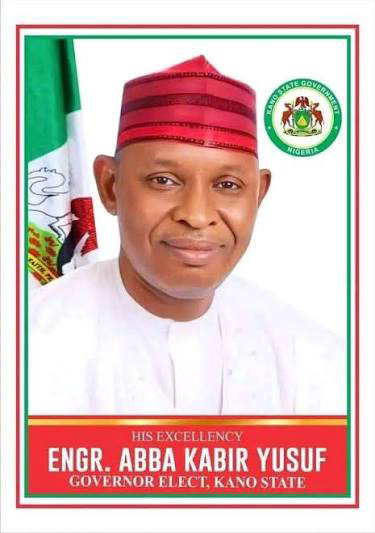
Kano State Governor, Abba Kabir Yusuf, has announced plans to establish a Kano Elders Council (KEC), a political advisory body intended to mirror the Lagos State Governance Advisory Council (GAC), a move that has ignited intense debate across political circles and social media platforms. Framing the initiative as a strategy for political stability and continuity, the governor declared emphatically: “Kano first, Kano first, Kano first. My loyalty belongs to Kano, not to any individual.”
Supporters of the proposal describe it as a bold attempt to institutionalise governance, reduce political instability, and insulate the state from abrupt policy reversals that often accompany changes in administration. According to this view, the Lagos GAC model has helped maintain ideological consistency, long-term planning, and elite consensus in Lagos politics, regardless of who occupies the governor’s office. Proponents argue that Kano, with its complex political history and influential elite class, could benefit from a similar structure that brings together respected elders, technocrats, and power brokers to advise the government.
However, critics see the move very differently. To them, the Lagos GAC itself represents the entrenchment of godfatherism, not political stability. Many argue that Lagos governors have historically been more loyal to a single political figure than to the electorate, citing examples such as the removal of former Governor Akinwunmi Ambode and controversies surrounding legislative interventions. In this light, they warn that replicating the model in Kano could undermine democratic institutions by creating an unelected power centre capable of overshadowing the executive, legislature, and even the judiciary.
The controversy is further complicated by Governor Yusuf’s recent political realignment. Opponents accuse him of betraying the Kwankwasiyya movement and Rabiu Musa Kwankwaso, the political structure widely believed to have propelled him to power. While Yusuf now insists that his loyalty is to Kano alone, critics argue that this principle did not prevent him from relying heavily on Kwankwaso’s political machinery during his campaigns in 2019 and 2023. To them, the sudden rejection of personal loyalty appears selective and politically convenient.
Some commentators have predicted dire consequences for Yusuf’s political future, warning that Kano’s political terrain is fundamentally different from Lagos. Unlike Lagos, where power is perceived to be tightly centralised, Kano politics is shaped by multiple strong actors, including former governors, wealthy business families such as the Dantatas and Dangotes, influential clerics, and deeply rooted political movements. Skeptics argue that no single individual or council can easily “pocket” Kano’s elite the way Lagos politics is often portrayed.
Others have raised ethnic and cultural concerns, arguing that importing what they describe as a “Yoruba political pattern” into Kano may backfire. They caution that Kano’s political identity, pride, and history demand a governance model rooted in local realities rather than external templates. For this group, the Elders Council risks being perceived as an imposition rather than an organic institution.
On the other side of the divide, supporters of the governor insist that the criticism misunderstands the concept of institutional loyalty. They argue that what exists in Lagos is not blind loyalty to one man, but allegiance to a political ideology that prioritises continuity, discipline, and long-term planning. From this perspective, political stability in places like Lagos, and even globally in cities such as Singapore or Dubai, is often traced to strong ideological leadership anchored around dominant figures. They maintain that Nigeria’s problem has never been strong political structures, but rather the absence of coherent ideology and institutional memory.
Some APC sympathisers have gone further to suggest that the outrage against Yusuf’s move is ironic, noting that many self-proclaimed anti-godfatherism advocates are suddenly uncomfortable with a governor cutting loose from his political godfather. They argue that the backlash exposes contradictions within Nigeria’s political discourse, where positions are often determined by partisan interest rather than principle.
As reactions continue to pour in, one thing is clear: the proposed Kano Elders Council has become more than a governance experiment. It has evolved into a symbolic battleground over godfatherism, ideology, loyalty, and the future direction of Nigerian politics. Whether the initiative becomes a stabilising force or a flashpoint for deeper political conflict will likely depend on its composition, powers, and how transparently it operates.
For now, Kano stands at a crossroads, with supporters hailing the proposal as progressive and critics warning it could be “dead on arrival” without broad-based legitimacy—particularly if key political stakeholders are excluded. As 2027 approaches, the real test will be whether this emerging structure strengthens democratic governance or merely reshapes power behind the scenes.


Responses