Nigerian Air Force Personnel Released by Burkina Faso Arrive Safely in Ghana After Diplomatic Intervention

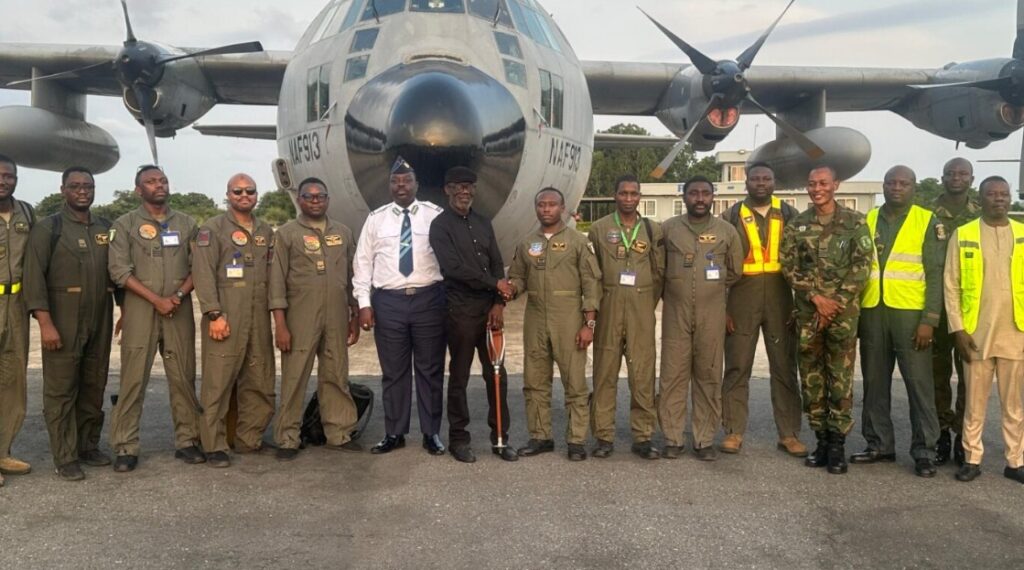
The Nigerian Air Force (NAF) personnel who were detained by military authorities in Burkina Faso following a forced aircraft landing have now arrived safely in Accra, Ghana, marking a diplomatic resolution to an incident that briefly strained relations within the West African sub-region.
Nigeria’s Minister of Foreign Affairs, Yusuf Tuggar, confirmed the development on Thursday, stating that the pilots and crew of the Nigerian Air Force C-130 aircraft, identified as NAF 913, had successfully landed at an Air Force base in Accra after their release. According to the minister, their safe arrival was the result of sustained diplomatic engagement and dialogue rather than confrontation.
“I can confirm that the pilots and crew of NAF C-130 (913) have safely arrived at the Air Force Base in Accra,” Tuggar said. “The successful outcome reflects Nigeria’s commitment to diplomacy, regional cooperation, and the leadership of President Bola Ahmed Tinubu in resolving sensitive matters through dialogue.”
The NAF aircraft had made an unscheduled landing in Bobo-Dioulasso, Burkina Faso, after the crew detected a technical issue during flight. Nigerian authorities explained that the decision to land was a precautionary safety measure, taken in line with international aviation standards and protocols that prioritize the safety of personnel, aircraft, and civilians.
However, Burkina Faso’s military authorities detained the Nigerian personnel shortly after the landing. The incident became more complicated when the Confederation of Sahel States (AES)—a bloc comprising Burkina Faso, Mali, and Niger—described the aircraft’s presence as an “unfriendly act,” suggesting it violated international law. This claim heightened tensions and delayed the immediate release of the crew, who were held for nearly two weeks.
The situation was eventually resolved on Wednesday, 17 December, following high-level diplomatic engagement. President Bola Ahmed Tinubu dispatched a Nigerian delegation led by Foreign Affairs Minister Yusuf Tuggar to Ouagadougou to meet with Burkina Faso’s military leader, Captain Ibrahim Traoré. Talks between officials from both countries focused on clarifying the circumstances surrounding the landing and restoring mutual confidence.
In a statement issued by Tuggar’s spokesperson, Alkasim Abdulkadir, the ministry confirmed that the matter was resolved amicably, with both sides agreeing to de-escalate tensions and prioritize diplomatic cooperation. Abdulkadir said the Nigerian delegation conveyed President Tinubu’s message of solidarity to Traoré, emphasizing Nigeria’s respect for Burkina Faso’s sovereignty and its desire for continued peaceful relations.
He added that discussions extended beyond the immediate incident to broader regional concerns. Nigerian and Burkinabé officials explored ways to strengthen political, economic, and security cooperation, particularly in addressing shared security threats such as terrorism, arms trafficking, and cross-border crime. Both sides reportedly reaffirmed their commitment to collective action through existing regional and continental frameworks.
The arrival of the Nigerian personnel in Ghana, rather than a direct return to Nigeria, has generated public debate and confusion, especially following earlier reports that suggested the aircraft would proceed to Europe after its release. However, officials have not indicated that the Accra stopover represents any irregularity. Aviation and diplomatic sources note that Ghana remains a major logistical and operational hub in West Africa, particularly for military coordination, technical assessments, and onward flight planning.
Despite the controversy surrounding the incident, the Nigerian government has framed the outcome as a diplomatic success, stressing that the safe release of its personnel without escalation demonstrates the value of dialogue in a region already grappling with political instability and security challenges.
For Nigeria, the episode underscores the growing complexities of regional relations in West Africa, particularly amid shifting alliances and heightened sensitivity among Sahelian military governments. While questions remain in the public space, officials insist that the priority was the safety of Nigerian personnel and the preservation of regional stability—objectives they say were ultimately achieved through calm diplomacy rather than force.


Responses