Nigeria’s New Tax Laws Explained Simply (2026 Guide): What It Means for You, Your Salary, and Your Bank Account

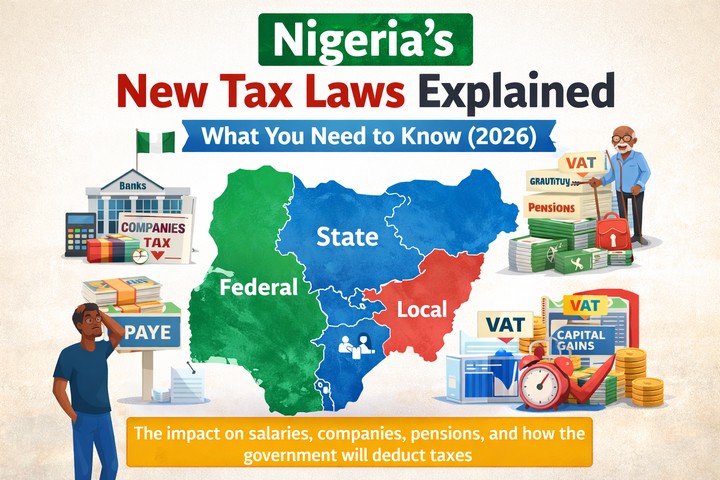
From 1 January 2026, Nigeria will begin operating a new tax system under the Nigeria Tax Act (NTA) 2025. This reform is one of the biggest changes to taxation in many years. Because “tax grammar” fit confuse person, this explanation breaks everything down in plain English, with small Pidgin, so everybody can understand wetin concern dem.
What Is This New Tax Law All About?
In simple terms, the government has merged and updated many old tax laws into one modern system. The aim is to make tax collection easier, reduce confusion, and ensure more people and businesses pay what they are supposed to pay.
Government says the goals are to:
-
Make tax fairer
-
Protect low-income earners
-
Bring more people and businesses into the tax system
-
Increase money for roads, hospitals, schools, and public services
Whether this will work well or not depends on transparency, but this is how the law is designed to operate.
How Salary Earners Will Be Taxed (PAYE)
If you work for a company and earn a salary, your tax is collected through PAYE (Pay As You Earn). This means your employer deducts tax before paying you.
Under the new law, low-income earners get protection:
-
First ₦800,000 per year – No tax
-
₦800,001 – ₦3 million – 15%
-
₦3 million – ₦12 million – 18%
-
₦12 million – ₦25 million – 21%
-
₦25 million – ₦50 million – 23%
-
Above ₦50 million – 25%
In short:
👉 If you earn small money, government no too touch you
👉 If you earn big money, you pay more tax
Also, the old consolidated relief allowance has been removed. Instead, there is now rent relief. If you pay rent and can prove it, you can deduct up to ₦500,000 from your taxable income.
Will Government Deduct Money Directly from My Bank Account?
This part scares many people, so let’s be clear.
1. TIN and Bank Accounts
Every bank account must now be linked to a Tax Identification Number (TIN). Without TIN:
-
You may not open or fully operate a bank account
-
Banks must report certain transactions to tax authorities
Important:
👉 Moving money is NOT taxed
👉 Keeping money in your account is NOT taxed
👉 Only income is taxed
So if money enters your account as salary, business profit, interest, rent, or dividends, tax authorities can trace it more easily.
Withholding Tax (WHT) – Tax Before Money Lands
Withholding tax means tax is removed before payment reaches you.
Examples:
-
Rent
-
Dividends
-
Interest on investments
-
Some business payments
If you invest and earn interest, banks or brokers may deduct tax before crediting your account. This does not mean government is taxing transfers; they are taxing income at source.
How Businesses and Companies Will Pay Tax
Small Businesses
If your company:
-
Has turnover below ₦100 million
-
Has assets below ₦250 million
👉 You pay zero company income tax
This is meant to help small businesses grow.
Medium and Big Companies
-
25% company income tax on profit
-
4% development levy (replacing education tax and similar levies)
Big Multinationals
Large companies must pay at least 15% effective tax, even if they use accounting tricks to show small profits.
Pensions, Gratuity, and Retirement
-
Pensions remain tax-free
-
Gratuity (lump sum paid at retirement) is now treated as taxable income if it exceeds certain thresholds
Meaning:
👉 Pension still safe
👉 Gratuity no be fully free again
Who Gets the Tax Money?
-
PAYE (salary tax) → State government
-
Company income tax → Federal government
-
VAT & withholding tax → Shared between Federal, State, and Local governments
New Areas Government Will Tax
The new law expands the tax net to include:
-
Digital income
-
Foreign income (for Nigerian residents)
-
Crypto, NFTs, and digital assets
-
Online businesses and remote work
If you earn income consistently, government expects tax compliance.
Penalties for Not Complying
If you:
-
Don’t register for tax
-
Don’t file returns
-
Hide income
👉 You may face fines, penalties, and interest
Why These Changes Matter
According to government:
-
Low earners are protected
-
Small businesses are encouraged
-
Tax loopholes are reduced
-
Revenue collection becomes more efficient through banks and TIN
Whether these taxes improve roads, security, power, and jobs is another discussion. But one thing is clear: from 2026, tax compliance will be harder to avoid.
Bottom line:
👉 If you earn little, you are mostly safe
👉 If you earn more, government is watching
👉 Understanding the law now will save stress later


Responses