NiMet Warns of Thunderstorms and Heavy Rains


The Nigerian Meteorological Agency (NiMet) has released its three-day weather outlook, predicting thunderstorms and moderate to heavy rainfall across different parts of the country between Friday, September 12, and Sunday, September 14, 2025. The forecast, issued in Abuja on Thursday, comes with strong warnings of possible flooding, advising Nigerians to take safety precautions seriously.
NiMet explained that the weather system over the coming days will bring cloudy skies, intermittent sunshine, and widespread rainfall patterns, with thunderstorms expected to dominate across the north, central, and southern regions. This projection aligns with the country’s peak rainy season, which often comes with challenges such as flooding, transportation disruptions, and agricultural setbacks.
Northern region forecast
According to NiMet, isolated thunderstorms accompanied by moderate rainfall are expected across several northern states beginning Friday morning. Areas likely to be affected include Bauchi, Gombe, Adamawa, Taraba, Kaduna, Kano, Zamfara, Katsina, Sokoto, and Kebbi.
On Saturday, the weather agency predicts a mix of cloudy conditions and sunshine intervals in the northern region during the day. Later in the afternoon and evening, thunderstorms with moderate rainfall are expected to develop over parts of Taraba, Adamawa, southern Borno, Bauchi, Sokoto, Kebbi, Kaduna, Zamfara, Kano, and Katsina States.
By Sunday, NiMet projects cloudy skies with bursts of sunshine during the morning hours, followed by isolated thunderstorms with light rainfall in Yobe, Jigawa, Kano, and Katsina. The northern region, with its mix of semi-arid and savannah zones, often experiences flash floods when intense rainfall occurs, and NiMet has cautioned residents to remain vigilant.
Central region forecast
The central region of Nigeria, which includes the Federal Capital Territory and several surrounding states, is also expected to experience unstable weather conditions throughout the forecast period. NiMet reported that Friday morning will begin with cloudy skies and sunshine intervals, with light rain showers expected in Niger, Kogi, and Benue.
Later in the day, thunderstorms accompanied by moderate rainfall are likely across Nasarawa, Plateau, Kwara, Kogi, Benue, and the FCT. On Saturday, residents of the central states should expect more thunderstorms with moderate rain, particularly during the afternoon and evening.
By Sunday, the region is forecast to have cloudy skies with breaks of sunshine. However, thunderstorms with moderate rainfall are expected in the afternoon and evening across parts of the FCT, Plateau, Nasarawa, and Benue. These patterns could affect farming activities and inter-state road travel, especially on routes prone to flooding or erosion.
Southern region forecast
The southern states are projected to receive more consistent rainfall compared to other regions. NiMet warned that intermittent moderate rainfall will persist across much of the region throughout the forecast period. Specifically, the agency flagged Lagos, Ogun, Akwa Ibom, and Cross River as high-risk areas for flooding due to their coastal locations and history of seasonal waterlogging.
On Saturday, the morning hours are expected to bring moderate rainfall over Lagos, Ogun, Edo, Ebonyi, Imo, Abia, Rivers, Bayelsa, Delta, Cross River, and Akwa Ibom. As the day progresses, most of these states will continue to see light to moderate rains, which could affect transport and daily activities.
By Sunday, cloudy conditions are expected during the morning hours, with rainfall likely in Oyo, Ogun, Lagos, Edo, Delta, Rivers, Bayelsa, Cross River, and Akwa Ibom. The rains are expected to persist into the afternoon and evening across much of the region, raising concerns about urban flooding in densely populated cities such as Lagos and Port Harcourt.
Safety warnings and advice
NiMet has emphasized the need for Nigerians to adopt safety measures to reduce risks associated with the heavy rains. One of the agency’s major warnings is for motorists to avoid driving under heavy downpours due to poor visibility and slippery roads.
Farmers have also been cautioned against applying fertilizer or pesticides just before rainfall, as nutrients could be washed away, reducing soil fertility and crop yields. NiMet further advised residents to fasten loose objects that could become dangerous projectiles during storms, disconnect electrical appliances during heavy rainfall to avoid damage, and avoid standing under tall trees that could collapse during thunderstorms.
Airline operators were not left out of the advisory. The agency urged them to obtain airport-specific weather reports before flights to ensure safe and effective planning, given the risks of turbulence and delays during thunderstorms.
Most importantly, NiMet encouraged Nigerians to remain informed by following daily forecasts via its website and other official communication channels. Staying updated, the agency stressed, will allow residents and businesses to better prepare for sudden weather changes and mitigate potential risks.
Broader implications
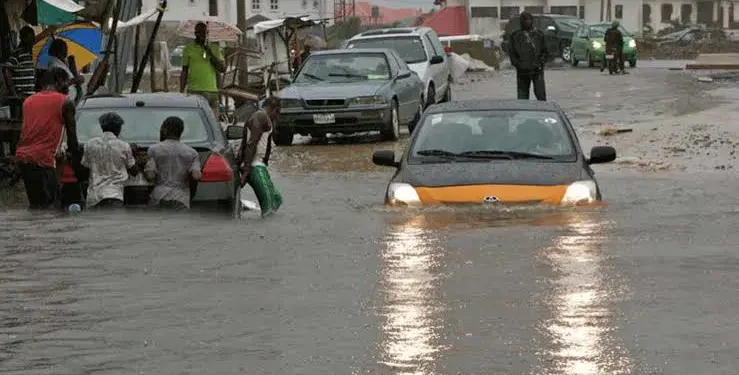
Weather forecasts like this serve as critical reminders of the growing risks posed by climate change and environmental mismanagement in Nigeria. Flash floods, urban flooding, and storm-related damage have become increasingly common, often leaving communities displaced and infrastructure weakened. The heavy rains predicted this weekend, particularly in flood-prone southern states, could lead to disruptions in electricity supply, traffic gridlock, and health risks associated with stagnant water.
The agricultural sector, which heavily depends on seasonal rainfall, also faces a delicate balance. While rainfall supports crop growth, excessive or poorly timed rains can damage farmland, wash away seedlings, and reduce productivity. For farmers, the guidance provided by NiMet is especially vital in deciding when to plant, fertilize, and harvest.
As Nigerians brace for the weekend weather, the emphasis remains on preparedness. By taking preventive steps, such as clearing drainage systems, securing property, and adjusting travel plans, individuals and communities can minimize the impact of heavy rainfall and thunderstorms.




Responses