NJC Reverses Suspension, Vindicates Justice Jane Inyang in Landmark Decision

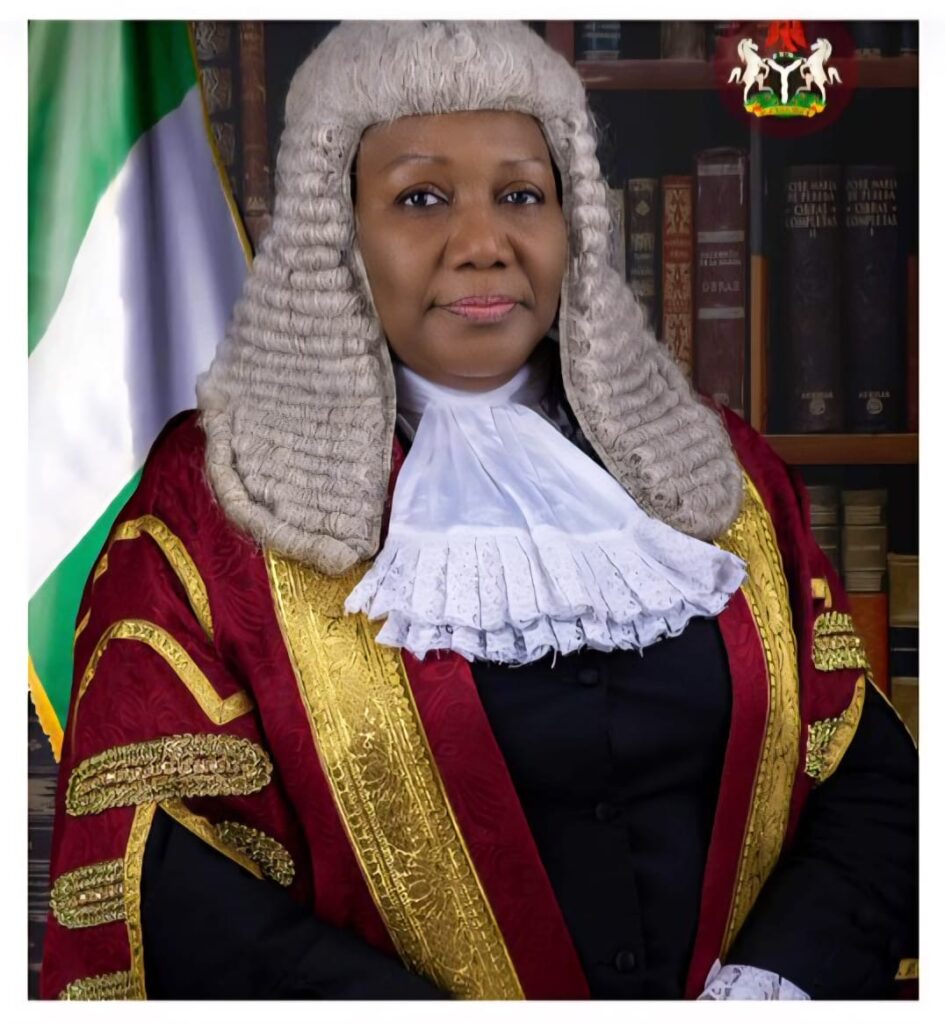
In what many legal observers have described as a watershed moment for judicial accountability and self-correction in Nigeria, the National Judicial Council (NJC) has formally reversed its earlier decision suspending Justice Jane E. Inyang of the Court of Appeal, Uyo Division. The decision, taken at the Council’s 110th meeting held in Abuja, has not only restored Justice Inyang’s professional standing but also reaffirmed the importance of due process, fairness, and the rule of law within the judiciary itself.
The NJC, upon a thorough review, faulted its previous resolution reached at its 108th meeting, where Justice Inyang was suspended for one year without pay. Central to the reversal was the Council’s acknowledgment that the petition upon which the suspension was based was filed outside the constitutionally stipulated six-month period. By law and established judicial practice, such petitions are statute-barred and ought not to be entertained. This procedural lapse alone was sufficient to invalidate the earlier decision.
Beyond the issue of limitation, the NJC further noted that the matter forming the basis of the petition was already subject to an appeal at the time the suspension was imposed. As such, the issue was sub judice, meaning it was actively before a court of competent jurisdiction. The Council admitted that it erred by delving into a matter that was still under judicial consideration, thereby breaching a fundamental principle of legal restraint.
In correcting its mistake, the NJC ordered that all salaries and emoluments withheld during Justice Inyang’s suspension be fully calculated and paid to her. This restitution underscores the Council’s acceptance that the suspension was wrongful and that Justice Inyang suffered unjust consequences as a result.
The controversy surrounding Justice Inyang stemmed from allegations that she granted an improper ex parte order allowing a receiver-manager to sell a disputed property while the substantive matter was still at an interlocutory stage. However, a closer examination of the facts reveals that the order in question was not an ordinary or illegal ex parte order. Rather, it was granted in aid of a receivership, pursuant to Sections 555 to 563 of the Companies and Allied Matters Act (CAMA) 2020, which empower courts to issue protective orders to preserve assets pending final determination.
Legal experts have pointed out that such orders are routine in receivership matters and are designed to prevent the dissipation or destruction of assets by debtors. Justice Inyang’s order was interim in nature, not final, and was accompanied by directives for service and a return date to ensure that all parties would be heard. Unfortunately, two days after issuing the order, she was elevated to the Court of Appeal and promptly ceased sitting at the Federal High Court, returning all pending files for reassignment.
Consequently, Justice Inyang had no further involvement in the case and no knowledge of subsequent events. Disturbingly, it later emerged that the interim order was allegedly not served on the respondent as directed, yet was nevertheless used by court officials and other actors to facilitate the sale of the disputed property. These actions occurred entirely outside Justice Inyang’s control and without her knowledge, long after she had moved on to her new judicial responsibilities.
Adding to the controversy was the fact that the buyer of the property, Justice S. Essien of the National Industrial Court—who claimed to have purchased it on behalf of a relative—was not subjected to disciplinary action. Similarly, court officials, bailiffs, and security operatives allegedly involved in the execution of the sale were not sanctioned. This selective accountability raised serious concerns about fairness and consistency in the handling of the case.
More striking still was the revelation that the petitioner reportedly withdrew allegations of bribery against Justice Inyang during proceedings before an NJC panel chaired by Justice Mary Odili. The petitioner allegedly apologized and admitted that he was convinced no bribe had influenced the order. Despite this retraction, the NJC at the time still proceeded to indict Justice Inyang—an action now widely viewed as unjust.
Justice Inyang’s vindication carries deeper significance given her long-standing reputation for integrity, independence, and courage. A jurist with a distinguished legal lineage, she is known for her principled dissent in high-profile cases, including the Ogun State governorship election petition, and for delivering the lead judgment affirming the conviction of hotelier Rahman Adedoyin for murder. Her career has been marked by a refusal to bow to pressure, money, or power.
Ultimately, this reversal is also seen as a strong statement by the Chief Justice of Nigeria, Justice Kudirat Kekere-Ekun. It reflects her willingness to uphold justice not only by disciplining erring judges, but also by correcting institutional errors when judges are wrongfully treated. The NJC’s decision sends a powerful message: while judicial officers are not above scrutiny, they are equally entitled to fairness, due process, and the courage of institutions to admit and correct their mistakes.



Responses