Nnamdi Kanu Sparks Controversy in Court: “Are You Insane? You Cannot Convict Me!”


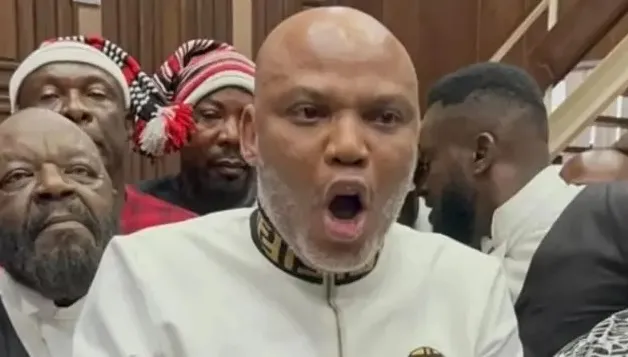
A dramatic scene unfolded in Abuja as the detained leader of the Indigenous People of Biafra (IPOB), Mazi Nnamdi Kanu, openly confronted the trial judge during his latest court appearance. In a heated exchange captured on video, Kanu furiously declared, “Are you insane? You cannot convict me. I am Nnamdi Kanu!”—a statement that has since ignited widespread debate across Nigeria and social media platforms.
The viral footage, originally shared on YouTube, shows Kanu visibly agitated as he spoke out against what he described as “an unlawful trial.” His courtroom outburst appeared to reflect his continued frustration with the Nigerian judicial system, which he insists lacks the moral and legal grounds to convict him. The IPOB leader, who has been in detention for several years, faces multiple charges including treasonable felony and terrorism-related offences.
The dramatic moment quickly divided public opinion. Some of Kanu’s supporters viewed his words as an act of defiance and courage, while others described it as evidence of mental exhaustion after prolonged detention. One commenter wrote, “Kanu, you have already won the battle. Nigeria as a country is finished… Justice Omotosho is a disgrace.” Others, however, were less sympathetic, with another user stating, “Seems like this man is depressed.”
Among those expressing support, many described Kanu as a freedom fighter who has become a symbol of resistance against oppression in Nigeria’s southeast. “God bless Mazi Nnamdi Kanu. We love you so much,” one supporter wrote passionately. But critics questioned his emotional stability and judgment, especially following his decision to represent himself in court after reportedly sacking his legal team.
Skeptics also highlighted the potential legal consequences of Kanu’s courtroom outburst. A user identified as Willy2025 commented, “He is making a very serious and costly mistake by this act of contempt. Upon his arraignment, the laws he violated were read to him and he said he understood them. He can’t now ask under which law he’s being tried.” Another contributor, Jakumo, added, “This arrogance and confrontation will only worsen his case. Judges are human too, and they don’t take insults lightly.”
The reactions captured a broader sentiment of frustration, fatigue, and polarization surrounding Kanu’s trial. While some Nigerians see him as a revolutionary standing up against perceived injustice, others believe his rhetoric and actions have fueled violence and division in the southeast. “You can rant and yell all you want,” one user remarked, “but it doesn’t stop justice from being served.”
Legal observers argue that the trial has become as much a political and emotional issue as a legal one. Kanu’s insistence that the Nigerian court has no jurisdiction over him stems from his long-standing claim that Biafra’s struggle is a matter of self-determination, not criminality. His supporters maintain that his prosecution violates international laws on the right to self-governance, while the government insists that IPOB’s activities have endangered national security.
On the other hand, some commentators ridiculed the entire spectacle. One post read, “If this is how battles are won, then we need to redefine victory. Hiding under beds every Monday can’t be called bravery.” Others called on the judiciary to handle the case swiftly to restore public confidence, describing the current situation as a reflection of Nigeria’s broken justice system.
Kanu’s latest courtroom outburst appears to underscore a deepening sense of despair and defiance. His words—“You cannot convict me. I am Nnamdi Kanu”—seem to embody both a statement of faith and a rejection of the authority prosecuting him. To his supporters, it was a declaration of indomitable spirit; to his detractors, it was a reckless display of arrogance that may seal his fate.
As reactions continue to pour in, one thing is certain: Nnamdi Kanu remains one of the most polarizing figures in Nigeria’s political landscape. His case has become a mirror reflecting the country’s divisions—between those who see him as a hero of liberation and those who view him as a dangerous agitator. Whether his bold defiance will translate into vindication or condemnation remains to be seen, but his courtroom declaration will undoubtedly echo in Nigeria’s political discourse for years to come.



Responses