Obasanjo Speaks on Third Term Claims

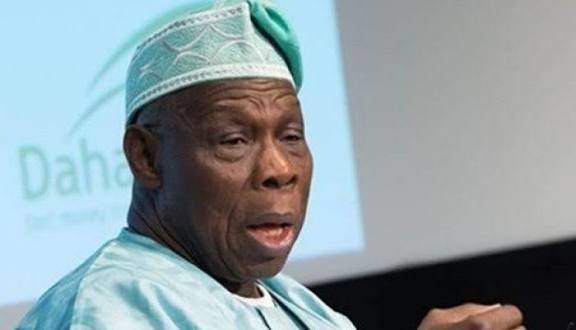
Former Nigerian President Olusegun Obasanjo has once again addressed one of the most persistent political stories that has followed him since he left office the claim that he wanted a third term. For years, this allegation has been part of Nigeria’s political gossip, with many insisting he attempted to extend his stay in power beyond the constitutional limit of two terms. But at an event in Accra, Ghana, the former president dismissed the story as false, calling it a myth that no one has ever been able to prove.
Obasanjo was speaking at the Democracy Dialogue organised by the Goodluck Jonathan Foundation, where he took questions and reflected on his time in office. With characteristic bluntness, he told the audience that no living or deceased Nigerian could ever truthfully say he approached them about seeking a third term. In his words, “I’m not a fool. If I wanted a third term, I know how to go about it. And there is no Nigerian dead or alive that would say I called him and told him I wanted a third term.”
For him, the matter is simple. He explained that during his time as president, he achieved something far more difficult than extending tenure—securing debt relief for Nigeria. That achievement required years of negotiations with international creditors, pressure from powerful countries, and consistent diplomatic effort. He argued that if he could succeed in something so challenging, then winning a third term would have been far easier, if that had been his desire. “I keep telling them that if I wanted to get debt relief, which is more difficult than getting a third term, and I got it, if I wanted a third term, I would have got it too,” he said.
Beyond defending himself, Obasanjo used the opportunity to speak on a wider issue that affects leadership in Africa the idea that some leaders see themselves as indispensable. According to him, this belief is not only dangerous but also against the will of God. In his view, no leader should ever think they are the only one capable of leading a country. He explained it in simple spiritual terms: life and leadership are temporary, and God has the power to remove anyone at any time. So when leaders cling to power or give the impression that no one else can govern, they are committing what he described as a sin against God.
He went further to talk about the natural cycle of leadership and productivity. Obasanjo reminded the audience that the best period of service usually comes when a leader is still young, vibrant, and full of energy. Once that vibrancy fades, it is better to step aside and allow others to take responsibility. He criticized those who hold on until their later years, believing the country cannot survive without them. “I know that the best is done when you are young, ideal and vibrant and dynamic. When you are ‘kuje kuje’ you don’t have the best. But some people believe that unless they are there, nobody else,” he said.
Obasanjo added that when leaders convince themselves that there is no alternative to their rule, they fail to recognize reality. History has shown that when one leader exits, another always rises to fill the space. Sometimes the successor does better, sometimes worse, but the important point is that no one is irreplaceable. “They will even tell you that they haven’t got anybody else. I believe that that is a sin against God, because if God takes you away, which God can do anytime, then somebody else will come, and that somebody else may do better or may do worse,” he said.
His comments come at a time when leadership questions are once again on the front burner across Africa. From disputed elections to constitutional amendments that allow leaders to extend their stay, many countries on the continent struggle with the problem of leaders overstaying their welcome. Obasanjo’s words remind Africans that leadership must always be about service, not entitlement.
This is not the first time Obasanjo has spoken out against the third term allegation. Over the years, he has repeatedly denied it, but the story has refused to die, partly because during his second term, there were whispers of constitutional amendments being pushed in the National Assembly that would have allowed a president to serve longer. Many critics at the time believed the amendments were linked to him, but no concrete evidence ever surfaced. His defense has always been the same—that he never asked for it and never plotted to change the constitution for his benefit.
The former president also continues to position himself as a voice of conscience on governance. Whether Nigerians agree with him or not, he remains vocal about democracy, leadership, and the responsibility of those who hold public office. For him, stepping aside after serving his two terms was not just an act of following the constitution but also a recognition that leadership must have limits. He left power in 2007 and has since become one of Africa’s most outspoken elder statesmen.
By linking the idea of indispensable leadership to sin, Obasanjo brings in a moral and spiritual angle that many Africans can relate to. In societies where religion plays such an important role, his argument carries weight. He is essentially saying that holding on to power as though one’s country will collapse without you is not only a political mistake but also an offense before God.
The debate over Obasanjo’s third term claim may never fully disappear, as it has become part of Nigerian political history. But in Accra, he once again tried to put the matter to rest. His message was clear: he never wanted a third term, he never asked for one, and anyone who claims otherwise cannot produce evidence. More importantly, his focus was on the future, urging leaders across Africa to avoid the temptation of clinging to power and to recognize that no one is indispensable.
For Nigerians listening to him, the reminder is timely. Leadership should be service, not possession. Power should be temporary, not permanent. And when the time comes, every leader must know when to step aside, trusting that the nation will continue without them.


Responses