Peter Obi Was Not Rigged Out of 2023 Election – Lai Mohammed Insists

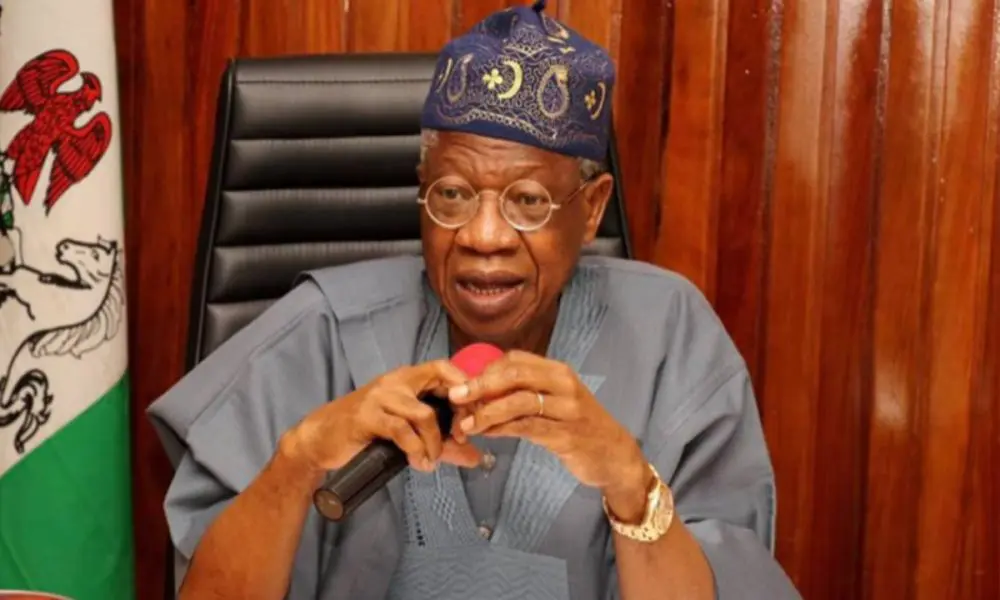
Former Minister of Information and National Orientation, Lai Mohammed, has stated that the former presidential candidate of the Labour Party (Nigeria), Peter Obi, was not rigged out of the 2023 Nigerian presidential election.
Mohammed argued that contrary to claims widely circulated on social media after the election, Obi neither won the election nor satisfied the constitutional requirements required to emerge as Nigeria’s president.
The former minister made these remarks during an appearance on the State Affairs podcast hosted by Edmund Obilo, where he discussed the controversies that followed the 2023 polls.
Obi Could Not Have Become President
According to Mohammed, even if Obi had secured up to 10 million votes, he still would not have become president because Nigeria’s electoral system requires more than simply winning the popular vote.
He explained that the Independent National Electoral Commission conducts presidential elections based on two major constitutional conditions. A candidate must secure the highest number of votes nationwide and must also obtain at least 25 percent of votes cast in two-thirds of Nigeria’s states.
“Even if Peter Obi had won 10 million votes, he could not have become president,” Mohammed said while speaking on the podcast.
He stressed that these requirements are clearly outlined in the Constitution of the Federal Republic of Nigeria, which governs the country’s electoral processes.
Election Outcome and Voting Spread
Providing details of the election results, Mohammed noted that Obi finished third in the race behind Atiku Abubakar of the Peoples Democratic Party and eventual winner Bola Ahmed Tinubu of the All Progressives Congress.
According to him, Obi secured the constitutionally required 25 percent of votes in only 15 states across the federation.
Atiku, on the other hand, achieved the same threshold in 21 states, while Tinubu surpassed the requirement in 29 states and also secured the highest number of votes overall.
“Obi did not come first, and he did not even come second. He came a close third to Atiku,” Mohammed said while explaining the outcome of the election.
He insisted that the results clearly demonstrated that Obi did not meet the conditions needed to be declared president.
Addressing International Concerns
Mohammed also revealed that following the election, questions about its legitimacy surfaced both locally and internationally. He said this prompted him and his team to engage with global stakeholders in order to clarify the situation.
According to him, they visited think tanks, international media organizations, and policy groups in countries including the United States and the United Kingdom to explain the constitutional framework governing Nigeria’s elections.
He said the aim of the engagements was to counter what he described as a widespread misconception—especially on social media—that Obi had actually won the election but was denied victory.
“If you followed social media at the time, you would feel that the Labour Party won the election. They were everywhere online,” he said.
However, Mohammed maintained that the perception did not align with the official results released by the electoral authorities.
Role of Social Media in the Narrative
The former minister also pointed to the influence of online discussions and activism, which he said contributed to the belief among many Nigerians that Obi had won the election.
According to him, the Labour Party’s strong presence and popularity on social media created a narrative that was different from the official electoral outcome.
Despite this, Mohammed insisted that the actual results and constitutional requirements made it impossible for Obi to be declared the winner.
Hypothetical Alliance with Atiku
Mohammed further suggested that the outcome of the election might have been different if Obi had remained within the Peoples Democratic Party and contested alongside Atiku Abubakar instead of running separately under the Labour Party.
He said such an alliance could have potentially strengthened the opposition and altered the final result.
“I think that if he had stayed with Atiku, the PDP would have won,” he said.
Continuing Debate Over the 2023 Election
The 2023 Nigerian presidential election remains one of the most debated elections in the country’s recent political history. While supporters of the ruling party maintain that the process was legitimate, critics and opposition supporters have continued to question aspects of the election and its conduct.
Nevertheless, Mohammed maintained that the outcome reflected the constitutional provisions governing Nigeria’s democratic process and insisted that Obi was neither the winner nor a victim of electoral manipulation.




Responses