Petrol Price May Hit N900/Litre Amid OPEC+ Output Increase and Global Oil Market Tensions


Nigerians could face a fresh wave of fuel price hikes this week as the pump price of petrol edges dangerously close to the N900 per litre mark. This follows both domestic supply challenges and a new decision by the global oil cartel OPEC+ to increase oil production by over half a million barrels daily starting in September.
Currently, crude oil prices are hovering around $70 per barrel, and the ripple effect is already being felt at Nigerian depots and filling stations. Over the weekend, several marketers increased their ex-depot prices—the cost at which petrol is sold to retailers—by as much as N50 per litre. This has pushed the average gantry price from about N820 on Thursday to a staggering N870 by Sunday.
Although many filling stations across Lagos and Ogun States are still selling petrol within the range of N865 to N875 per litre, price boards in some locations now show rates as high as N910. For instance, Matrix filling station at Kara, along the Lagos-Ibadan Expressway, displayed N910 per litre on Saturday, while Rainoil in Ibafo was selling for N900 per litre on Sunday.
These shifts are causing growing concern among consumers, many of whom are already struggling with the broader economic fallout of inflation, a weakening naira, and rising transportation costs.
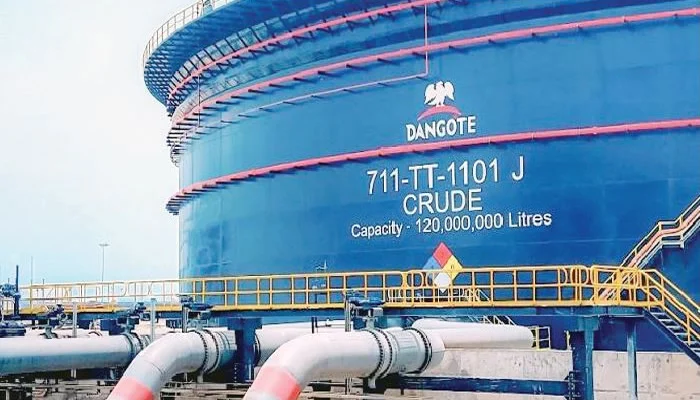
Data from Petroleumprice.ng on Sunday showed that some major depots had significantly increased their rates. Aiteo, Aipec, A.A. Rano, and Emadeb were offering ex-depot prices of around N865. Others such as NIPCO, Matrix, Sahara, and Bono set theirs at N870. Dangote’s depot remained the most affordable, selling petrol at N858. However, prices from marketers like Fynefield, Mainland, Sigmund, Ever, and Zone 4 were as high as N900 per litre.
Fuel station operators have been slow to immediately adjust their pump prices, suggesting many are still selling old stock. But experts warn that the general public should brace for widespread price increases in the coming days as new supply takes effect.
According to the National Vice President of the Independent Petroleum Marketers Association of Nigeria (IPMAN), Hammed Fashola, fluctuations in the exchange rate and global crude oil prices are key drivers of the recent fuel price adjustments. He noted that the naira’s continued volatility against the U.S. dollar is making it harder for importers to predict landing costs and manage supply chains efficiently.
Speaking to The PUNCH, Fashola urged patience until Monday, saying, “Let’s wait till Monday to know where things are headed.” His remarks reflect the uncertainty that currently clouds Nigeria’s downstream petroleum sector, which remains largely deregulated and heavily influenced by international market forces.
Adding more complexity to the fuel pricing landscape is the latest development from the Organization of the Petroleum Exporting Countries and its allies (OPEC+), which met virtually on Sunday. The coalition approved a production increase of 547,000 barrels per day for the month of September. This marks the latest in a string of monthly production hikes designed to claw back market share and stabilize global supplies.
The group’s decision comes amid mounting geopolitical tensions and increasing pressure from the United States on countries like India to cut back on Russian oil imports, a strategic move aimed at forcing Russia to negotiate an end to the war in Ukraine.
According to energy analysts, the new production boost represents a reversal of OPEC+’s earlier output cuts and is being carried out ahead of schedule. In total, the output hike and a separate deal with the United Arab Emirates could inject an extra 2.5 million barrels per day into the global market—roughly 2.4% of global demand.
Brent crude, the international benchmark, closed just under $70 per barrel on Friday. That’s a significant recovery from the year’s low of around $58 in April. Analysts attribute this to increased seasonal demand and tightening stockpiles in key markets.
Commenting on the development, Amrita Sen, co-founder of global energy consultancy Energy Aspects, said that OPEC+ is showing renewed confidence in the global oil market. “Given fairly strong oil prices at around $70, it does give OPEC+ some confidence about market fundamentals,” she said.
All eyes are now on how Nigerian marketers will respond this week. With ex-depot prices already climbing and international crude prices staying firm, most filling stations are expected to adjust their pump prices upwards—some potentially breaching the N900 per litre threshold.
The implications for everyday Nigerians are significant. Higher petrol prices will further increase the cost of transportation, food, and other goods, compounding inflationary pressures already gripping the economy.
The federal government has not commented officially on the recent surge in depot prices. However, industry insiders believe that without intervention—either through a stabilization fund or a temporary pricing cap—retail prices could rise further, especially if the naira continues to depreciate.
OPEC+ is scheduled to meet again on September 7, when member states may decide on reinstating previously suspended production cuts. These cuts, amounting to 1.65 million barrels per day, are currently expected to remain in place through the end of 2026, but could be adjusted depending on geopolitical developments and global demand.
As the world’s largest oil producers fine-tune their output levels to balance price stability with market share, countries like Nigeria—still reliant on imported fuel due to inadequate refining capacity—remain highly vulnerable to global shocks.
For now, Nigerians must watch the pumps and prepare their wallets. Unless there is a major drop in crude oil prices or a strengthening of the naira, the N900 per litre mark could become the new normal sooner than many hoped.



Responses