Report Alleges Wike Tried to Amend Asset Declaration After U.S. Property Revelations

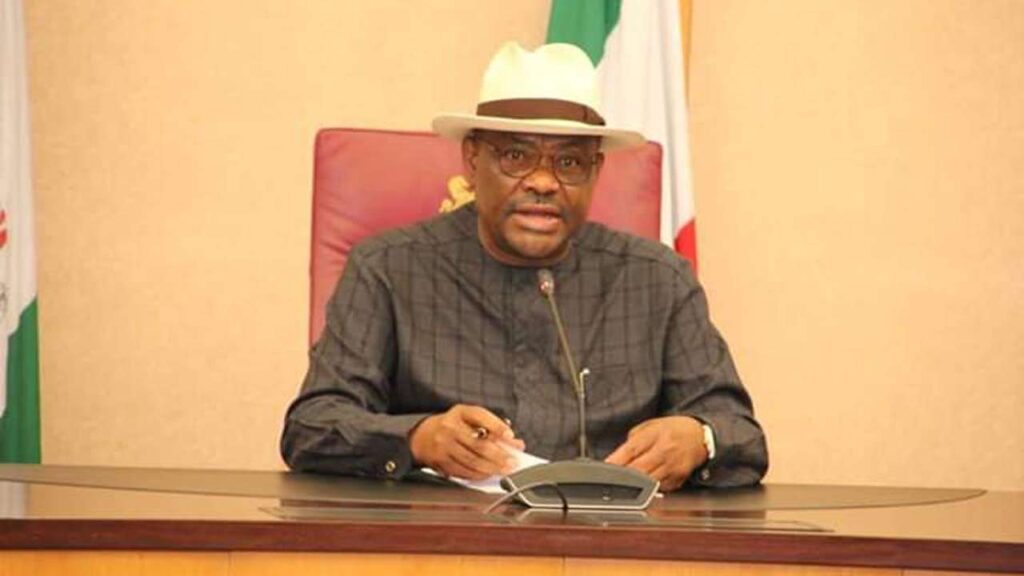
Fresh controversy surrounds Nigeria’s Minister of the Federal Capital Territory, Nyesom Wike, following reports that he allegedly sought to amend his official asset declaration after revelations about the acquisition of multi-million-dollar properties in Florida, United States.
According to findings by Metro Daily, the minister approached the Code of Conduct Bureau (CCB) in an attempt to update his asset filings to include the newly exposed foreign properties. However, CCB officials reportedly informed him that his original declaration had already been transmitted to the Economic and Financial Crimes Commission (EFCC) for verification and further investigation.
Sources within Wike’s circle confirmed that the development has caused unease, as investigators continue to trace a pattern of property purchases linked to the minister’s family in the U.S.
Documents cited in the report show that Wike allegedly acquired a $2 million mansion in Winter Springs, Florida, in March 2025. The transaction was said to have been carried out through a private deal and registered under the names of his wife, Justice Eberechi Wike, and their three children — a move investigators believe was designed to obscure direct ownership.
The Florida property, a two-storey residence covering more than 4,000 square feet, is only one of several high-value assets reportedly tied to the family. Between 2021 and 2023, three other homes were allegedly purchased in cash and quickly transferred to the couple’s children via quitclaim deeds executed by Mrs. Wike, who serves as a senior judicial officer in Nigeria.
These transactions, the report notes, appear to have been conducted discreetly to keep them outside the radar of Nigeria’s anti-corruption agencies — including the CCB, EFCC, and the Independent Corrupt Practices and Other Related Offences Commission (ICPC).
Under Nigerian law, all public officials are required to declare their complete assets — domestic and foreign — upon assumption of office. The omission of any such properties constitutes a violation of the country’s Code of Conduct regulations.
A CCB insider quoted in the report said:
“When the minister requested to amend his asset declaration to include those properties, he was informed that his documents had already been forwarded to the EFCC for forensic verification.”
The EFCC is reportedly conducting a comprehensive financial audit of Wike’s asset filings to determine potential breaches of declaration laws or illicit enrichment.
Meanwhile, several civil society organizations (CSOs) and advocacy groups have called for a full probe into the minister’s finances, alleging that the case goes beyond non-disclosure and may involve the diversion of public funds.
In response, Wike’s camp has dismissed the allegations as politically motivated, describing them as part of an orchestrated attempt to tarnish his image and weaken his political influence. The minister maintains his innocence, insisting that no evidence links him to any wrongdoing.
However, property documents obtained from U.S. public registries appear to contradict his denials, detailing a series of transfers involving his immediate family.
A senior EFCC source, speaking anonymously, was quoted as saying:
“He can keep denying, but the forensic audit will reveal the truth. Our job is to uphold integrity in public service, no matter who is involved.”
As the investigation unfolds, the case has reignited debate about corruption, transparency, and accountability among Nigeria’s political elite — and the lengths to which some may go to conceal their wealth abroad.


Responses