Senior Iranian Military Official Abu al-Qassem Baba’iyan Killed in Israeli Airstrike

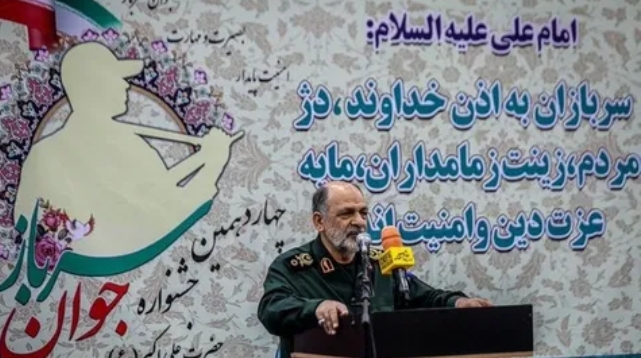
The Israel Defense Forces (IDF) has announced that a senior Iranian military official, Abu al‑Qassem Baba’iyan, was killed in an airstrike carried out in Tehran.
According to the Israeli military, the strike was conducted by the Israeli Air Force based on what it described as precise intelligence gathered by the IDF’s intelligence directorate.
Senior Role in Iran’s Military Command
The IDF described Baba’iyan as the head of the military office of Iran’s Supreme Leader, Ali Khamenei, and a key figure responsible for coordinating Iran’s military activities against Israel.
According to Israeli officials, Baba’iyan also served as the chief of staff of the emergency command headquarters known as Khatam al‑Anbiya Central Headquarters.
The headquarters plays a central role in coordinating operations among different branches of Iran’s armed forces.
The Israeli military stated that Baba’iyan was responsible for linking various Iranian military units and organizations involved in planning and carrying out operations against Israel, especially during emergency situations.
Leadership Changes Following Previous Strikes
Baba’iyan’s appointment to the role came after the earlier killing of Mohammad Shirazi, who previously served as the military chief of staff to Iran’s Supreme Leader.
Shirazi was reportedly killed during the opening phase of an Israeli military campaign referred to as Operation Roaring Lion.
In addition, the IDF said Baba’iyan had also recently taken over responsibilities following the death of Ali Shadmani, who had served as chief of staff of Iran’s emergency command structure before being killed in another Israeli operation.
These developments highlight what Israeli officials describe as a broader strategy targeting senior figures within Iran’s military leadership.
Part of a Wider Campaign
The strike on Baba’iyan is reportedly part of Israel’s ongoing military campaign against Iranian command structures and strategic assets.
The IDF said operations such as Operation Roaring Lion are intended to degrade Iran’s ability to coordinate military activities against Israel.
Israeli officials argue that targeting high-ranking commanders disrupts decision-making structures and weakens operational coordination within Iran’s military network.
Escalating Regional Tensions
The incident adds to growing tensions in the Middle East, where hostilities between Israel and Iran have intensified through direct strikes, proxy conflicts, and cyber operations.
Both countries have accused each other of aggressive actions and destabilizing the region.
Iran has repeatedly warned that attacks on its territory would provoke retaliation, while Israel maintains that it will continue operations aimed at preventing threats to its national security.
Uncertain Impact on the Conflict
Analysts say the killing of high-ranking officials can temporarily disrupt military coordination but may not necessarily end hostilities.
In previous conflicts, leadership losses have often been followed by rapid replacements within military hierarchies.
Nevertheless, such targeted strikes can have symbolic and strategic effects, especially during periods of heightened conflict.
As the situation continues to evolve, the strike on Baba’iyan marks another significant development in the ongoing confrontation between Israel and Iran, raising concerns about the potential for further escalation across the region.


Responses