Subsidy Removal Was Painful but Necessary — Otti Backs Tinubu’s Economic Reform

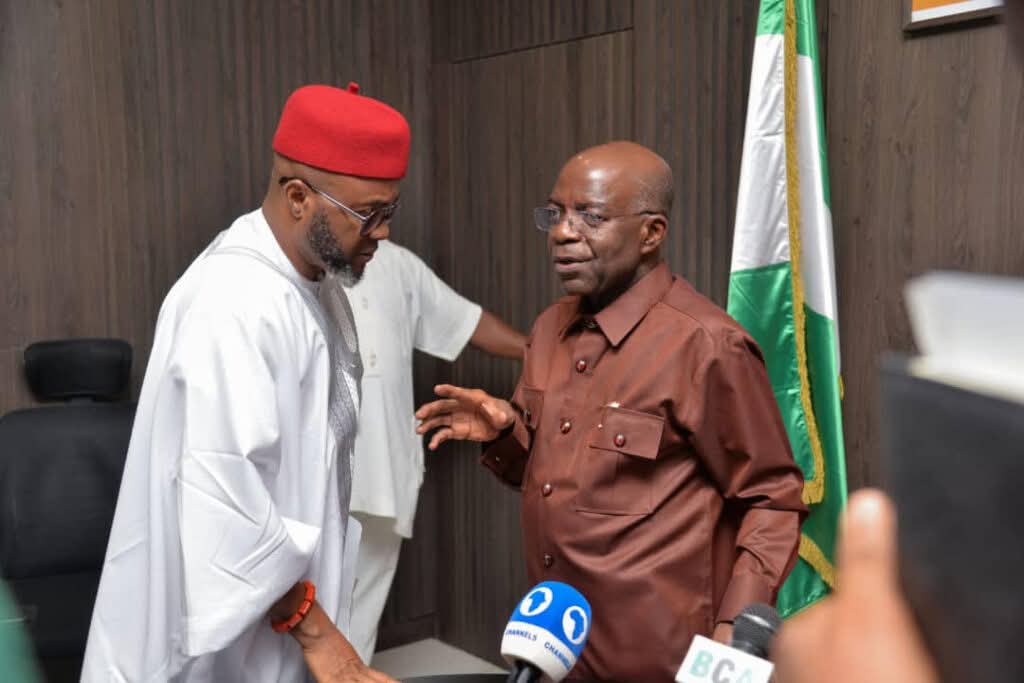
Governor Alex Otti of Abia State has thrown his weight behind President Bola Ahmed Tinubu’s controversial decision to remove fuel subsidy, describing it as a courageous move that will ultimately benefit Nigeria despite the immediate hardship it has caused.
Speaking during a meeting with Victor Ikeji, the Federal Commissioner representing Abia State at the Federal Character Commission, Governor Otti acknowledged that while the policy has been painful for citizens, it was necessary to correct what he described as years of economic distortion.
According to Otti, fuel subsidy had long been widely criticized by economists and policy experts as inefficient and riddled with corruption. He noted that even before assuming office, he had consistently argued in public writings that the subsidy regime was unsustainable and functioned more as a financial drain than a benefit to ordinary Nigerians. In his view, President Tinubu demonstrated political will by taking the difficult step to end it—something previous administrations hesitated to do.
The governor likened the reform to correcting a bad habit, explaining that any meaningful adjustment would inevitably come with discomfort. However, he expressed confidence that the long-term gains—such as improved fiscal stability and better allocation of national resources—would outweigh the short-term pain currently being experienced by citizens.
Otti also used the occasion to commend President Tinubu for appointing Victor Ikeji to the Federal Character Commission, describing the decision as a recognition of Abia State. He assured that Ikeji would uphold the principles of fairness, equity, and balanced representation, which are central to the commission’s mandate.
In response, Ikeji expressed gratitude for the confidence reposed in him and pledged to discharge his duties diligently. He emphasized his commitment to ensuring that Abia State is properly represented in federal appointments and opportunities, while also improving the efficiency of the commission’s operations within the state.
While Otti’s endorsement of subsidy removal aligns with the position of many economic analysts, it has sparked mixed reactions among Nigerians. Supporters of the policy argue that subsidy payments had become a major burden on government finances, often benefiting a small group of intermediaries rather than the general population. They believe that removing it creates room for investment in critical sectors such as infrastructure, healthcare, and education.
However, critics remain unconvinced. Many Nigerians point to the sharp rise in fuel prices and the ripple effects on transportation, food costs, and overall living expenses. For them, the promised long-term benefits remain uncertain, especially in the absence of visible improvements in public services or economic conditions.
There is also a lingering debate about fairness and trust. Some citizens question whether the savings from subsidy removal are being transparently managed or effectively reinvested to improve living standards. Others argue that without strong social safety nets, the burden of reform disproportionately falls on ordinary people, while political leaders remain insulated from its impact.
The controversy highlights a broader challenge facing Nigeria’s economic reforms: balancing necessary structural changes with the immediate realities of citizens’ livelihoods. While policymakers like Otti emphasize long-term gains, many Nigerians are more concerned about the present cost of living and the tangible benefits they can see and feel.
As the debate continues, the success or failure of subsidy removal will likely depend not just on the policy itself, but on how effectively its outcomes are managed and communicated to the public.




Responses