Tanko Muhammad and the Judgment That Shook Public Faith


When the news of the death of Justice Ibrahim Tanko Muhammad, former Chief Justice of Nigeria, broke, it called for sober reflection rather than noise or celebration. Death often closes a personal chapter, but it does not automatically close the public conversation surrounding a person’s actions and legacy. For many Nigerians—particularly ordinary citizens whose primary encounter with democracy is casting a vote—Tanko Muhammad’s name will forever be linked to one defining moment: January 14, 2020, the day the Supreme Court delivered its judgment on the Imo State governorship election.
On that day, the apex court overturned the outcome of the 2019 Imo governorship election and installed a candidate who had not been declared winner at the polls. The ruling was based on the inclusion of results from hundreds of polling units that had earlier been excluded during collation. In legal terms, the court described its decision as a correction of an electoral error. In the emotional and psychological experience of many Nigerians, however, it felt like something far more unsettling: the nullification of the people’s will.
For the average voter in Nigeria, participating in elections is already an act that requires endurance and faith. Citizens wake up before sunrise, stand in long queues under harsh weather, and sometimes risk violence, all for the belief that their vote will count. When a court judgment later appears to overturn that collective sacrifice, the sense of betrayal can be profound. Most citizens do not read court judgments or study legal reasoning; they understand outcomes. To them, it seemed as though thousands of votes cast in good faith were erased by distant figures in black robes, removed from the lived reality of the polling unit.
This was where the real damage occurred—not only in Imo State, but nationwide. The judgment reinforced a long-standing fear that elections in Nigeria do not truly belong to the people. Conversations in buses, markets, and family compounds took on a darker tone. Many began to ask a troubling question: “Why vote at all, if courts can decide everything?” That creeping sense of hopelessness may be the most enduring consequence of the Imo ruling.
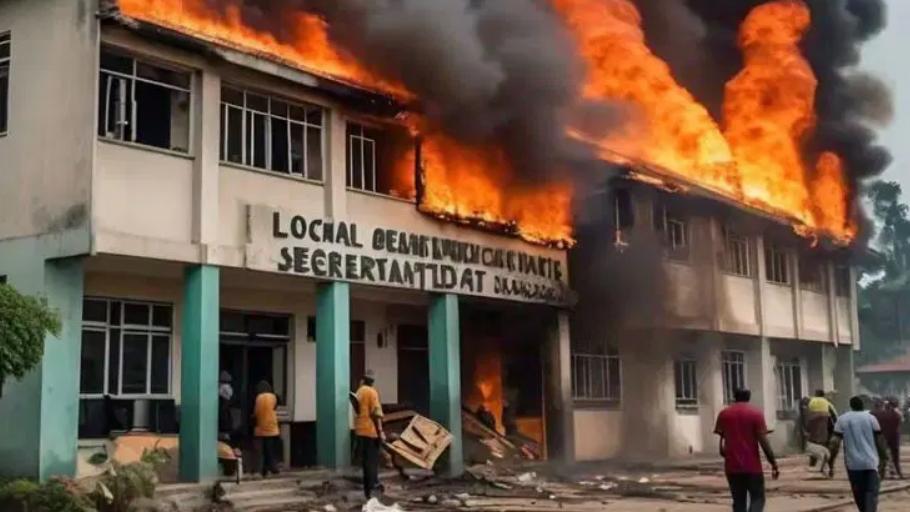
Imo State itself became emblematic of political instability. Protests erupted, tensions deepened, and mistrust of democratic institutions intensified. What was intended as a legal resolution instead widened the gulf between the judiciary and the public it exists to serve. Even among those who defended the judgment as legally sound, there remained an unanswered question from ordinary Nigerians: how can justice be technically correct yet feel fundamentally unfair?
Under Tanko Muhammad’s leadership, the judiciary increasingly appeared—rightly or wrongly—to many Nigerians as less of a neutral arbiter and more of a political actor. Whether this perception was accurate mattered less than the fact that it gained traction. Once public belief in judicial independence erodes, the damage extends far beyond election disputes. It seeps into everyday life: the poor citizen who assumes justice is for sale, the accused who believes outcomes are predetermined, and the public that sees influence rather than truth as the ultimate currency.
Tanko Muhammad’s tenure as Chief Justice ended amid internal crises within the judiciary itself, reinforcing the image of an institution struggling to maintain its moral authority. By the time he exited office, public confidence had already been badly shaken.
Now that he has passed on, there is a temptation to soften history or focus solely on his rise through the judicial ranks. But honesty is essential if Nigeria hopes to rebuild trust in its courts. A legacy is not defined only by intention or legal theory; it is shaped by how actions are experienced by the people. For many Nigerians, the Imo judgment marked a turning point—a moment when faith in the power of the ballot began to fade.
This reflection is not about condemning or celebrating a man in death. It is about acknowledging the injury done to public trust and drawing lessons from it. Courts do not survive on constitutional authority alone; they survive on legitimacy. When citizens believe judges can overturn their collective will without explanations that feel clear, transparent, and convincing, democracy itself is weakened.
Tanko Muhammad’s death ends his personal journey, but the lesson of that era remains alive. If the Nigerian judiciary is to recover fully, it must remember that justice is not only about legal correctness. It must also be seen, felt, and understood as fair. Once people lose faith in the courts, they do not seek refuge in the law—they quietly turn away from it.




Responses