U.S. Defense Secretary Confirms Military Readiness Over Nigeria Crisis After Trump’s Warning

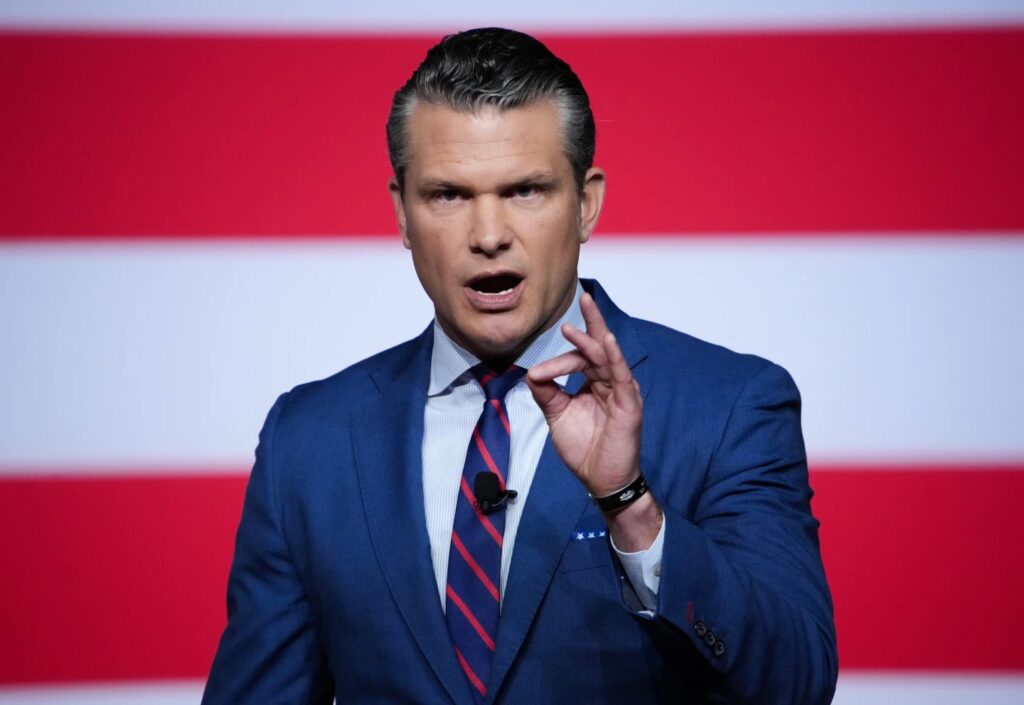
United States Defense Secretary Pete Hegseth has confirmed that the Department of War is preparing for potential action in Nigeria following reports of continued attacks against Christian communities in parts of the country.
Hegseth made the declaration on Saturday morning in a post on X (formerly Twitter), responding directly to a message from President Donald Trump, who had earlier condemned what he described as the “systematic killing of Christians” in Nigeria.
“Yes sir. The killing of innocent Christians in Nigeria — and anywhere — must end immediately. The Department of War is preparing for action,” Hegseth wrote. “Either the Nigerian Government protects Christians, or we will kill the Islamic terrorists who are committing these horrible atrocities.”
The comments mark the most direct statement yet from a top U.S. defense official since President Trump’s post on Friday, in which he designated Nigeria as a “Country of Particular Concern (CPC)” for alleged religious persecution.
Trump warned that Washington could suspend all forms of aid and assistance to Nigeria and might consider military intervention if the situation does not improve.
“If the Nigerian government continues to allow the killing of Christians, the U.S.A. will immediately stop all aid and assistance to Nigeria, and may very well go into that now disgraced country ‘guns-a-blazing,’” Trump posted on his Truth Social platform.
Nigerian Government Denies Allegations
In response, Nigerian officials swiftly denied any state-sponsored persecution of religious minorities, insisting that the country remains committed to protecting all citizens regardless of faith.
A spokesperson for the Nigerian Ministry of Foreign Affairs described the allegations as “false and unhelpful,” emphasizing that the government is actively combating terrorism and communal violence.
“There is no sanctioned persecution of any religious group in Nigeria,” the statement read. “We urge our partners and friends abroad to exercise caution and verify claims before making pronouncements that may inflame tensions.”
Despite the denial, reports of attacks in southern Kaduna, Plateau, and Benue States have continued to draw international attention, with human rights organizations warning that violence targeting Christian farmers has escalated in recent months.
Mixed Reactions Across Nigeria and Diaspora Communities
News of Hegseth’s statement triggered intense debate on Nigerian social media, with reactions ranging from support for U.S. intervention to fears of foreign military involvement in a sovereign African state.
One commenter wrote, “America no dey joke ooo. This might be what forces our leaders to finally take action.” Another user warned, “Tinubu and his allies better sit up, or they’ll all end up in exile with frozen assets.”
Others expressed concern over the broader implications of an American intervention. “Assist Nigeria to tackle insecurity, yes — but not through invasion,” one post read. “This genocide claim may be a cover for something deeper.”
Some Nigerians, frustrated by years of violence and government inaction, welcomed Trump’s tough stance. “We need the U.S. to act fast,” one user wrote. “Our leaders don’t care — all they think about is 2027 elections.”
A number of contributors linked the current tension to Nigeria’s internal divisions, arguing that tribal and religious intolerance have reached dangerous levels. “This APC government blew it out of proportion,” said another. “They turned blind eyes to the killings, and now the world is watching.”
Security Analysts Weigh In
Security experts have offered differing interpretations of the U.S. statements. While some view it as a warning intended to pressure Nigeria into stronger counterterrorism efforts, others believe it signals a possible escalation in U.S. involvement in West Africa.
Dr. Leonard Ajayi, a defense analyst based in Abuja, said that while Washington may not plan a full-scale invasion, targeted operations such as drone surveillance, intelligence sharing, or limited airstrikes could follow if diplomatic talks fail.
“It’s unlikely that the U.S. will put boots on the ground,” Ajayi explained. “But they could assist local forces or strike terrorist cells directly if the Nigerian government is perceived as complicit or ineffective.”
Global Implications and the Road Ahead
The potential U.S. action in Nigeria comes amid broader discussions about America’s role in African conflicts. The Biden administration had previously reduced military footprints on the continent, but the Trump presidency’s return appears to signal a more assertive doctrine — especially in regions plagued by extremist violence.
Meanwhile, human rights groups continue to call for credible investigations into recent massacres and the prosecution of perpetrators within Nigeria.
Whether the situation escalates into direct U.S. involvement remains uncertain, but one thing is clear: the crisis in Nigeria has now become a matter of global concern, with Washington’s warnings setting the stage for possible diplomatic or military fallout in the coming weeks.



Responses