Yemi Kale Explains What Okonjo-Iweala Meant by Saying Nigeria’s Economy Is “Stable”

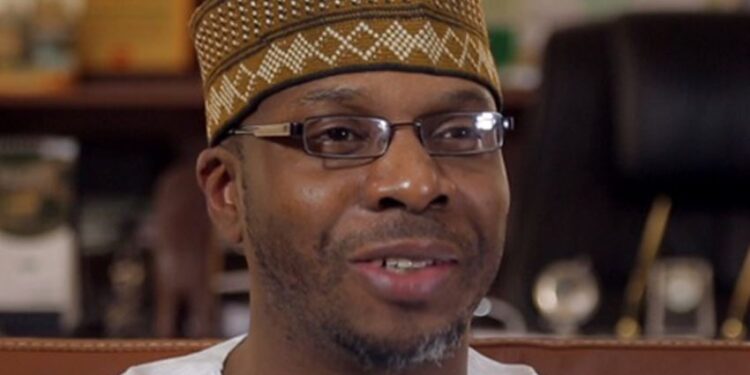
The debate around the state of Nigeria’s economy gained fresh momentum after World Trade Organization Director-General, Dr. Ngozi Okonjo-Iweala, described the country’s economy as “stable” following her recent meeting with President Bola Tinubu in Abuja. While her remarks drew mixed reactions, especially from citizens still struggling with the soaring cost of living, former Statistician-General of the Federation and ex-Chief Executive of the National Bureau of Statistics, Dr. Yemi Kale, stepped in to clarify what economists mean when they use the word “stable” in this context.
For many Nigerians, stability seems like a strange description of an economy where food prices keep climbing, transport costs continue to rise, and health care has become more expensive. Families battling with monthly rent, school fees, and inflation naturally wonder how anyone can describe the current reality as stable. But Kale explained that in economic terms, stability does not mean that life has suddenly become affordable. Instead, it refers to a stage where key macroeconomic indicators are no longer moving in unpredictable or extreme ways.
According to him, when economists say an economy is stable, they mean factors like inflation, the exchange rate, and GDP growth are no longer swinging wildly up and down. He gave an example: if inflation falls from 25 percent to 12 percent and then remains steady around that level, the economy would be described as stable. Of course, prices are still much higher than before, but because they are no longer rising at an uncontrollable pace, economists interpret that as a sign that the situation is under control.
In simpler terms, Kale likened it to a boat that had been rocking dangerously during a storm. Once the waves calm and the rocking reduces, the boat is described as stable, even though it has not yet reached the safety of the shore. That means the crisis phase is over, but the passengers—in this case, Nigerian households—are still exhausted, hungry, and worried about what comes next.
He stressed that stability is usually the first phase after a major crisis such as a currency crash, hyperinflation, or severe recession. It signals that the bleeding has stopped and that the foundations are being laid for recovery. However, he was quick to add that stability alone does not automatically relieve families of hardship. The high cost of living created during the crisis remains, and this is what Nigerians are dealing with today. Prices of rice, beans, bread, transport fares, and rent are still biting hard, and that explains why ordinary citizens do not immediately feel any difference when they hear that the economy is stable.
Kale also pointed out that the benefits of stability often flow first to businesses and investors rather than households. When the currency stabilizes or inflation stops climbing unpredictably, companies begin to plan better, balance sheets improve, and investors feel more confident about putting money into the economy. This improved confidence can eventually lead to expansion, job creation, and better wages, but those benefits take time to trickle down to the average household.
For families, the hardship remains immediate and personal. They feel the pinch every time they go to the market, pay school fees, or try to fuel their cars. Kale admitted this reality and warned that stability must be sustained long enough before citizens can see real changes in their day-to-day lives. If stability is lost and the country slips back into another crisis, then all the small gains will be wiped away, deepening frustration.
Summing up his analysis, Kale emphasized that economic stability should not be mistaken for the solution to hardship. Instead, it is the first necessary step. “The first step to reversing hardship is stability and stopping the bleed,” he explained, making it clear that his comments were purely technical and not political. He reminded Nigerians that while the present pains are undeniable, without stability, there would be no foundation to build future recovery.
This perspective helps to place Okonjo-Iweala’s comments in context. During her visit to the Presidential Villa, she praised the efforts of President Tinubu’s administration for introducing reforms that have brought a measure of predictability to the economy. According to her, the government had worked hard to stabilize key areas, but she added that stability alone was not enough. The next step, she argued, is growth—sustained, inclusive growth that goes hand in hand with building social safety nets to protect vulnerable Nigerians.
She acknowledged that reforms always come with short-term pain. Removing subsidies, adjusting currency rates, and restructuring fiscal policy all bring immediate shocks to families. But, in her view, if stability is maintained and reforms are followed through with carefully designed policies, the longer-term outcome will be a stronger economy that creates jobs and raises incomes. She stressed that government must ensure that social protection measures are strengthened so that the poorest and most vulnerable Nigerians are not left behind in the transition.
Okonjo-Iweala’s remarks and Kale’s clarification highlight the gap between technical assessments of the economy and the everyday experience of Nigerians. For many citizens, the words “stability” and “growth” will mean little until they can buy food at reasonable prices, pay transport fares without dread, and afford basic healthcare without going into debt. Yet for policymakers, achieving stability is a critical milestone. Without it, every effort at reform risks being wiped away by fresh crises.
The reality, then, is that Nigeria may be in a more predictable phase economically, but that does not erase the hardship ordinary people face daily. It simply means the foundation has been laid to move toward recovery. The true challenge for the government lies in ensuring that the benefits of stability translate quickly into improved living standards. Citizens will judge progress not by technical definitions but by what they can afford to eat, wear, and pay for in their households.
For now, Kale’s message is clear: stability is not comfort, but it is a necessary beginning. Nigerians may not feel the relief yet, but if the stability is preserved and coupled with policies that focus on job creation, income growth, and stronger social protections, the hope is that the economy will eventually move from being merely stable to being truly prosperous for its people.


Responses