Nigeria’s Excess Crude Account Now at $535,823


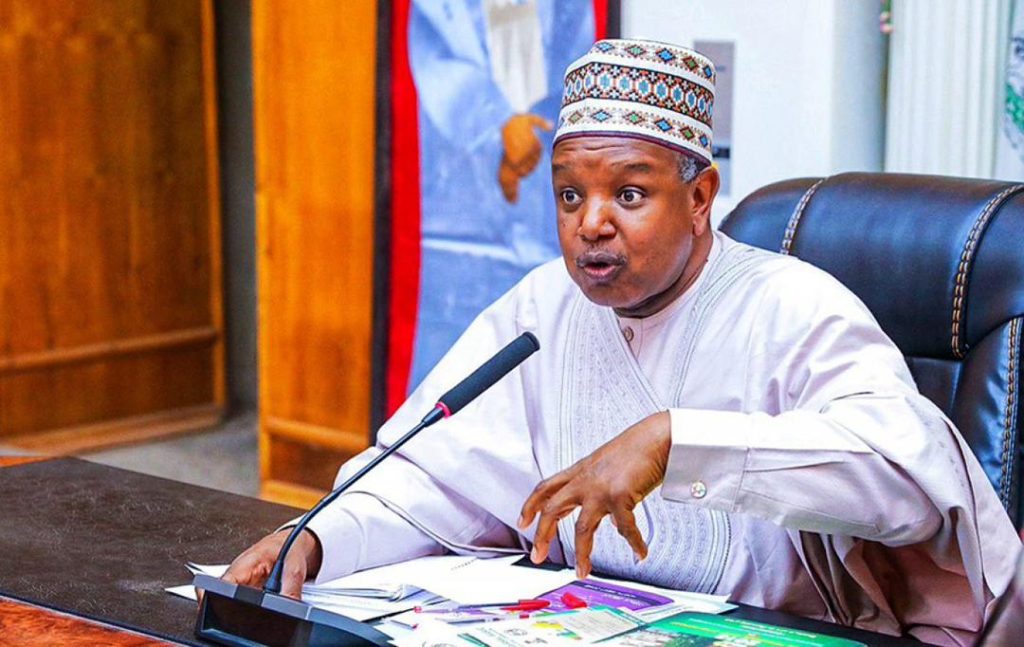
Nigeria’s Excess Crude Account, once a powerful fiscal buffer for Africa’s largest economy, now stands at just $535,823.39. The figure was disclosed on Thursday by the Accountant-General of the Federation, Shamsedeen Ogunjimi, during the National Economic Council (NEC) meeting chaired by Vice President Kashim Shettima.
The Excess Crude Account, popularly referred to as the ECA, was established in 2004 during the administration of former President Olusegun Obasanjo. The goal was straightforward but strategic: to set aside oil revenues earned above the benchmark price fixed in the national budget. In times when global crude prices surged, Nigeria could save the windfall and later draw on the funds to stabilize the economy when oil prices fell or when revenues came under pressure. Over the years, however, the account has dwindled drastically, largely due to frequent withdrawals by successive governments to meet pressing fiscal needs.
As of April 2025, the ECA balance was $473,754.57. The latest update of $535,823 shows only a marginal increase, far from the billions of dollars the account once boasted. To put it in perspective, in 2008 when oil prices soared above $140 per barrel, the account peaked at more than $20 billion. Since then, withdrawals, falling oil prices, and governance concerns have steadily eroded the savings.
At Thursday’s meeting, Ogunjimi, who was represented by the Minister of Finance and Coordinating Minister of the Economy, Wale Edun, also provided updates on other federally managed accounts. He revealed that the Stabilisation Account currently holds N78.45 billion, while the Natural Resources Account has a balance of N106.72 billion. These accounts, like the ECA, are designed to provide support for fiscal stability and investment in critical areas of the economy.
But the focus of the meeting extended beyond the numbers. The National Economic Council also unveiled the framework for the Renewed Hope Development Plan (2026–2030), which is expected to replace the outgoing National Development Plan (2021–2025). According to Vice President Kashim Shettima, the new plan will serve as a roadmap for Nigeria’s ambition of building a $1 trillion economy under the administration of President Bola Tinubu.
The Vice President described the plan as not just a policy document but a “critical transition strategy” that will sustain Nigeria’s economic reforms, deepen continuity, and align the country’s growth trajectory with the long-term objectives of the Nigeria Agenda 2050. He emphasized that the Renewed Hope Plan will consolidate existing reforms, particularly in revenue mobilization, fiscal prudence, industrialization, and social investment.
“Another major consideration today is the expiration of the National Development Plan 2021–2025 and the preparation of its successor, the Renewed Hope Plan 2026–2030,” Shettima told the Council. He noted that the transition was necessary to sustain reforms already underway and to avoid gaps that could derail momentum.
The Renewed Hope Development Plan, spanning five years, is expected to serve as a bridge toward achieving the Nigeria Agenda 2050, a long-term strategy designed to transform Nigeria into a prosperous, globally competitive economy. The Agenda 2050 envisions a country that can sustainably lift millions out of poverty, diversify its economy, and attract substantial investment across sectors.
Analysts have, however, expressed concerns about the dwindling size of the Excess Crude Account and what it means for Nigeria’s fiscal resilience. The account, once considered a national savings buffer against oil price volatility, is now at a level many describe as symbolic rather than impactful. With just a little over half a million dollars in it, the account can barely support any meaningful intervention in times of economic stress.
Critics argue that the country’s inability to preserve its oil windfalls reflects deeper issues of fiscal indiscipline and over-reliance on crude oil revenue. Instead of saving during oil booms, Nigeria has often spent excessively, leaving the economy vulnerable during downturns. Others point to the lack of transparency in how funds from the account have been utilized over the years, which has eroded public trust.
On the other hand, government officials insist that the Renewed Hope Plan offers a chance to change the narrative. By consolidating reforms, broadening the tax base, and attracting private sector investment, the administration hopes to reduce dependence on oil revenues and increase Nigeria’s non-oil fiscal buffers. The focus is on sectors such as agriculture, manufacturing, technology, and renewable energy, all of which are expected to drive growth and create jobs.
Some experts note that while Nigeria’s foreign reserves and sovereign wealth funds still provide some level of buffer, the low ECA balance highlights the urgent need for structural reforms. Without such reforms, they warn, the ambitious target of building a $1 trillion economy by 2030 may be difficult to achieve.
For many ordinary Nigerians, however, the debate over the Excess Crude Account may feel distant. What matters most to them is how government policies translate into lower inflation, stable currency, affordable food, jobs, and better living conditions. With rising prices of essentials, a weakening naira, and limited job opportunities, there is increasing pressure on the government to deliver tangible improvements in daily life.
The unveiling of the Renewed Hope Development Plan signals that the administration is aware of these challenges and is eager to present a framework for solutions. Whether this plan will live up to expectations remains to be seen, but the stakes could not be higher. For now, the ECA balance serves as a stark reminder of the country’s squandered opportunities and the need for greater prudence in managing future oil revenues.



Responses