Naira Ends August Stronger Amid Forex Inflows

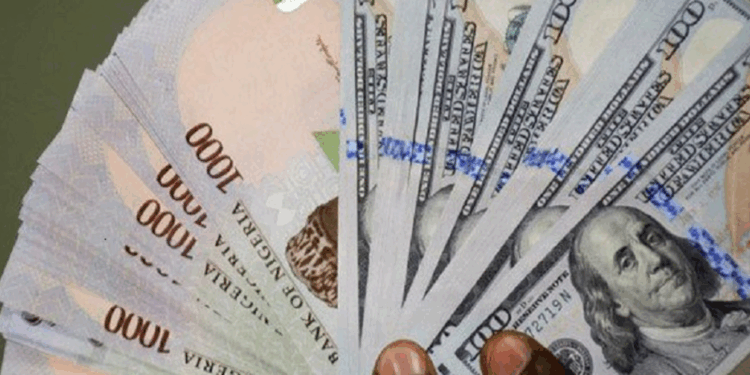
The Nigerian naira closed the month of August with a slight but notable gain against the United States dollar, showing resilience in both the official and parallel foreign exchange markets. This comes at a time when Nigeria’s foreign reserves are on the rise, diaspora remittances are increasing, and foreign portfolio investors are cautiously returning to the country’s financial market.
On Friday, the naira strengthened to ₦1,545 per dollar in the parallel market, an improvement from ₦1,552 the day before. At the official Nigerian Foreign Exchange Market (NFEM), the local currency appreciated to ₦1,531 per dollar, up from Thursday’s ₦1,533/$ close. This means the naira gained about 0.14 percent against the greenback in the final trading sessions of the month, a movement analysts say is modest but psychologically important for restoring confidence in Nigeria’s fragile currency.
The Central Bank of Nigeria (CBN) confirmed that the country’s external reserves rose by $1.72 billion in August, pushing total reserves to $41.3 billion. These reserves are vital for giving the CBN room to intervene in the forex market and manage exchange rate volatility.
CBN Governor Yemi Cardoso explained that a significant part of this growth came from improved diaspora remittances. Nigerians abroad sent home over $600 million in the last two months alone, marking a 200 percent increase compared to earlier in the year. According to him, remittance channels have become more efficient and transparent, allowing families and businesses to access funds more directly through the banking system instead of relying heavily on parallel channels.
“This renewed flow of diaspora remittances is reducing Nigeria’s overdependence on oil revenues and strengthening our foreign exchange portfolio,” Cardoso said, stressing that non-oil inflows will play a bigger role in stabilizing the economy going forward.
Foreign investor sentiment also showed cautious improvement. Inflows from offshore portfolio investors increased to $1.7 billion in August, compared to $1.5 billion in June. Analysts believe this shows that Nigeria is beginning to attract renewed interest from global funds, especially as the carry trade environment looks more favorable and some macroeconomic indicators appear relatively stable.
Nigeria’s slight currency gains also came at a time when the US dollar was experiencing mixed fortunes globally. The US Dollar Index (DXY), which measures the greenback against a basket of six major currencies, ended August slightly higher after weeks of decline. However, it remained below 98 points, one of its lowest positions in 2025.
Investors increased their buying pressure on the dollar following speculation about the US Federal Reserve’s next policy move. Fed Governor Christopher Waller dismissed the need for an aggressive 50-basis-point rate cut in September, instead suggesting that the Fed would adopt a “wait-and-see” approach depending on upcoming labor market and inflation data.
This cautious tone, along with sticky inflation figures, has kept the Fed’s benchmark interest rates steady at 4.25–4.50 percent. US Treasury yields reflected this balancing act, with the 10-year yield closing at 4.22 percent and the 30-year yield at 4.90 percent. Analysts note that while the dollar regained some strength, investor uncertainty surrounding Fed independence under President Donald Trump remains a risk factor.
For Nigeria, the naira’s performance at the end of August signals cautious optimism. After months of volatility and steep depreciation, any sign of stability offers relief to households and businesses struggling with rising import costs.
Still, the exchange rate remains fragile, particularly in the parallel market, where the gap with the official rate has yet to close completely. Traders say demand for dollars remains high, especially for imports and travel, but recent CBN interventions and increased inflows have provided a temporary buffer.
Economists warn that Nigeria must not rely solely on diaspora inflows and portfolio investments, which are often volatile. Long-term stability will require stronger export earnings, deeper industrial production, and continued reforms to encourage foreign direct investment.
Beyond Nigeria, the global financial environment also poses risks. Concerns about a more politicized US Federal Reserve under Trump’s second term are shaking investor confidence. His attempts to remove Fed Governor Lisa Cook, reshuffle regional Fed presidents, and influence monetary policy decisions have sparked debates about the independence of America’s central bank.
For Nigeria, these developments matter because a stronger or weaker US dollar directly affects emerging market currencies, including the naira. A stronger dollar typically puts pressure on Nigeria’s exchange rate, as investors pull out capital for safer US assets. On the other hand, a weaker dollar gives emerging markets some breathing space.
Meanwhile, geopolitical tensions, particularly the ongoing Russia-Ukraine conflict, continue to unsettle global markets. Recent reports of a Russian missile strike on Kyiv, killing at least 23 people, highlight how fragile the global economic environment remains.
The naira’s end-of-August gain, though slight, underscores the importance of consistent inflows, effective CBN interventions, and a stable global environment. Analysts suggest that if remittances remain strong and investor confidence improves, the currency could hold steady in the coming months. However, persistent inflation, heavy import dependence, and political uncertainty both at home and abroad continue to pose significant risks.
For ordinary Nigerians, the small appreciation is welcome news, but it has yet to translate into lower prices for food, fuel, and other essentials. Until broader structural reforms reduce reliance on imports and strengthen local production, the naira’s stability will remain vulnerable.



Responses