Rice Industry in Crisis as Import Surge Forces Closure of 90 Mills Across Nigeria

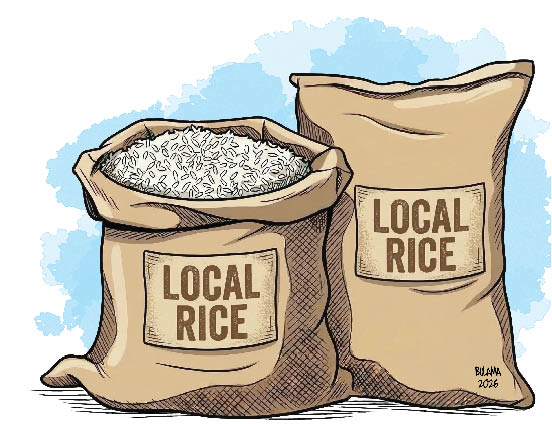
Nigeria’s rice industry, once considered a major pillar of the country’s agricultural diversification strategy, is now facing a serious crisis as rising importation and smuggling continue to undermine local production. Stakeholders in the sector warn that the situation has already forced dozens of rice processing companies to shut down operations, raising fears that years of investment in the industry could be wiped out.
The Director-General of the Rice Processors Association of Nigeria (RIPAN), Andy Ekwelem, disclosed that nearly 90 rice mills across the country have stopped operating due to the challenges currently facing the sector. According to him, Nigeria has more than 150 rice mills nationwide, but the remaining ones are now functioning far below their installed capacity.
He explained that most operational mills are currently running between 30 and 70 percent of their production capacity, a situation he described as unsustainable for businesses that require large investments in machinery, manpower, and logistics.
Ekwelem attributed the crisis primarily to the increasing volume of imported rice entering the Nigerian market, both through official channels and illegal smuggling routes.
Available statistics suggest that Nigeria imported between 2.4 million and 3.2 million metric tonnes of rice in 2025. Much of this importation reportedly occurred during a temporary duty-free waiver introduced by the federal government in an effort to reduce food prices for consumers.
However, industry stakeholders say the policy had unintended consequences, particularly for local producers who suddenly had to compete with cheaper foreign rice flooding the market.
According to data cited by agricultural consulting firm Vestance, rice imports for the 2024/2025 market year reached about 2.4 million metric tonnes. This represented a 60 percent increase from earlier projections in April 2024, which estimated imports at about 1.5 million tonnes. These figures also do not include the quantity of rice smuggled into the country through land borders.
The sharp increase in imports has resulted in a supply surplus, causing prices of locally produced rice to drop significantly. Industry players say this has made it extremely difficult for local farmers and millers to remain profitable.
Kolawale Oye, Managing Director of Infinera Agribusiness Ltd, said government data itself shows that Nigeria recorded a rice surplus of roughly 1.1 million tonnes by December 2025. However, he argued that the surplus was largely driven by imports rather than improved domestic production.
Meanwhile, data from the National Bureau of Statistics (NBS) shows that Nigeria’s food import bill has risen sharply in recent years. The country reportedly spent about ₦3.83 trillion on food imports in 2023 when Bola Ahmed Tinubu assumed office as president. By 2025, that figure had increased to approximately ₦7.65 trillion.
Despite the concerns raised by stakeholders, the Minister of Agriculture and Food Security, Abubakar Kyari, argued that the amount of rice imported during the waiver period was relatively small compared to Nigeria’s annual demand.
According to him, only about 250,000 metric tonnes of rice were imported during the duty-free window, while Nigeria’s local consumption demand stands at roughly 11 million tonnes annually.
However, the Minister of State for Industry, John Owan Enoh, acknowledged that the influx of cheap foreign rice has created serious challenges for domestic producers. He warned that when imported or smuggled rice sells at prices significantly lower than locally processed rice, it discourages investment and weakens Nigeria’s agricultural value chain.
Rice has long been one of Nigeria’s most important staple foods. Current estimates suggest Nigerians consume between 6.7 million and 7 million metric tonnes of milled rice each year, with per capita consumption averaging between 32 and 33 kilograms annually.
The sector had experienced significant growth during the administration of former President Muhammadu Buhari, particularly after the government restricted rice importation through land borders and introduced the Anchor Borrowers’ Programme.
These policies encouraged domestic production and attracted heavy investment in rice processing facilities. Paddy production increased from about 2.8 million tonnes in 2010 to around 8 million tonnes by 2021, while several large rice mills were established across northern and southern states.
However, industry experts say the recent policy shifts and rising smuggling activities have reversed many of those gains.
Farmers and millers in states such as Kano, Benue, Taraba, and Nasarawa report that many processing plants have either shut down completely or drastically reduced production.
For instance, several rice mills located along the Zaria–Kano highway—once known for their bustling activities—are now largely silent, with some facilities suspended for months.
Rice mill owners say they are struggling with rising production costs, including diesel, electricity, and labour, while the market price of rice continues to fall due to competition from imported brands.
In Taraba State, major rice milling companies in Jalingo have reportedly closed operations due to lack of patronage, leaving only smaller mills struggling to survive.
Farmers are also feeling the impact of the crisis. Many say they are abandoning rice cultivation altogether due to the high cost of farm inputs and declining profitability.
The chairman of the Rice Farmers Association of Nigeria in Kano State, Abubakar Haruna Aliyu, revealed that more than 50 percent of rice farmers in the state are considering leaving the sector.
According to him, the suspension of the Anchor Borrowers’ Programme has left many farmers without access to affordable financing and support.
An agricultural economist, Mamun Mallam, warned that Nigeria’s paddy production could decline significantly if urgent policy actions are not taken.
He projected that paddy rice production may drop from about 10 million metric tonnes in 2018 to roughly 4 million tonnes by 2026 due to insecurity, floods, and lack of incentives for farmers.
Experts warn that if the trend continues, Nigeria could become even more dependent on food imports, putting additional pressure on the naira and worsening the country’s food security challenges.
Stakeholders are therefore urging the federal government to implement policies that protect local producers while ensuring affordable food for consumers.
Without swift intervention, many fear the collapse of Nigeria’s rice value chain could lead to massive job losses, abandoned farmlands, and deeper economic challenges in rural communities.





Responses