Reps Warn of Looming Fuel Scarcity and Price Surge Amid Crude Supply Challenges


Fresh concerns have emerged over Nigeria’s fuel supply outlook, as the House of Representatives Committee on Petroleum Resources (Downstream) warns of an imminent petrol scarcity and possible spike in pump prices if urgent action is not taken.
Speaking at a press briefing in Abuja, the committee chairman, Ikenga Ugochinyere, described the situation as a looming crisis that could significantly worsen economic hardship across the country. He cautioned that unless critical bottlenecks in the fuel supply chain are resolved within 48 hours, Nigerians may soon face long fuel queues, distribution disruptions, and higher petrol costs.
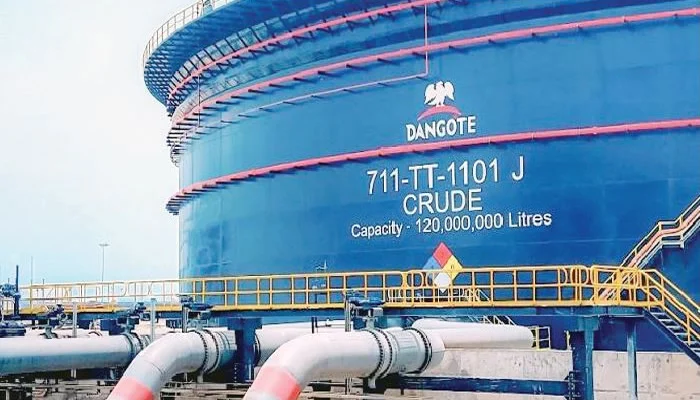
At the centre of the concern is the operational capacity of the Dangote Refinery, widely regarded as a key pillar in Nigeria’s push for energy self-sufficiency. According to Ugochinyere, the refinery is currently receiving far less crude oil than required for optimal production.
He disclosed that while the facility is allocated about 21 cargoes of crude oil and needs at least 15 to function effectively, it is presently receiving only five. This shortfall, he noted, is already affecting refining output and poses a direct threat to nationwide fuel availability.
The committee also raised concerns about the quality of crude supplied to domestic refineries, stating that lower-grade inputs are being delivered to facilities designed for higher-quality crude. This mismatch, lawmakers argue, reduces efficiency and limits refining capacity, further compounding supply challenges.
Another major issue highlighted is the role of international intermediaries in crude oil transactions. Ugochinyere revealed that crude produced in Nigeria is often sold to local refineries through middlemen based abroad, particularly in cities like London and Dubai. These intermediaries, he said, inflate prices significantly without adding value.
“For every barrel priced at $100, local refiners end up paying as much as $118, with the additional cost going to middlemen,” he explained, noting that such premiums have risen sharply from $2–$4 per barrel to over $18.
This added financial burden, according to the committee, is ultimately transferred to consumers through higher fuel prices, worsening the cost-of-living crisis already affecting millions of Nigerians.
To prevent a full-blown crisis, lawmakers have called on the Presidential Technical Committee overseeing the crude-for-naira initiative to urgently reconvene and address the identified challenges. They also urged strict enforcement of the Domestic Crude Oil Supply Obligation under the Petroleum Industry Act (PIA) 2021 to ensure that local refineries receive adequate and appropriate crude supplies.
In addition, the committee appealed to Bola Ahmed Tinubu to issue clear executive directives compelling compliance from all stakeholders involved in the oil supply chain.
While urging citizens to remain calm and avoid panic buying, the lawmakers warned that failure to act swiftly could lead to widespread fuel shortages, increased transportation costs, and further inflationary pressure on essential goods and services.
The warning comes at a time when global oil markets are already experiencing volatility due to rising geopolitical tensions, particularly involving Iran, Israel, and the United States. These developments have driven up crude oil prices globally, increasing the cost of refined petroleum products.
For Nigeria, the impact is especially severe due to its continued reliance on imported fuel despite being one of Africa’s largest crude oil producers. Fluctuations in global oil prices, combined with foreign exchange pressures and rising logistics costs, have contributed to a sharp increase in petrol prices—from around ₦746–₦850 per litre to over ₦1,200 in many areas.
Analysts warn that unless domestic refining capacity is stabilized and supply chain inefficiencies addressed, Nigeria may struggle to shield its economy from global oil shocks, leaving citizens vulnerable to recurring fuel crises.





Responses